
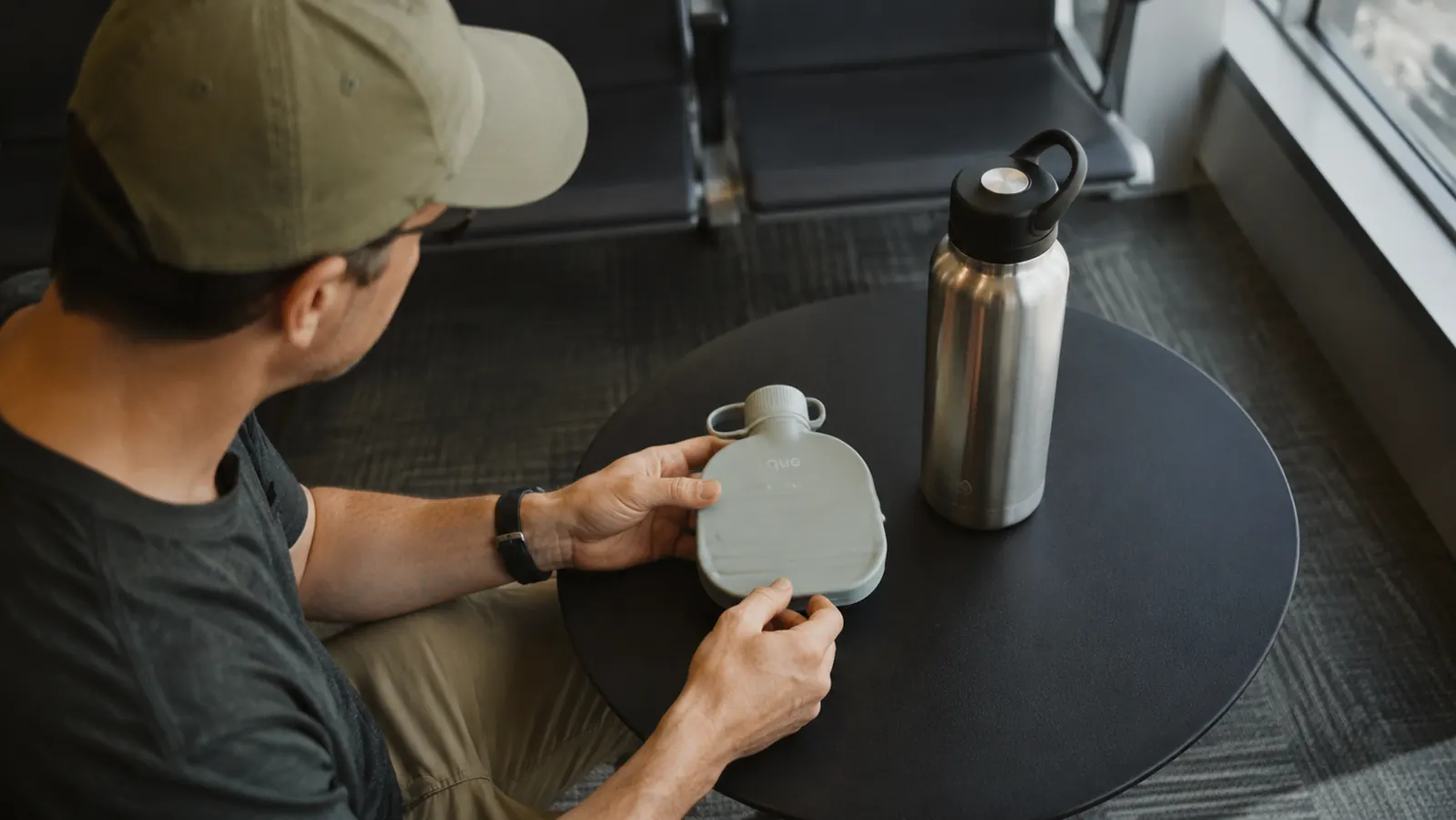
Quick answer: if you're flying more than you're hiking, the collapsible bottle wins. If you're doing serious trail miles or you want something that survives being kicked around a truck bed, the hard-sided bottle still has a place. I carry a Survivor Filter Clear Collapsible Water Bottle in my daypack for about 80% of my trips, and I still own a dented steel bottle that comes out for the other 20%. This is the breakdown of why, with real numbers instead of vague opinions.
I used to travel with a 32-ounce insulated steel bottle exclusively. It kept water cold for a full day, I trusted it, and I never thought twice about switching. Then I did a six-city trip in 11 days, mostly carry-on only, and that bottle ate almost a third of my backpack's usable space every time I had to empty it for security and repack. That's the trip that got me looking at collapsible options, and it's the comparison I keep coming back to.
Since then I've run both bottle styles through enough trips to stop guessing and start keeping notes. Two ski weekends, a 9-day trip through three countries in Europe, a handful of regional flights with tight connections, and a couple of weekend car trips where I threw gear in the trunk without much care. The pattern held up every time. This isn't a one-trip impression, it's what actually happened across a full season of travel with both bottles in rotation.
| Collapsible Water Bottle | Hard Bottle | |
|---|---|---|
| Style | Collapsible silicone (Survivor Filter Clear) | Hard-sided steel or plastic |
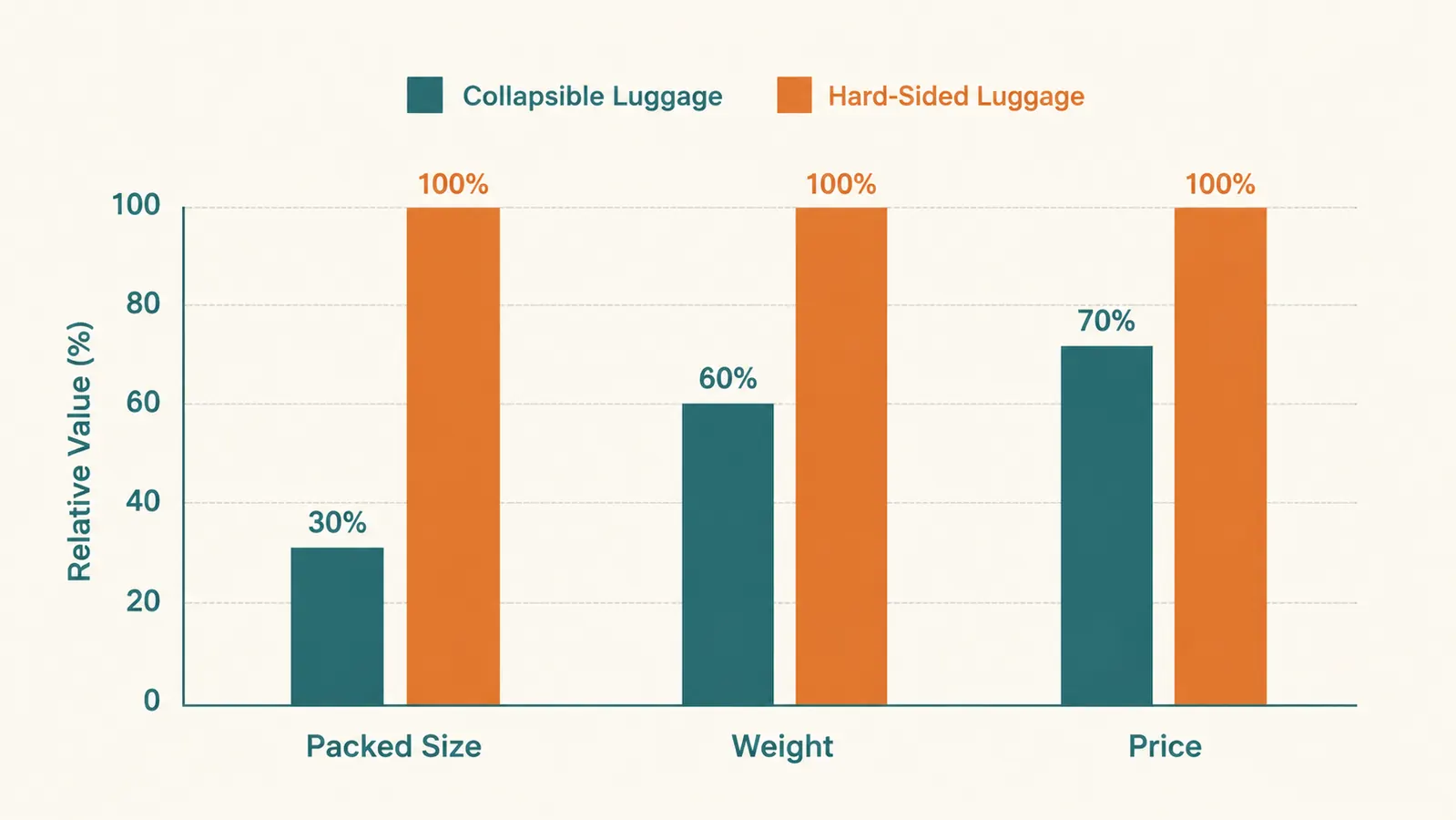
| Packed size (empty) | About 1.5 inches flat, fits a jacket pocket | Full height, roughly 10-11 inches, no compression |
| Weight (empty) | 5.8 oz | 9 to 14 oz depending on material |
| Capacity | 22 oz per bottle (2-pack included) | 20 to 32 oz, single bottle |
| Durability vs impact | Resists drops well, can be punctured by sharp objects if overpacked | Dents but rarely fails, handles rough drops better |
| Cleaning | Wide mouth, hand-wash or top rack, dries slower due to folds | Wide mouth, dries fast, some models not dishwasher safe if insulated |
| Insulation | None, water matches ambient temp within an hour | Insulated models hold cold 12-24 hours |
| Airport security friction | Empties flat, TSA rarely questions it | Bulky even empty, sometimes flagged for extra look due to double walls |
| Price | $16.95 for a 2-pack | $20 to $45 for one bottle |
A few of these rows deserve more context than a single line can give. The durability row in particular gets misread a lot. People assume 'collapsible' means fragile, and that's not really true. The Survivor Filter's silicone is thick enough that normal drops, getting stepped on in a tent, or being squashed under other bag contents doesn't hurt it. The actual risk is narrower than most people think: sharp, pointed objects packed directly against it. That's a packing habit problem more than a product weakness, and it's easy to avoid once you know it.
Where the Collapsible Bottle Wins
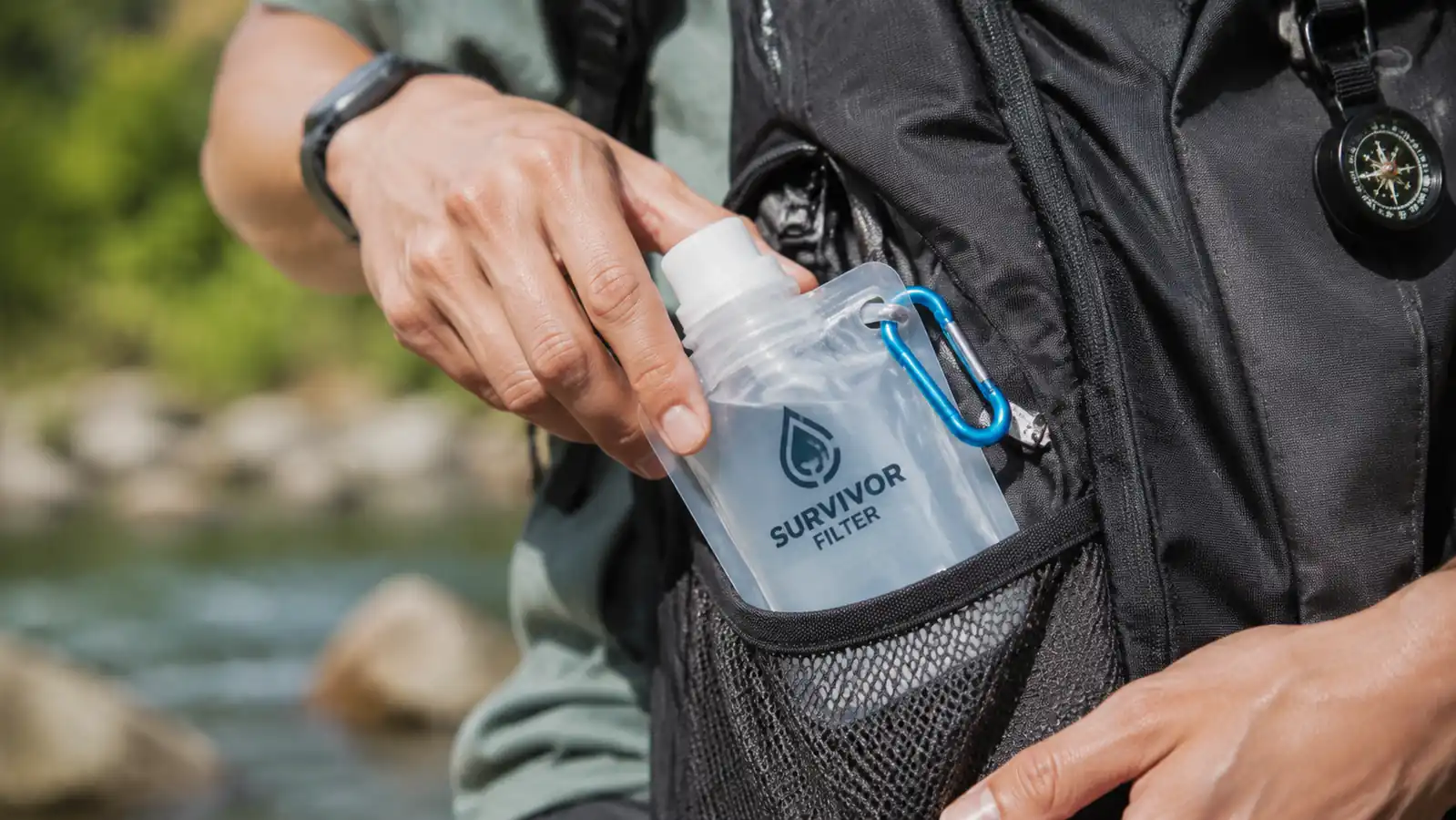
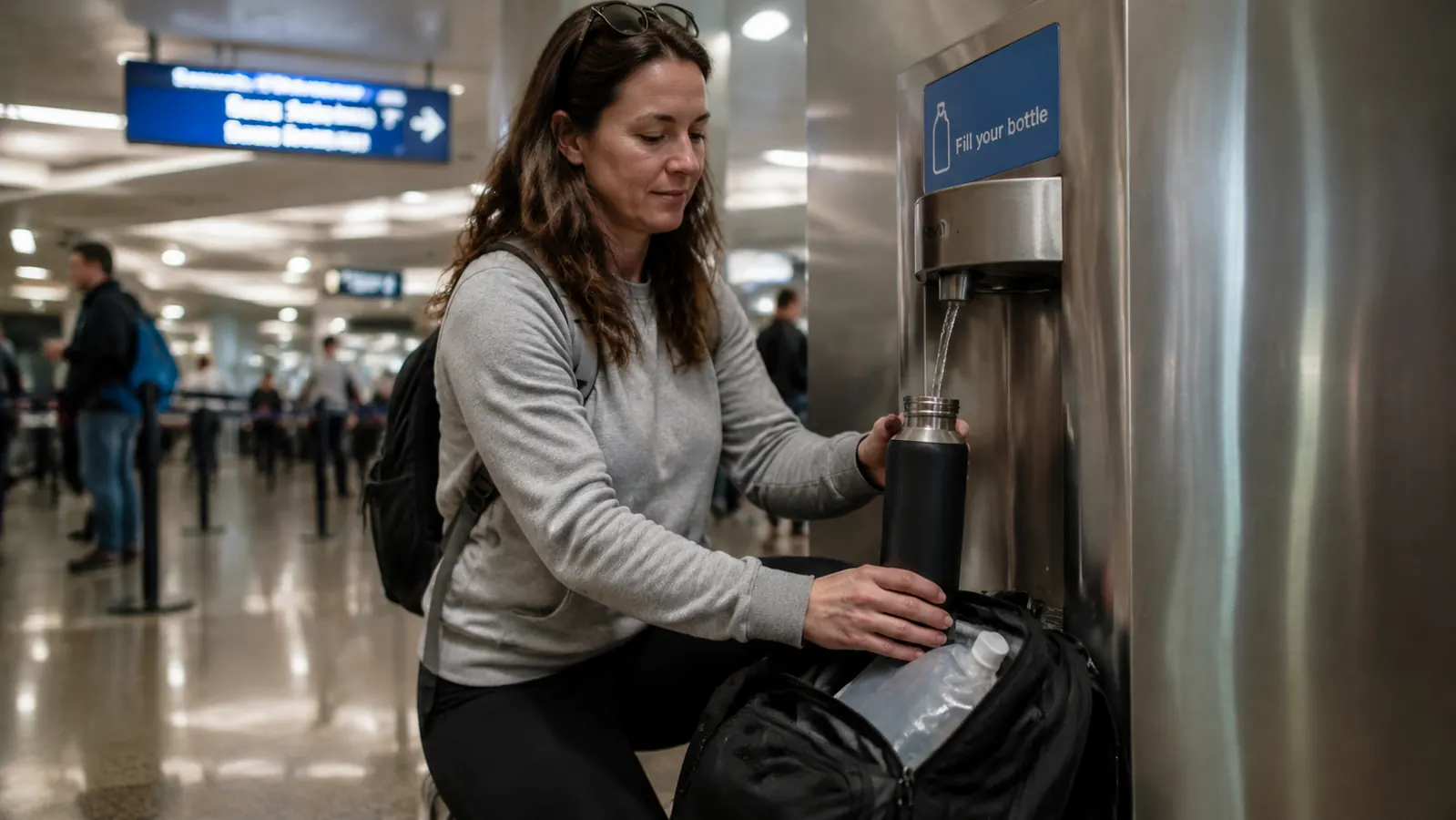
The packed size is the whole story. A Survivor Filter Clear folds down to something you could tuck behind a passport in a jacket pocket. When I'm going through security at a small regional airport with one X-ray lane and a line of 40 people, I don't want to be the guy holding everyone up because my steel bottle didn't get emptied all the way and now it's dripping onto the conveyor belt. I unscrew the cap, roll it flat in about four seconds, and it goes through without a second look.
It also solves a packing problem that hard bottles create by default: dead space. A rigid bottle takes up the same volume whether it's full or empty. A collapsible one takes up almost zero volume when it's empty, which matters most on the flight home when your bag is already stuffed with souvenirs and dirty laundry. I've fit a folded bottle into the mesh pocket of a packing cube more than once, something that would never happen with a hard-sided one.
The two-pack matters too. One bottle for me, one for whoever I'm traveling with, or a backup if one gets left behind in a hotel room, which has happened to me exactly twice with hard bottles and cost me $25 both times to replace a decent insulated one. At $16.95 for two, losing one isn't a financial event.
There's also a smaller thing I didn't expect to care about: the clear body. Being able to see exactly how much water is left without unscrewing the cap or shaking it sounds minor until you're mid-flight trying to ration water on a delayed connection. With an opaque steel bottle you're guessing. With this one, a glance tells you whether you can finish it before landing or need to stretch it out.
Where the Hard-Sided Bottle Wins
Insulation is the biggest one, and I won't pretend otherwise. If you're the type who wants ice-cold water at hour eight of a road trip through the desert, no collapsible bottle on the market is going to do that. The double-wall steel bottles hold their temperature because of the vacuum gap, and silicone just doesn't have that structure. If cold water for a full day matters more to you than pack space, this is a real tradeoff, not a marketing gimmick.
Hard bottles also win on abuse tolerance in specific situations, mainly anything involving sharp gear. I've tossed a steel bottle into a duffel bag with tent stakes, a multitool, and crampons without a second thought. I would not do that with a collapsible bottle. The silicone walls on the Survivor Filter hold up fine to normal handling and even some folding fatigue over months of use, but a stray screwdriver tip or a zipper pull digging in during a rough flight can put a hole in it. If your trip involves gear with edges, keep the collapsible bottle in a dedicated pocket away from anything pointy.
There's also a stability factor that matters more than people expect. A hard bottle stands upright on its own, on a nightstand, in a cup holder, on an uneven picnic table. A collapsible bottle, especially when it's not full, tends to lean and tip because the walls flex. It's a small annoyance, but if you're the type who sets a bottle down a dozen times a day at a work site or a conference, that difference adds up.
Cost Over a Full Year of Travel
The upfront price gap looks small on paper, $16.95 for two collapsible bottles versus $20 to $45 for one hard-sided bottle, but the real difference shows up over a year of regular trips. I've cracked the plastic threading on a cheap insulated bottle after about 14 months of daily use, and replacing just the lid cost almost as much as buying a new budget one. The Survivor Filter bottles are simple enough, cap, valve, silicone body, that there's less to fail, and having a spare in the pack means one damaged bottle doesn't end the trip.
I also don't baby either bottle the way the boxes suggest you should. Real travel means bottles get left in hot cars, dropped on tile floors, and squeezed into overstuffed bags. Judged against that kind of actual use rather than a showroom shelf, the lower price of the collapsible option isn't a downgrade, it's a better match for how most people treat gear on the road.
The Cleaning Difference Nobody Mentions
Both styles have a wide mouth, so scrubbing the inside isn't the issue. The difference shows up in drying. A hard bottle stands upright on a dish rack and air dries in a few hours. A collapsible bottle has folds in the silicone that trap moisture, and if you pack it away half-damp, you'll open your bag two days later to a faint mildew smell. I learned this the hard way on a trip through humid Southeast Asia weather. Now I make a point of turning it fully inside out (it's flexible enough to do this) and letting it dry flat before folding it away. Takes an extra 30 seconds, solves the problem completely.
If you're using either bottle for anything besides plain water, like electrolyte mixes or juice, the collapsible design needs a bit more attention. Residue can settle into the folds where a bottle brush doesn't reach as easily. A quick rinse with warm water right after use, before anything dries and sticks, keeps this from ever becoming a real problem. I treat it the same way I'd treat a reusable straw: rinse immediately, deep clean weekly.
Stop letting a bulky bottle eat your carry-on space
The Survivor Filter Clear Collapsible folds flat enough to disappear into a jacket pocket, comes as a 2-pack, and clears security without the hassle of a rigid bottle. See today's price on Amazon.
Amazon Check Today's Price on Amazon →Who Should Buy the Collapsible
If most of your travel is flying, especially carry-on only, and you value pack space over having ice water at hour ten, the collapsible bottle is the better fit. It's also the right call if you're outfitting a family or a group, since the two-pack means you're not buying four separate $30 bottles for a trip. Day hikers doing a few miles on maintained trails will be fine with one too, as long as the trail doesn't involve scrambling over sharp rock with the bottle strapped to the outside of a pack.
It's also a smart pick for anyone who travels with kids. Two bottles means less arguing over whose is whose, and the lighter weight means one less thing pulling on a small backpack. I've handed a folded one to my nephew before a flight and had it back in the bag in seconds when we hit the gate.
Who Should Buy the Hard-Sided Bottle
If your trips lean toward multi-day backcountry hikes, work sites, or anywhere gear gets thrown around with sharp edges nearby, get a hard-sided bottle instead. Same goes if keeping water cold for most of a day is a non-negotiable for you, not just a nice-to-have. I'd also lean hard-sided for anyone who's rough on gear in general and won't remember to keep the collapsible bottle away from zippers and buckles.
The collapsible bottle didn't replace my steel one. It replaced the version of me who kept losing carry-on space to an empty bottle I couldn't shrink.
What I Actually Pack Now
For flights and city trips, it's the Survivor Filter, no debate. For anything backcountry or multi-day with rough gear, the steel bottle still comes with me. I've stopped trying to pick one winner for every trip because they solve different problems. The real mistake is packing a hard-sided bottle out of habit for a trip where the only thing you needed was pocket space.
The way I think about it now is pretty simple. Before I pack, I ask what the trip actually demands. A weekend flight to see family with one carry-on, the collapsible bottle wins without a second thought. A five-day backcountry trip with a full pack and questionable water sources along the trail, the hard-sided bottle earns its weight. Most travelers I know are doing far more of the first kind of trip than the second, which is why the collapsible bottle ends up being the one that gets used most months of the year.
Pick the bottle that matches how you actually travel
For flights, layovers, and carry-on-only trips, the collapsible bottle wins on space every time. Check today's price and see if the 2-pack makes sense for your next trip.
Amazon Check Today's Price on Amazon →