
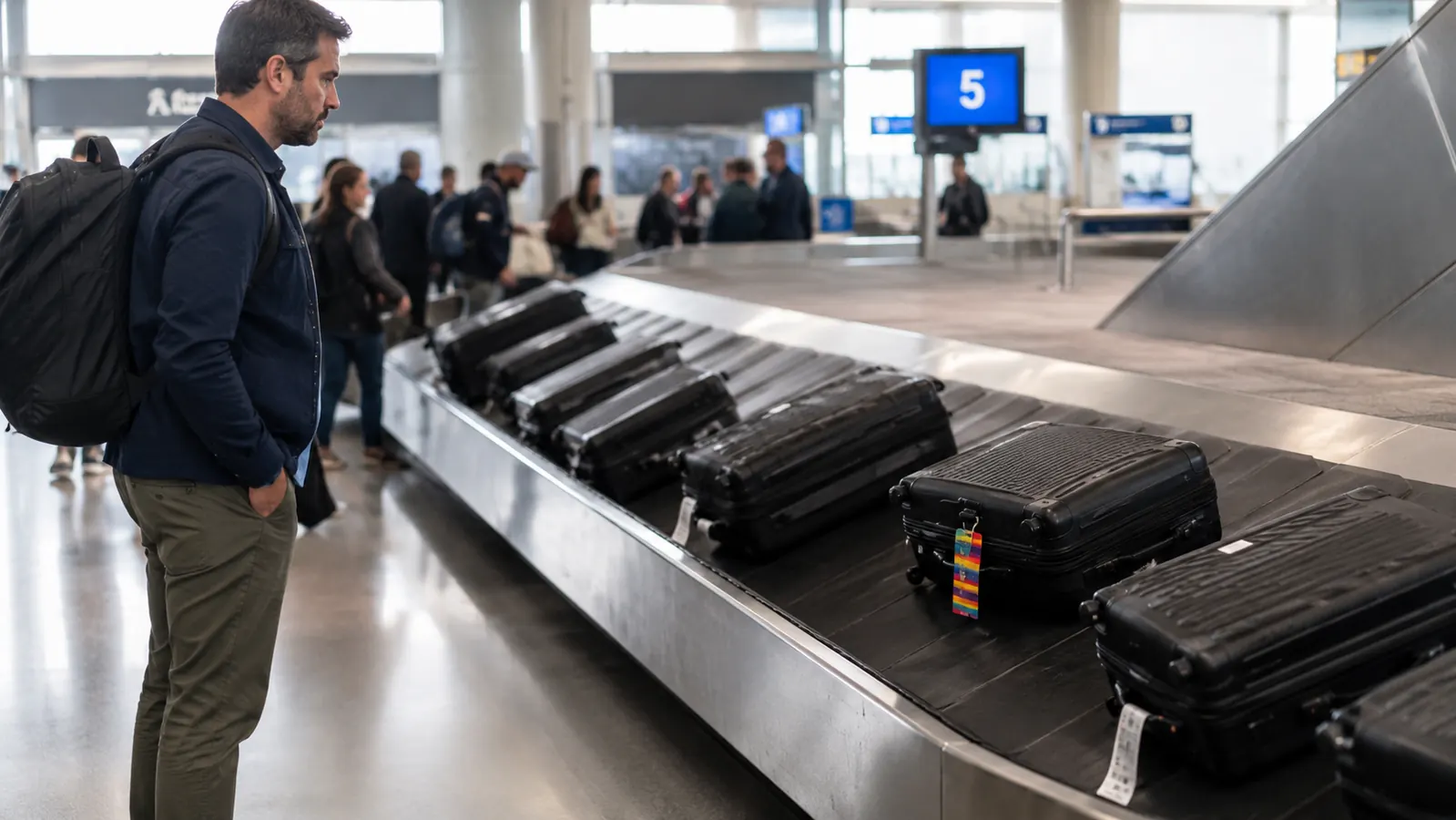
Quick answer: if you want your bag back, put a luggage tag on it. If you want to know where your bag currently is while you're helplessly standing at a carousel it isn't on, a smart tracker adds a layer of information, but it doesn't get anyone to physically go get your suitcase. I've flown with both, and I've had exactly one system actually result in a stranger calling me to say "hey, I have your bag." It wasn't the tracker.
I want to be fair here because both tools solve real problems, just different ones. A luggage tag is identification. A smart tracker is a location signal. Airlines, baggage handlers, and hotel staff can read and act on a tag in about four seconds. None of them are opening an app to look for your Bluetooth pin, and most of them aren't allowed to anyway. So let's break down where each one actually earns its keep, because the marketing on smart trackers makes them sound like they've replaced tags entirely, and after a couple hundred flights, I don't think that's true.
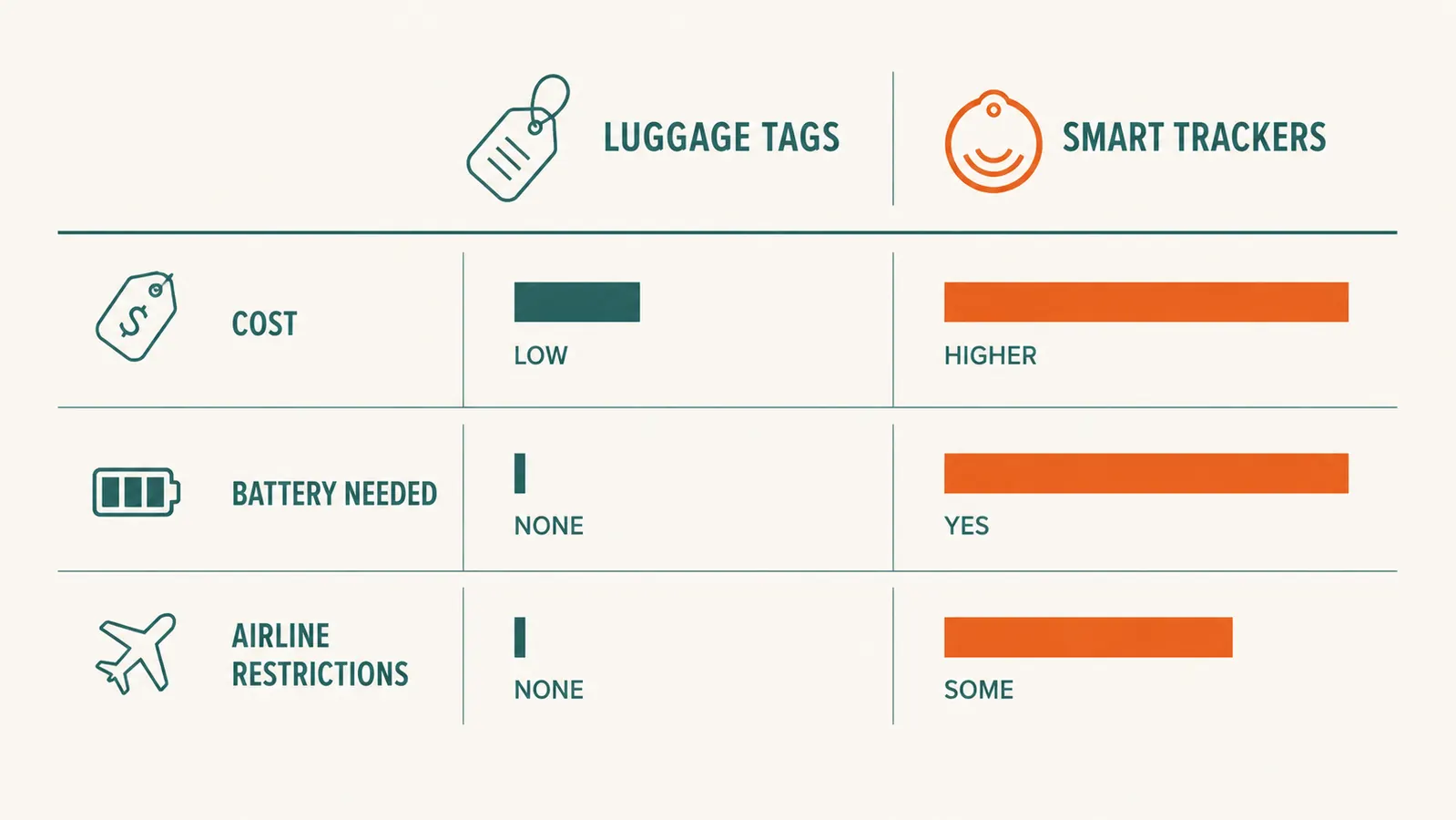
| Luggage Tags | Smart Luggage Trackers | |
|---|---|---|
| Upfront cost | $7.99 for a 3-pack | $25 to $30 per unit, per bag |
| Ongoing cost | None, ever | None for basic models, subscription fees on some rival brands |
| Battery required | No, works forever | Yes, replace or recharge every 6-12 months |
| Works with zero signal | Yes, it's a physical tag anyone can read | No, needs nearby phones or Wi-Fi to report location |
| Airline cargo hold compliance | No restrictions, allowed everywhere | Lithium battery rules apply, some airlines restrict trackers in checked bags |
| Who can act on it | Airline staff, baggage handlers, hotel lost-and-found, strangers | Only you, via the app, and only within range of a network |
| Setup time | Under 30 seconds, no app, no account | 5-10 minutes, app download, account, pairing |
| Privacy | Sliding cover hides your address until you choose to show it | Location history stored in an app tied to your account |
| Best for | Every checked bag, every trip, no exceptions | High-value bags on trips where you want a paper trail if things go sideways |
Where Luggage Tags Win
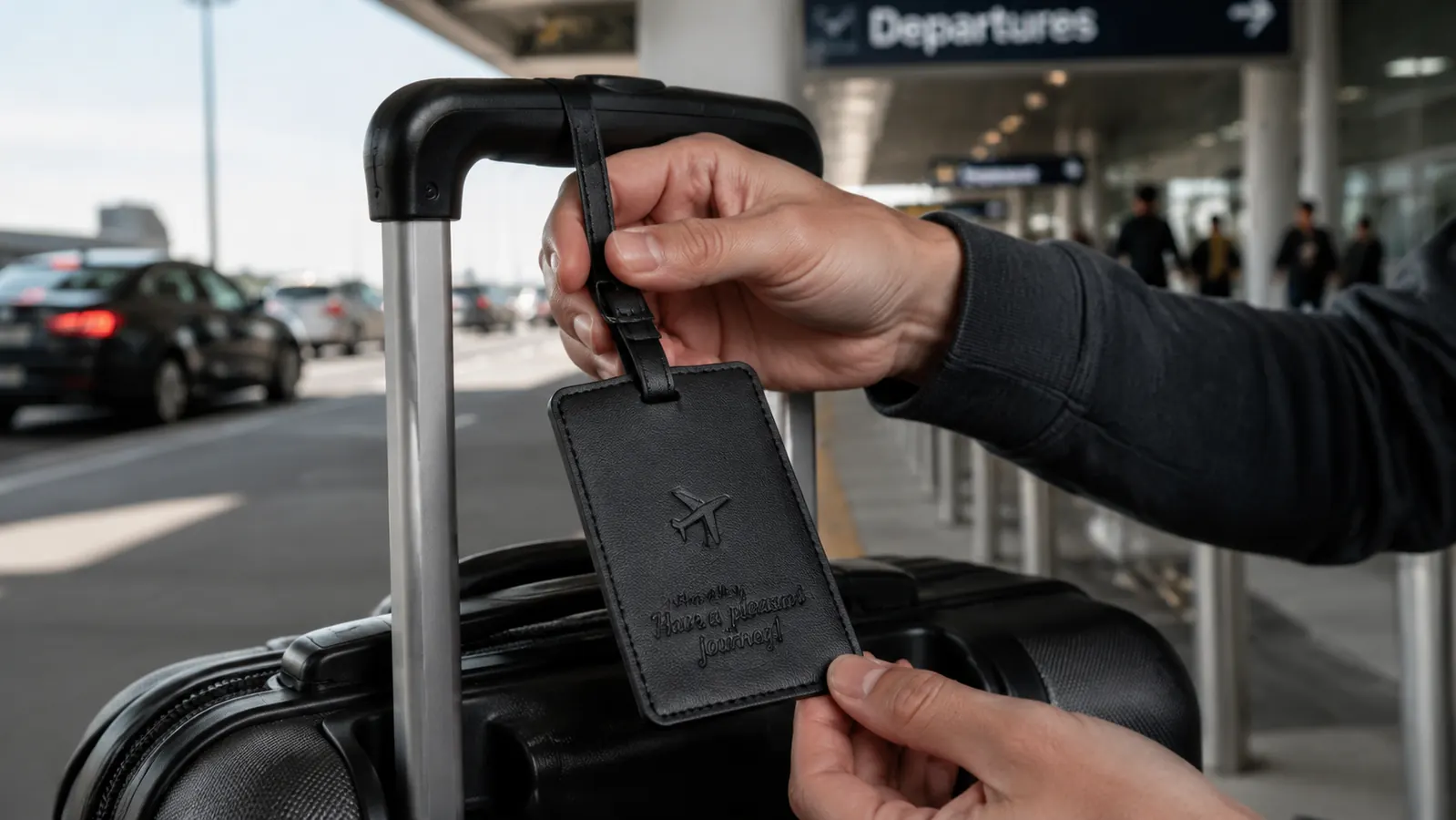
I lost a duffel bag on a layover through Charlotte back in October. Delta's system had it flagged as "in transit," which is airline-speak for nobody knows. What actually got it back to me in nine hours wasn't an app ping, it was a baggage handler at CLT reading the tag on the handle, seeing my name and the hotel I was staying at that night, and rerouting it there directly. No tracker involved. The tag did the entire job, and it did it faster than the airline's own tracing department, which was still telling me the bag was "in the system" three hours after it had already been dropped off at my hotel's front desk.
Luggage tags also just work in every scenario a smart tracker can't touch. No battery to die mid-trip. No pairing issue when you switch phones, which happened to a friend of mine right before a trip to Lisbon, she'd upgraded her phone two days before flying and her tracker app never fully re-synced. No signal dead zone in a cargo hold stacked with a hundred other bags, which is exactly where most trackers go quiet for hours at a time. A tag is dumb technology in the best sense, it can't fail because there's nothing to fail. The privacy-cover style like the 3-pack I travel with now hides your name and address behind a sliding panel, so it's not broadcasting your home info to every stranger at the carousel, but the second someone official needs to read it, it's right there, no unlocking a phone or opening an app required.
Price matters too. Three tags for under eight dollars means every bag in the house gets one, including the ones you'd never bother buying a $28 tracker for, like a gym duffel, a kid's backpack, or the beat-up carry-on you only use twice a year. That's the real advantage of cheap and simple: full coverage instead of protecting just your one "important" bag while the rest of your luggage travels with zero identification at all. I've watched people spend real money outfitting a single suitcase with a tracker and then check a second bag completely bare, which is backwards. The cheap bag with nothing on it is exactly the one that gets misrouted, because nobody at the airline has any way to connect it to you once the tag on the outside is missing or torn off.
There's a durability side to this too that doesn't get talked about enough. A luggage tag with a steel loop and a hard plastic shell survives being crushed under three hundred pounds of other bags, dragged across a conveyor belt, and rained on during a tarmac transfer, because it has no electronics to protect. I've had the same set of tags survive two years of monthly trips with nothing worse than a scuffed edge. A tracker with a cracked casing or a dead battery from a spill is just dead weight at that point, and you usually don't find out it's failed until the one trip you actually needed it.
And there's a quieter reason tags win that has nothing to do with hardware at all. When a tag has your name on it, it gets your bag flagged as "claimed" the moment someone looks at it, even if you never file a report. A stranger who picks up an identical black suitcase by mistake at baggage claim, which happens more than people think, sees your name on the tag before they've dragged it out the door. A tracker gives you none of that in-the-moment protection, because nobody browsing the carousel is checking anyone's phone for a paired device.
Where Smart Trackers Win
I'm not going to pretend trackers are useless, because they're not. If your bag gets stolen, or an airline genuinely loses it for days instead of hours, a Bluetooth tracker gives you a location history you can hand to the airline or the police. "Last seen at this address" is a real piece of evidence a tag can never provide. For someone checking a bag full of camera gear or a bike case worth real money, that extra layer of proof is worth the cost, and I'd never talk someone out of adding one to a genuinely expensive piece of luggage.
Trackers also help with a specific kind of anxiety that tags don't touch, the not-knowing during the flight itself. Watching your tracker ping at your destination airport before you've even landed tells you the bag made the connection, which is genuinely reassuring on a tight layover where you've got maybe forty minutes between gates and no way of knowing if your suitcase made it too. A tag can't give you that peace of mind mid-flight. It only helps once the bag is lost and someone needs to identify it, which means a tag is reactive by design while a tracker is at least trying to be proactive, even if it can't actually do anything with the information beyond telling you where the problem is.
There's also a psychological piece worth naming honestly. A lot of people buy trackers because watching the little dot move on a map feels like control, even when it isn't. It's a real feature, just not the one the marketing implies. The dot moving doesn't get your bag onto the next flight. It just tells you, with more precision than an airline's app usually manages, exactly how stuck it is. For international trips where a bag might sit in customs holding for a day, that precision at least tells you whether to keep waiting at baggage claim or start filing the missing-bag report right away, which does save time even if it doesn't save the bag itself.
Worth noting too, some airlines have gotten stricter about trackers with built-in lithium batteries in checked luggage, following FAA guidance on hidden battery devices. Most consumer trackers are well within the allowed limits, but it's one more thing to double-check before a flight that a plain tag never requires you to think about.
Give every bag the cheap insurance a tracker can't replace
A 3-pack of privacy-cover luggage tags costs less than checking one bag, covers every suitcase you own, and never needs a battery. Check today's price on Amazon before your next trip.
Amazon Check Today's Price on Amazon →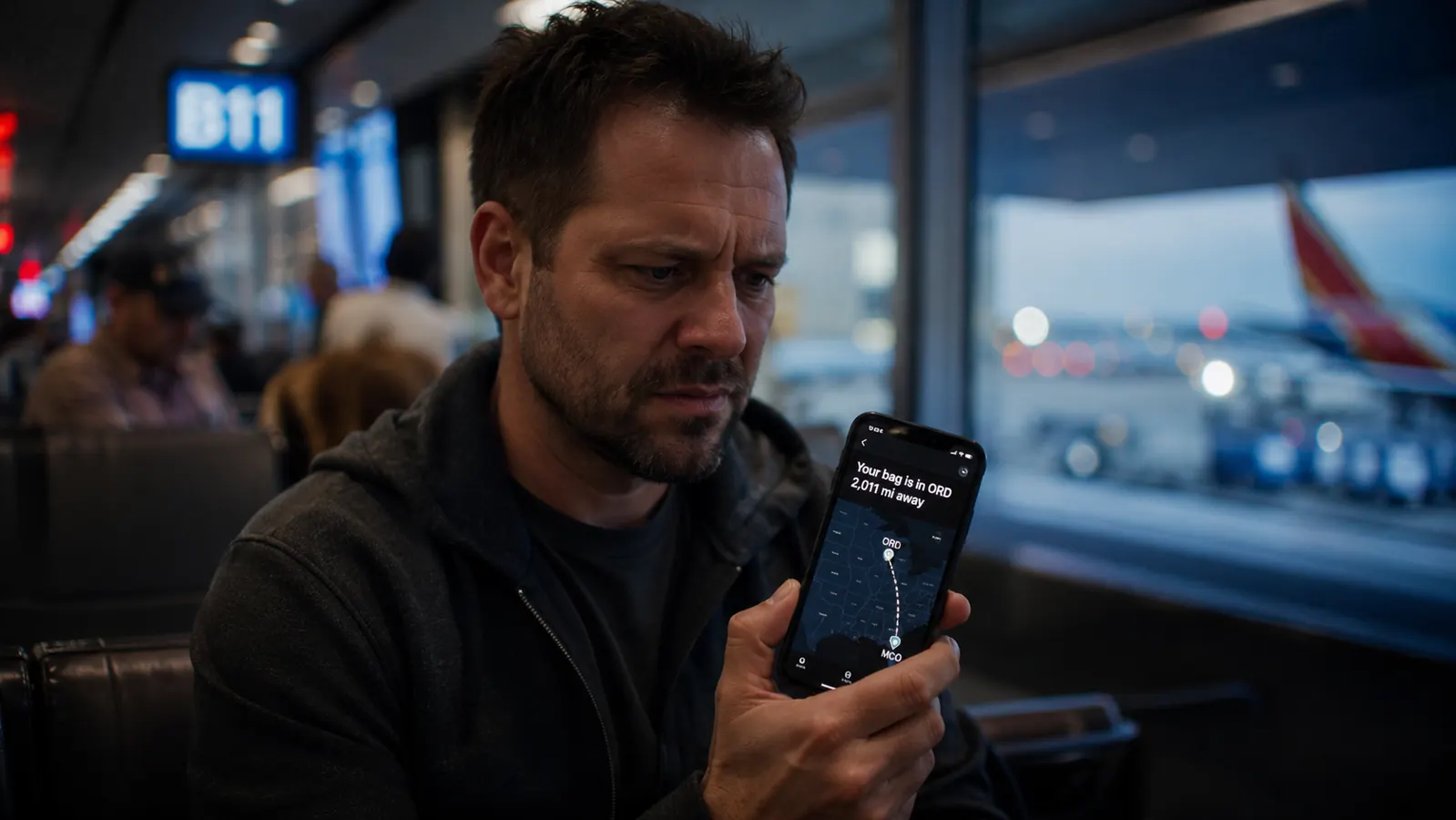
Who Should Buy Which
If you're an occasional flyer with two or three bags total, buy the tags and move on with your life. Seven dollars covers your whole household's luggage, permanently, and it's the one thing that actually helps a stranger get your bag back to you when things go wrong. If you're checking genuinely expensive gear, or you fly often enough that a lost bag would wreck a business trip or a once-a-year vacation, layer a smart tracker on top of a tag rather than instead of one. The tag is the identification. The tracker is the insurance policy. They're not really competing products once you frame it that way, they just get marketed like they are because trackers are the higher-margin item and tags don't need a splashy tech launch to sell.
Think about it from the airline's side for a second too. Ground crews handle thousands of bags a day and they're trained to look for a physical tag when a bag's barcode sticker gets torn off, which happens constantly. They are not trained to, and mostly can't, chase down a Bluetooth signal buried in a cargo hold. Whatever tech you add on top, the tag is still the thing the system was actually built to read. That's not nostalgia talking, it's just how the logistics chain works at every airport I've flown through, from small regional hubs to the busiest international terminals.
If you're traveling as a family, this gets even more obvious. Five bags for a family trip means five tags cost about the price of one tracker, and every single one carries an ID a hotel bellhop or gate agent can read on sight. Trying to outfit a family of four's luggage with individual trackers gets expensive fast, and honestly, most families don't need that level of tech for a beach vacation. They need their name on the bag.
My own bags carry both now, but if I had to strip one off every suitcase in my closet, the tracker goes first. It's the tag that's done the actual work every time I've needed it, and it's the tag that costs so little there's no real reason to leave any bag without one, even the ones you only pack twice a year.
Start with the tool that airline staff can actually use
No app, no battery, no subscription. Just a name, a number, and a privacy cover that keeps it discreet until it's needed. See current pricing on the 3-pack.
Amazon Check Today's Price on Amazon →