
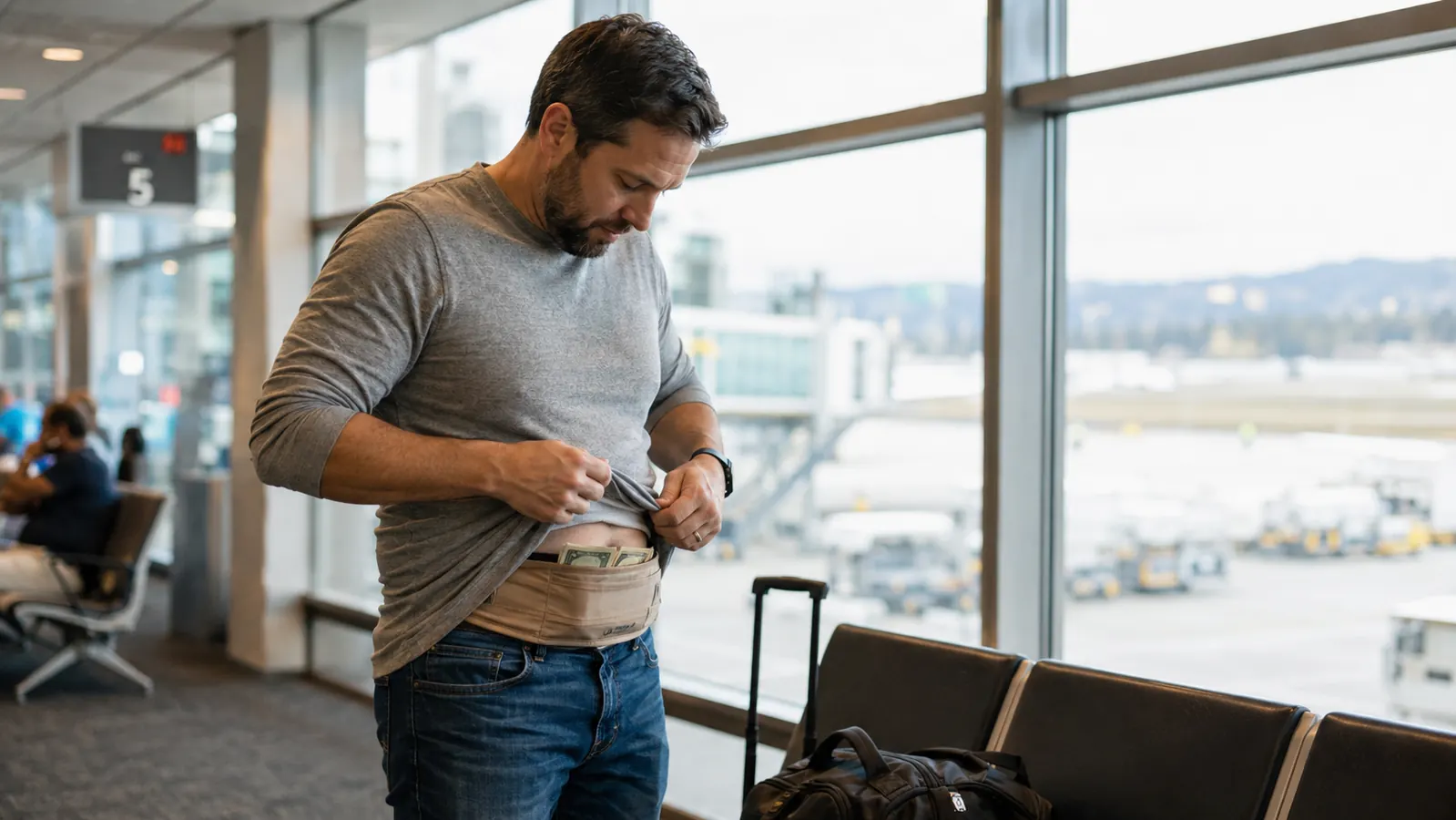
I need to say this up front: I bought this money belt with my own money at a pharmacy counter in Lisbon after a friend got pickpocketed on the tram. Nobody sent me a free unit. Nobody asked me to write anything nice about it. So what follows is not a highlight reel, it's what actually happened after wearing the Alpha Keeper under my clothes on close to 200 travel days over the last year.
My other article on this site covers the long-term durability story, stitching, zipper life, that kind of thing. This one is different. This is the stuff nobody tells you before you buy a money belt: the sweat, the bathroom-stall fumbling, the moment you forget it's even there and pat your pocket in a panic anyway out of old habit, and the one design choice that nearly made me return it in the first week. If you're on the fence about whether a money belt is actually livable day to day, this is the review I wish someone had written for me before I packed one.
Nobody Warns You About the Sweat
Let's get the uncomfortable part out of the way first. This thing sits against your skin, under your waistband, for hours at a time. In Lisbon in July, in Bangkok in September, in a non-air-conditioned train car crossing Croatia, I sweated into the Alpha Keeper in a way that no product listing prepares you for. The fabric is a soft microfiber blend that's genuinely comfortable when it's dry, but once it's damp it clings, and the passport inside can pick up a faint dampness too if you're not careful about where you tuck it.
I started carrying a small packet of silica gel in the main compartment after a humid week in Chiang Mai left my emergency cash feeling slightly soft to the touch. It worked. I also started wearing a thin cotton undershirt tucked in specifically to sit between my skin and the belt, which cut down on the direct sweat contact by a lot and made the whole thing feel less like a wetsuit by hour six. Neither of those fixes came from the product page. They came from three weeks of trial and error and one genuinely uncomfortable overnight bus through the Balkans.
I'll also say the smell is a real thing nobody mentions. After a full hot day, the fabric holds a faint sweat smell that a quick hand-wash in the sink always fixed, but if you're the type who's precious about gear staying fresh-smelling between washes, know that this isn't that kind of product. It's a workhorse, not a spa item, and it needs a rinse every few days on a hot-climate trip or you'll notice it.
The Bathroom Stall Problem Is Real
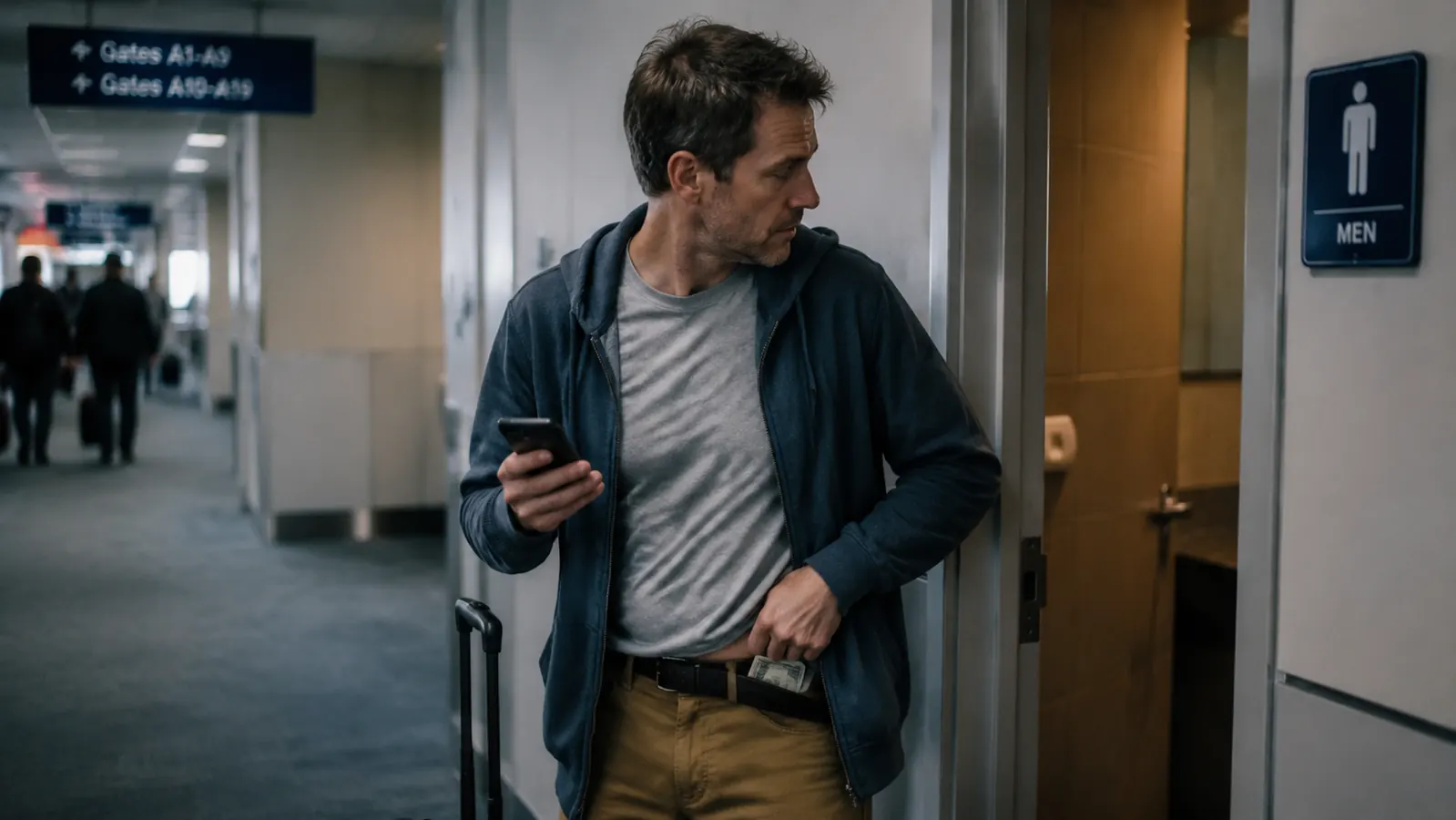
Here's a scenario that never shows up in marketing photos: you need cash at a market stall, or you need your passport at a hotel front desk, and it's tucked against your lower back or stomach under two layers of clothing. You cannot just casually reach for it like a wallet in your back pocket. In practice, this means one of two things. Either you excuse yourself to a bathroom to access it privately, which I did constantly in the first two months, or you get good at a quick, practiced motion of untucking your shirt slightly and reaching in without making a scene in front of a line of people waiting behind you.
I got faster at this over time, but the learning curve is real and a little embarrassing at first. At a crowded stall in Istanbul's Grand Bazaar, fumbling with my shirt hem while a vendor waited for payment and a small line formed behind me, I understood exactly why every guide tells you to keep a small amount of walking-around cash in a normal wallet or front pocket. The money belt is not built for frequent access. It's built for the stuff you touch twice a day, not twenty times, and treating it otherwise is where most of the frustration people report actually comes from.
There's also a specific awkwardness at security checkpoints and passport control that took me longer to get comfortable with than I expected. Border agents notice when you're patting around under your shirt, and more than once I got a look that said clearly they were deciding whether to flag me for a closer check. Stepping slightly out of the main flow of foot traffic before you reach the desk, and having your document already half-retrieved before you're face to face with an agent, solves most of that, but it's a skill you build over several trips, not something you nail on day one.
The Design Choice That Almost Made Me Return It
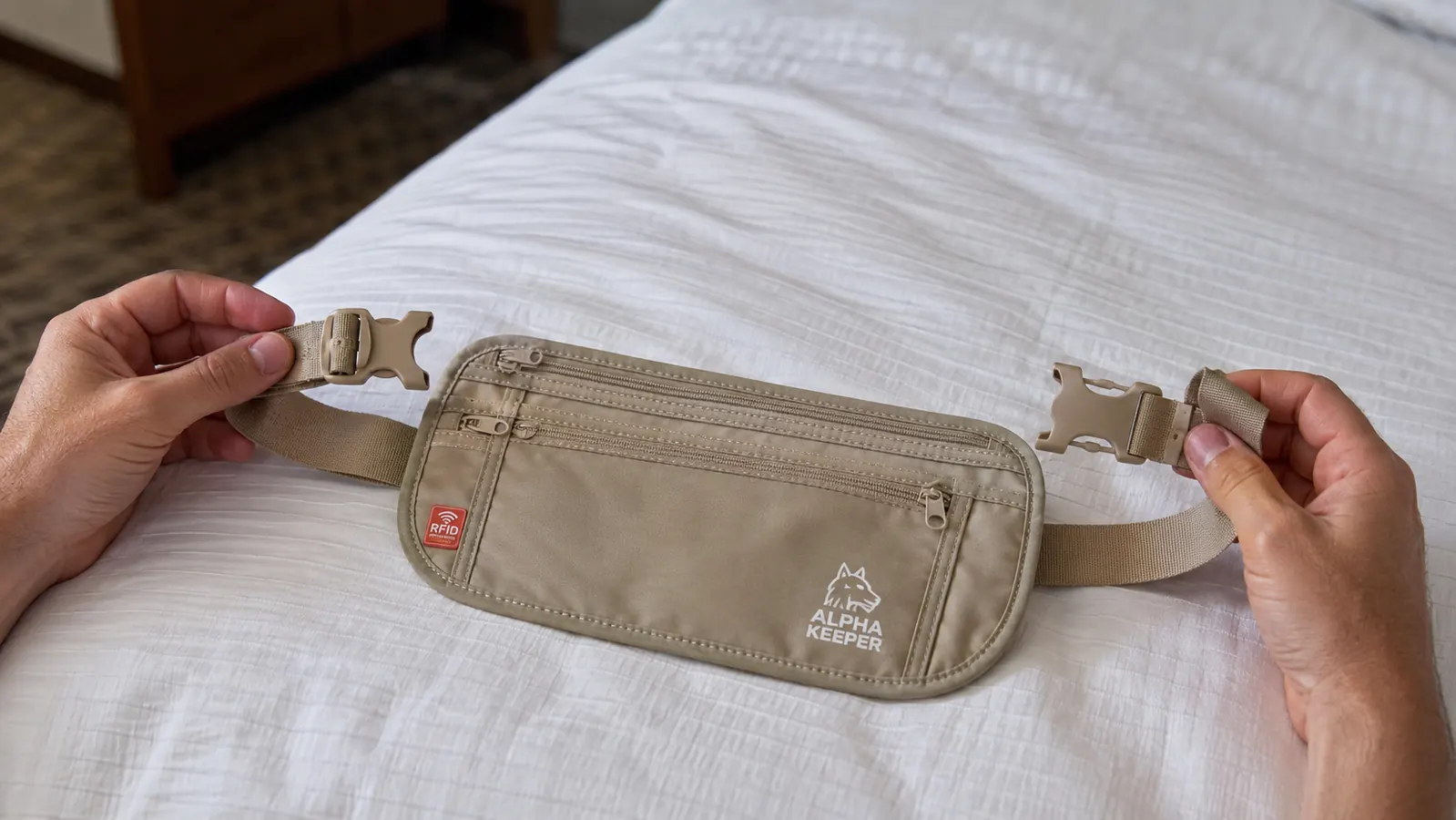
The belt has a single main zippered compartment and one smaller pocket in front of it. When I first packed it, I put my passport, a backup card, and folded cash all in the same main pocket, the way the product photos seem to suggest. Every time I needed the cash, I had to pull the passport partway out to get underneath it, which meant more fumbling, more time spent adjusting my shirt in public, and one heart-stopping moment in a Prague metro station where I thought I'd dropped my passport on the platform. I hadn't. It had just slid to the bottom of the compartment while I was digging for a banknote. But that ten seconds of panic taught me something important.
I now use the front pocket exclusively for the cash I might need same-day, and the main compartment stays sealed and untouched, passport and backup card only, accessed maybe once or twice per trip at borders or hotel check-in. That single change solved most of my frustration with the Alpha Keeper. It's not a flaw in the stitching or the zipper quality, it's a flaw in how the product photos suggest you organize it. Nobody tells you to compartmentalize by how often you'll need something, not by what type of item it is, and once I figured that out on my own, the whole experience improved dramatically.
The Quick Verdict
Genuinely useful security layer, but comfortable and practical only if you're honest about how you'll actually use it, not how the product photos show it.
Amazon Check Today's Price →What I Liked
- Keeps cash, cards, and passport hidden and hard to reach in a crowd
- RFID-blocking layer and a slim, low-profile shape under a shirt
- Genuinely eases the anxiety of carrying valuables in busy tourist spots
- Sturdy stitching and a comfortable, adjustable elastic strap
Where It Falls Short
- Gets sweaty against your skin in hot weather and needs airing out
- Reaching it means finding privacy, so it is awkward for quick access
- The single deep pocket makes organizing cash and documents fiddly
- Takes a trip or two to get used to wearing it comfortably
Still deciding if a hidden belt fits your travel style?
See today's price and current buyer photos on Amazon before you commit to a system like this.
Amazon Check Today's Price on Amazon →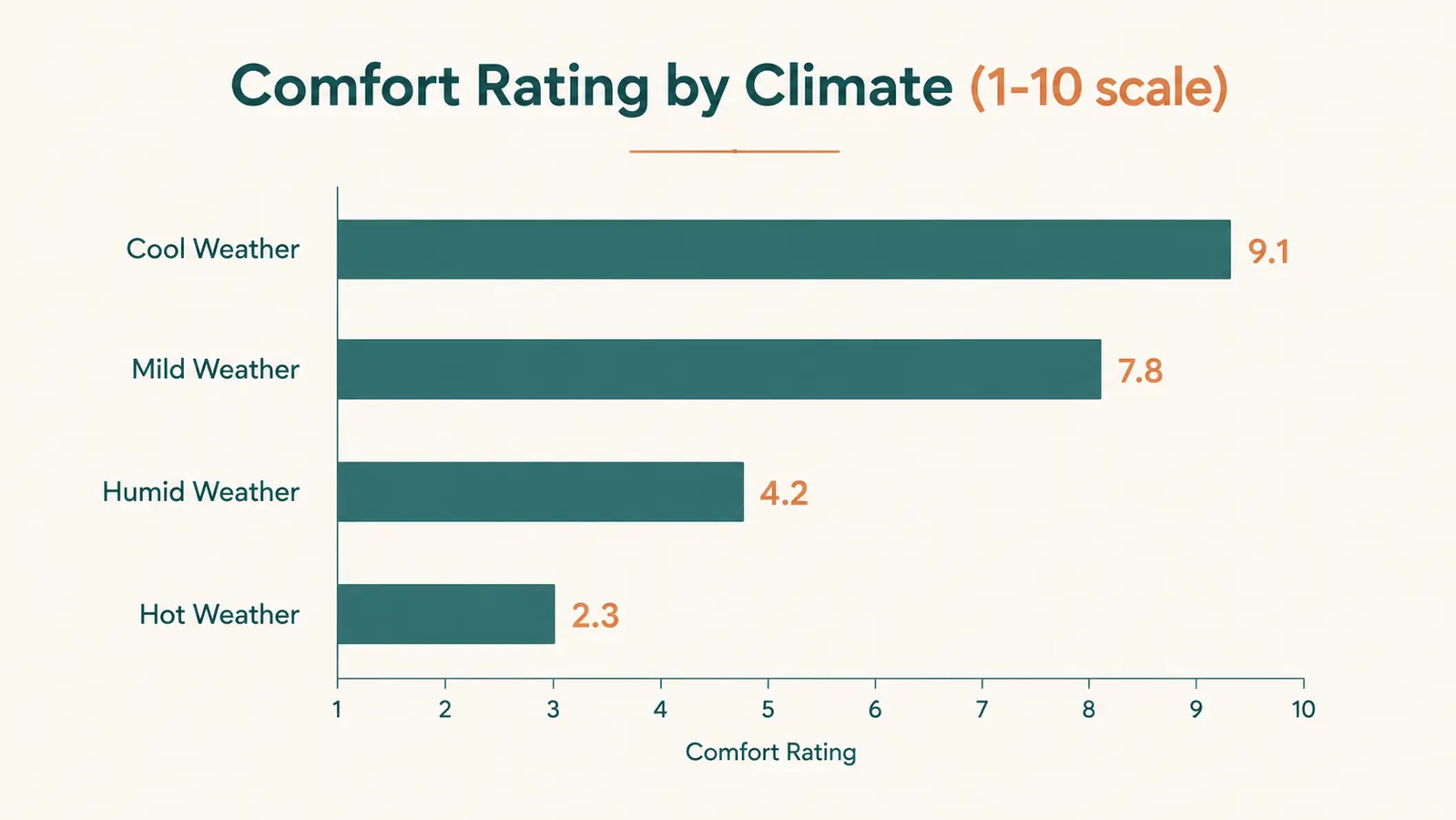
What the Star Rating Doesn't Tell You
The Alpha Keeper sits at a strong average rating, and I understand why. It does what it says. RFID blocking works, the zipper hasn't failed on me across a year of near-daily cycles, and the elastic waistband has held its stretch through dozens of washes. But star ratings flatten out the lived experience. They don't tell you that in humid climates you'll want a backup plan for moisture, or that you'll need roughly a week of awkward public fumbling before accessing it feels natural, or that the belt runs slightly long if you're under about 32 inches at the waist and needs the excess strap tucked or trimmed.
I trimmed about two inches off mine with sharp scissors and sealed the cut end with a lighter so it wouldn't fray. That's a five-minute fix, but it's not something the listing mentions anywhere, and I only found the tip in a Reddit thread from another traveler with the exact same complaint about excess strap length flapping around under a shirt.
The rating also doesn't capture the mental adjustment period. For the first two or three trips, I was hyper-aware of the belt every time I sat down, stood up, or bent over to pick something up off the floor. That awareness fades, but it takes longer than the glowing five-star reviews would have you believe. If you're expecting to forget it's there on day one, you'll be disappointed. By week three, you mostly will. That gap between expectation and reality is exactly the kind of thing an average star rating can't communicate.
A money belt doesn't fail loudly. It fails quietly, in the moments you didn't plan for, like a crowded metro platform when you're not sure if you dropped your passport or not.
Where the Honest Comfort Line Actually Sits
I want to be specific here instead of vague. In cool or mild weather, cities like Edinburgh in autumn or Vancouver in spring, I genuinely forget I'm wearing it by midday. It sits flat, doesn't shift much, and the fabric stays dry enough that it's a non-issue for a full day of walking and sightseeing. In hot, humid conditions, Southeast Asia in the wet season or a Mediterranean summer, it becomes something I'm aware of constantly by hour three. Not painful, not chafing exactly, just a low hum of discomfort that some travelers will tolerate easily and others will find genuinely annoying by the end of a long day.
If your trips are mostly temperate climates and shorter travel days, this comfort question barely matters and you can basically ignore this whole section. If you're doing a multi-week trip through consistently hot, humid regions, go in with realistic expectations, plan for a change of tucked undershirt at minimum, and don't be surprised if you end up taking it off for an hour at a rest stop just to let your skin breathe.
The One Thing I Wish I'd Known Before My First Trip With It
If I could go back and tell myself one thing before that first trip to Morocco, it would be this: practice the access motion at home, in front of a mirror, before you ever need it in public. I felt silly doing it, standing in my bedroom untucking my shirt and reaching for the zipper pull, but that ten minutes of practice meant that by the time I actually needed cash at a crowded souk stall, my hands already knew what to do without me having to think about it or look down. Travelers who skip this step are the ones who end up standing awkwardly at a counter, visibly patting themselves down while a line forms behind them.
The other thing I wish someone had told me is to test the belt with actual bulk in it before departure, not just an empty pouch. A folded passport, three cards, and a stack of local currency sits very differently against your body than an empty compartment does, and the first time I wore it fully loaded was also the first time I discovered where it dug in against my hip bone when I sat down in an airplane seat. A quick test walk around your house or block, fully loaded, tells you more than any review, including this one.
Who This Is Actually For
This belt earns its keep for travelers moving through dense crowds, markets, public transit, and tourist-heavy pickpocket zones, the kind of trip where losing your passport or your card stash would genuinely wreck the rest of the trip. If that's your itinerary, the tradeoffs I've described are worth it. I wore it through Barcelona's Las Ramblas, the Istanbul Grand Bazaar, and Rome's crowded metro without a single incident, and I credit at least part of that to simply not having valuables in an obvious pocket or bag pouch where a bump-and-lift move could reach them.
It's also worth mentioning who I'd steer toward a slightly different setup entirely. Solo travelers doing long stretches of budget backpacking, moving city to city every two or three days with a heavy pack, tend to get the most value out of this belt because they're rarely near a hotel safe and rarely have a fixed base to leave documents behind. If that's your travel style, the daily discomfort I've described is a fair trade for the peace of mind, and most backpackers I've met who use one say roughly the same thing once they're past the first couple of weeks of adjusting to it.
Who Should Skip It
If your travel is mostly car-based road trips, business trips with hotel safes available, or shorter city breaks where you're not navigating dense pickpocket-heavy crowds, this is probably more belt than you need day to day. A slim RFID card sleeve in a zipped interior pocket covers most of that risk without the daily comfort tradeoff and the learning curve I've spent this whole review describing. I still pack this belt for specific high-risk legs of a trip rather than wearing it start to finish on every kind of travel, and that selective use has honestly made me like it more, not less, over the past year.
I'd also gently steer anyone with sensitive skin or a history of heat rash away from wearing this as an all-day, every-day solution in a hot climate. It's not that the fabric is harsh, it's simply that any barrier against the skin for ten-plus hours in heat is going to be a factor for someone already prone to irritation, and there's no shame in using this belt only for the handful of hours each day when you're actually out in a crowd, then switching to a zipped daypack pocket or hotel safe the rest of the time.
Know exactly what you're getting before it's under your shirt for 12 hours
Compare current specs, sizing notes, and buyer feedback on Amazon's product page before you decide.
Amazon See Current Price and Details →