
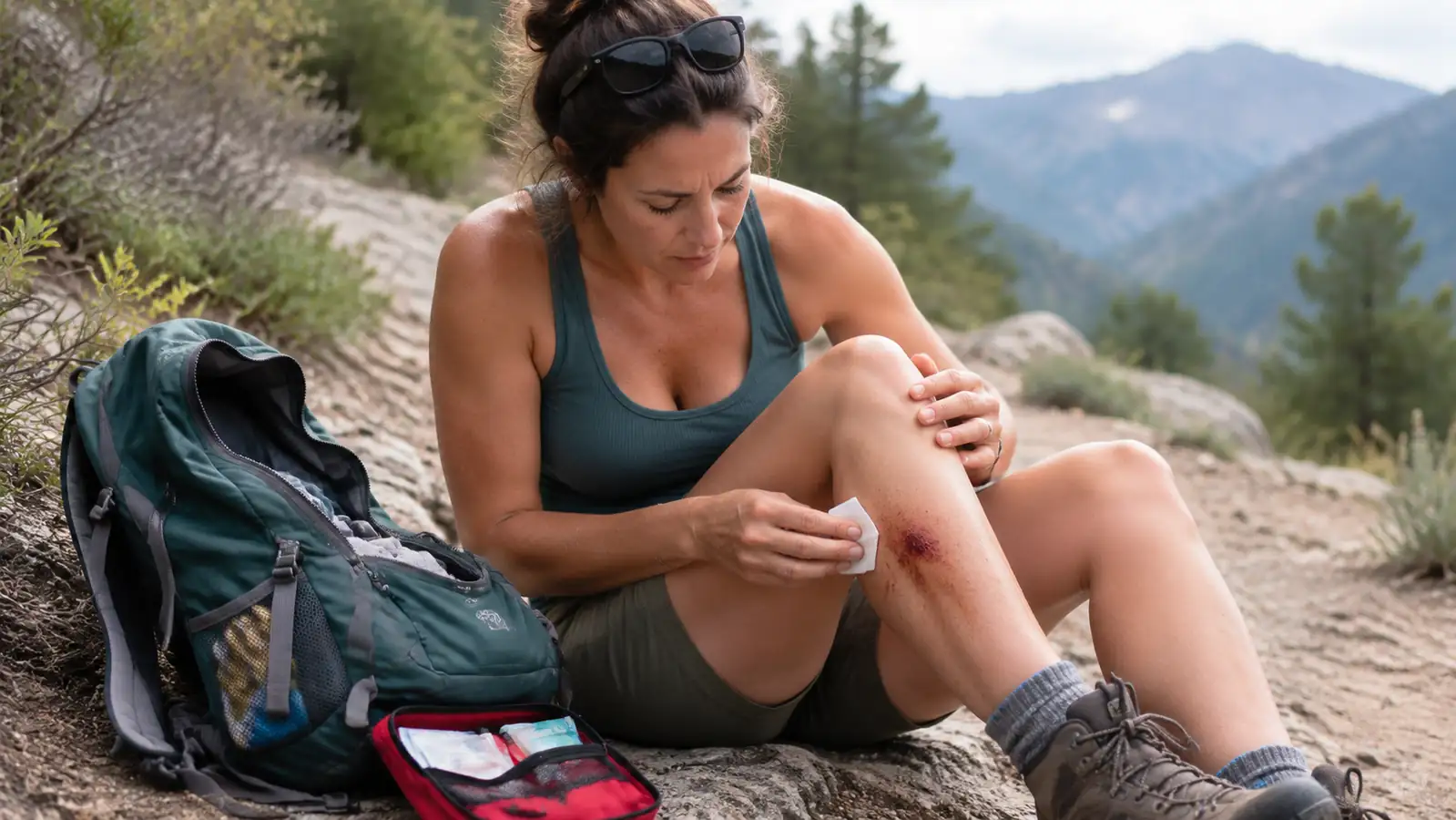
I was four miles into a six-mile loop outside Asheville when my foot caught a loose piece of shale and I went down hard on my right knee. Not a dramatic fall, no cliff edge, nothing that needed a rescue call. Just the kind of stupid, ordinary slip that happens on a trail with more scree than dirt. I sat there for a second doing the mental math every hiker does after a fall, checking if anything felt wrong beyond the sting, running through fingers and wrists and ankles before I even looked down at the knee itself.
My knee was open, not deep, but bleeding enough that it ran down into my sock within a minute. I was solo that day, my hiking partner had bailed with a work call that morning, so it was just me, two miles from the trailhead in one direction and roughly the same distance to a lookout point in the other where I knew day hikers sometimes passed through. Neither distance felt short with a leg I hadn't tested yet.
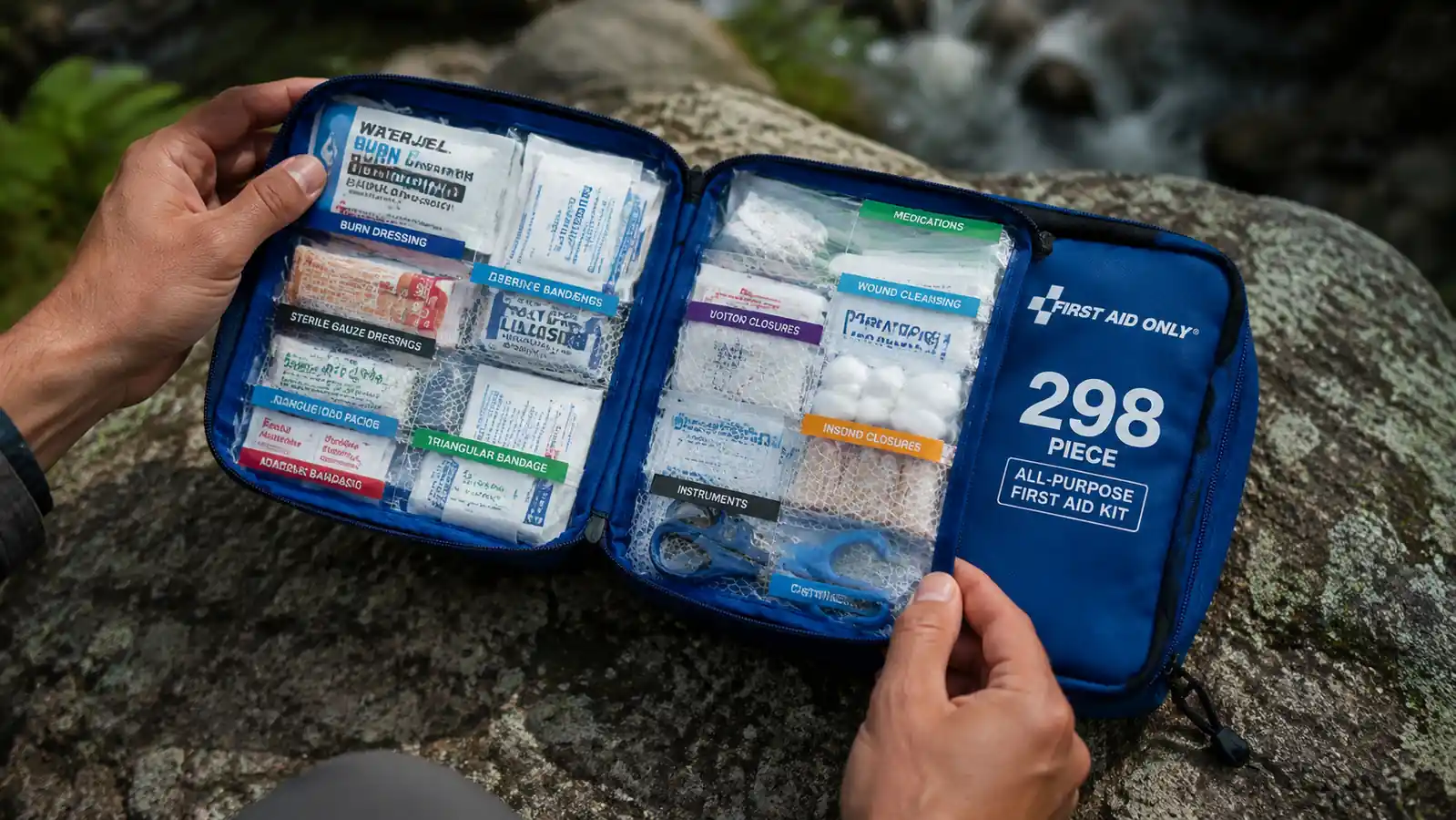
The only reason that afternoon didn't turn into a much longer story is a first aid kit I'd tossed into my pack almost as an afterthought a few trips earlier. It's the 298-piece kit from First Aid Only, the kind that looks almost too small for what it claims to hold until you actually open it up and realize how much is packed into that zippered pouch.
I was two miles from anywhere, sitting on a rock with a bleeding knee, and the only thing standing between me and a long, ugly walk out was a pouch I almost didn't bring.
I've carried a First Aid Only kit for a couple years now, mostly because a friend who used to guide backcountry trips told me the day you actually need one is never the day you expect. I'd used it before for blisters, a headache, once for a splinter that turned into a bigger production than it should have. This was the first time it mattered in a real way, the first time the stakes were more than mild annoyance.
The kit that turns a bad fall into a five-minute delay
This 298-piece kit is small enough to disappear into a daypack but stocked with enough antiseptic wipes, gauze, and bandages to actually handle a real trail injury, not just a paper cut.
Amazon Check Today's Price on Amazon →
I cleaned the cut with one of the antiseptic wipes from the kit, which stung enough to make me wince but also made it obvious the wound wasn't going to get infected sitting there on a rock two miles from my car. I wrapped it with gauze and a self-adhesive wrap that held tight without me needing tape, which matters when your hands are shaking a little from adrenaline and you're working one-handed because the other hand is holding your leg still.
What struck me wasn't any single item in the First Aid Only kit. It was that everything I actually needed was already there, already organized, already exactly where I expected it to be because I'd looked through the kit before, not for the first time in an emergency. I wasn't digging past sample-size hand sanitizer and expired sunscreen looking for a bandage big enough to matter. It was gauze pads, wipes, wrap, tape, all sized for a real injury instead of a first aid kit built for a kitchen junk drawer that nobody has restocked since a move three apartments ago.
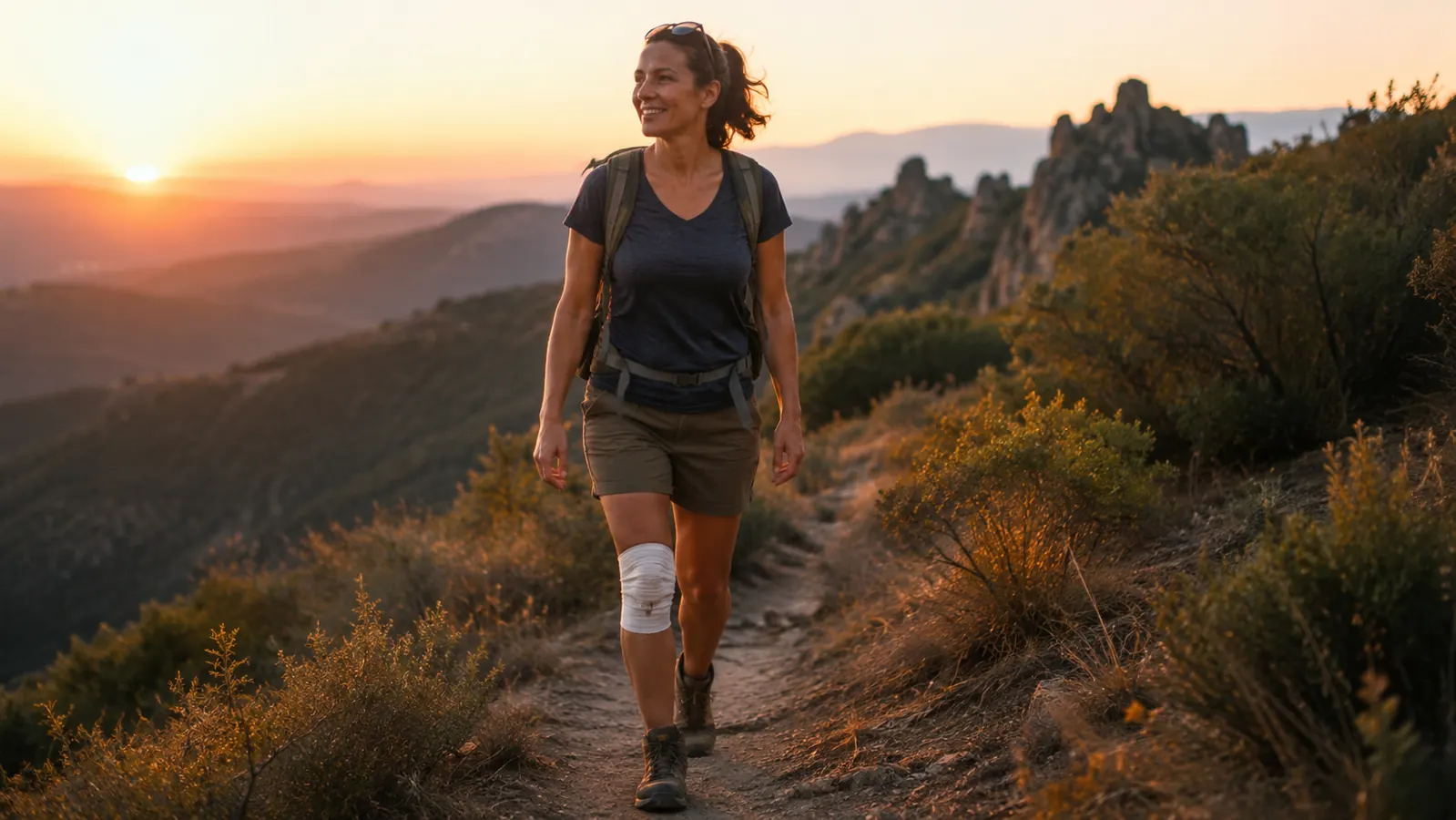
I sat there for maybe ten minutes total, cleaned up, wrapped, testing the knee by bending it a few times before I trusted it with my full weight again. Then I got up and finished the hike. Two more miles, slower than I'd planned, favoring the leg a little, but I finished it instead of doing the thing I actually dreaded in that first minute after the fall, which was hobbling back to the trailhead defeated and cutting the whole trip short over what turned out to be a scrape I could manage myself.
What Else Helps When You're Hiking Solo
Since that trip, I've added a couple habits that cost nothing extra. I tell someone my planned route and expected return time before I head out solo, even for a short loop. I keep the first aid kit in the same outer pocket of every pack I own so I'm never digging through the wrong compartment when it matters. And I check the kit every few months to swap out anything I've used up, because a half-restocked kit gives you false confidence right up until the moment it doesn't, which is exactly the moment you can least afford it.
What I'd Tell You If We Were Sitting at My Kitchen Table
If you asked me over coffee whether a first aid kit is worth the space it takes up in your pack, I'd tell you it's not really about the odds of something happening. It's about what your afternoon looks like on the day it does. Mine could have ended with a long, bloody limp back to the car and a ruined trip. Instead it cost me ten minutes on a rock and I finished the hike I came for. I don't think about that kit much when I'm packing now, it just goes in, same pocket, every time. But I think about that knee every time I zip my bag shut before a hike, and I'm glad I never talked myself out of carrying it.
Don't let a small injury end a trip you planned for months
It's a compact kit that earns its space in your pack the one time you actually need it. Pack it before your next hike, road trip, or flight.
Amazon Check Today's Price on Amazon →