
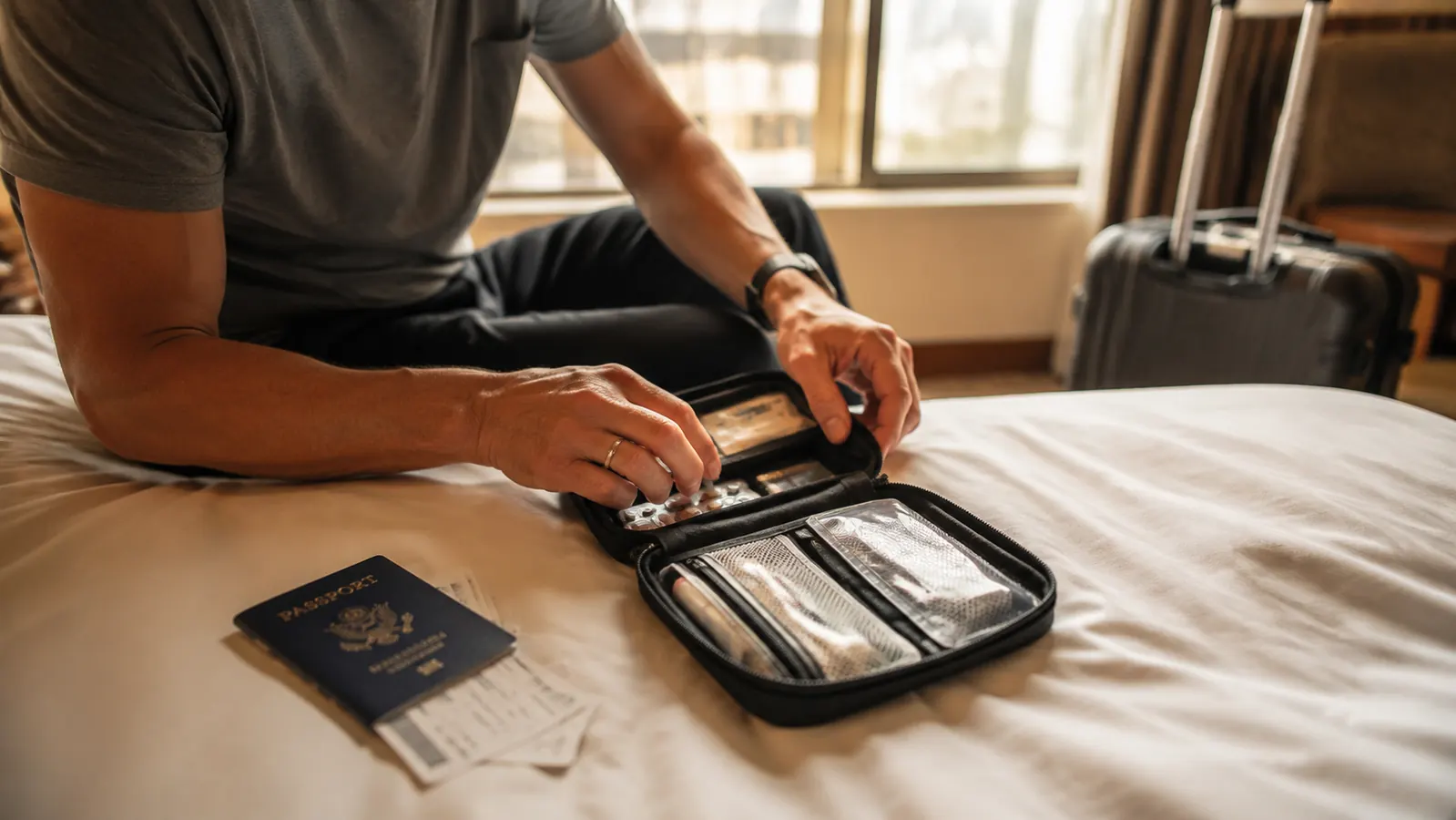
I've packed the First Aid Only 298 Piece kit on every trip since January, four total, and it's been opened for real reasons three separate times. Not "just in case" reasons. Actual bleeding, actual blisters, actual 2am hunting through zippered pockets for something that helps. My wife thought I was overpacking when I first tossed it in the car for a road trip to Nashville. She stopped saying that after the steak knife incident in our Airbnb kitchen.
This review isn't a spec sheet copied off the Amazon listing. It's what happened when I actually needed the thing, what was in the pouch when I reached for it, what worked, what I fumbled through, and what I've since added or swapped out because the stock kit came up short in a couple of specific ways.
The Quick Verdict
A genuinely well-organized starter kit that covers 90% of real travel mishaps out of the box. Deduct half a star for a couple of filler items and packaging that gets bulky if you don't repack it.
Amazon Check Today's Price →Still Traveling Without a Real First Aid Kit?
Most people find out they need one the hard way, usually in a hotel bathroom at midnight with nothing but a bar of soap. This is the kit I actually reach for.
Amazon Check Today's Price on Amazon →How I've Used It
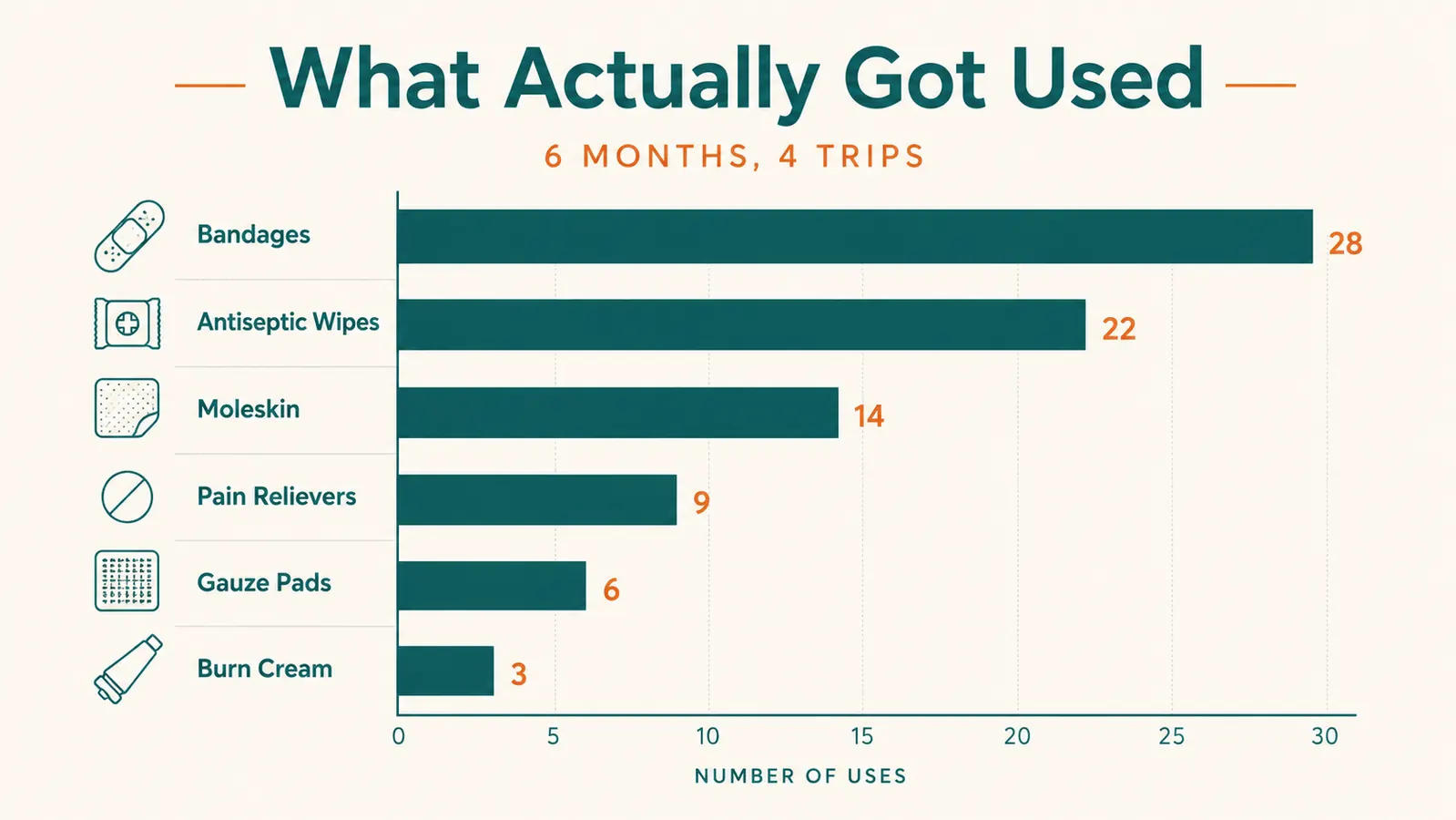
My test wasn't a lab. It was four real trips over six months: a week in Nashville with my wife and our 7-year-old, a work trip to Denver, a long weekend hiking outside Asheville, and a two-week stretch through Portugal and Spain. I threw the First Aid Only kit in a packing cube and made a rule for myself: if something came up that needed first aid, I had to use what was in this kit before reaching for anything else in the house or hotel, even if the hotel had its own supply at the front desk.
That rule got tested fast. Day three in Nashville, I was slicing limes for drinks and caught the side of my thumb with a steak knife that turned out to be sharper than it looked. Not stitches-level, but it bled enough that I needed more than a paper towel. I grabbed the kit off the kitchen counter, found the gauze pads and adhesive tape in about ten seconds because the compartments are labeled, and had it wrapped before my wife even got the first aid app pulled up on her phone. That ten seconds mattered. When you're standing over a sink with blood running down your wrist, digging through a loose ziplock bag of mismatched bandages is the last thing you want to be doing.
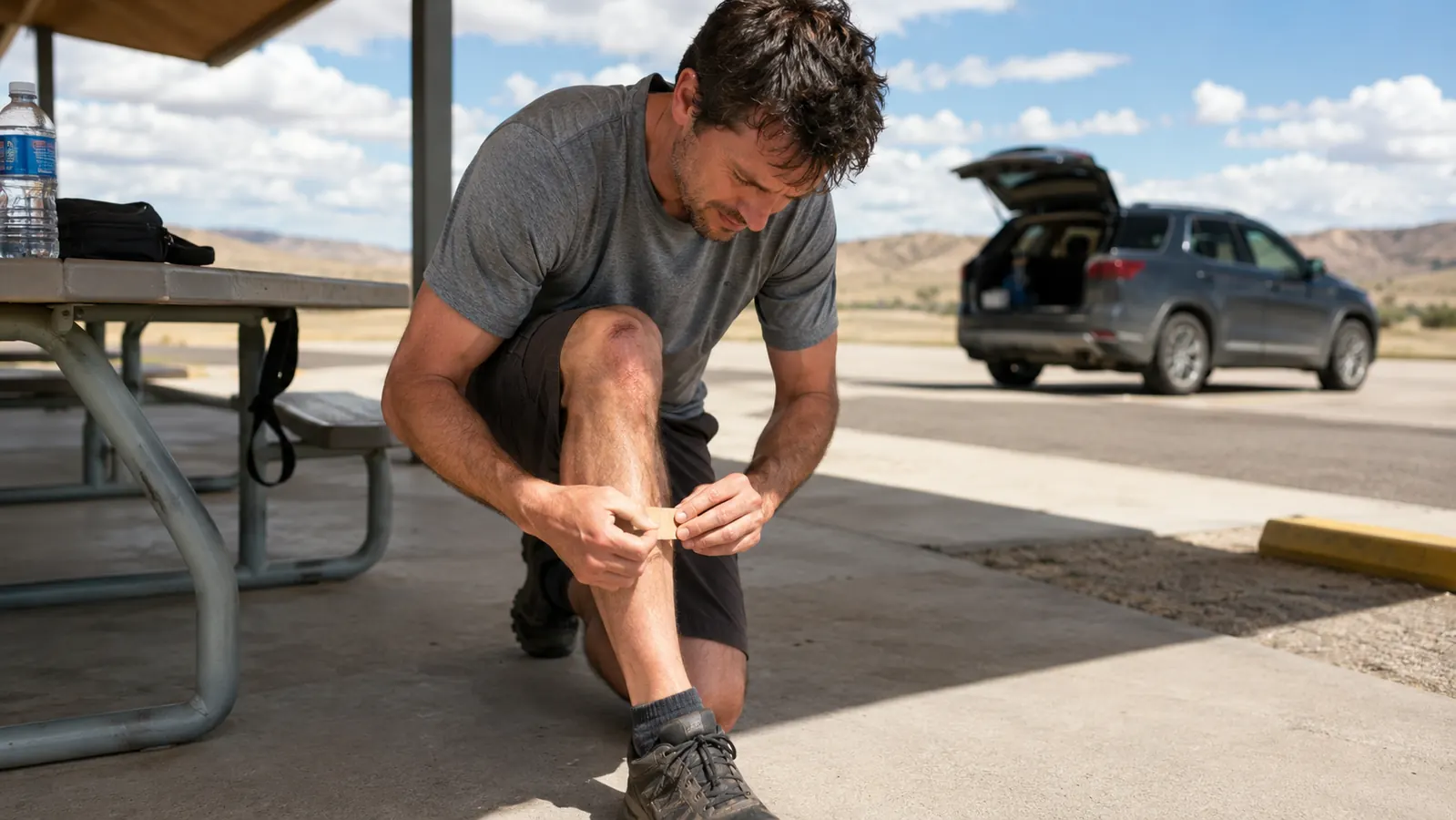
The other two real uses were smaller but told me more about day-to-day durability. A blister on my heel two days into the Portugal trip, the kind that shows up after a full day of cobblestone streets in shoes that felt broken in until they weren't, treated with the moleskin that comes tucked in the second layer. It's not a huge piece of moleskin, maybe enough for two applications, but it did the job and let me keep walking instead of retreating to the hotel for the rest of the night. And my daughter's scraped knee at a rest stop outside Knoxville, which needed an antiseptic wipe, a bandage, and a lot of reassurance that it wasn't going to hurt. That one wasn't dramatic, but it's exactly the kind of moment a travel first aid kit earns its keep on, the small stuff that would otherwise mean a frantic search for a gas station pharmacy aisle.
There's a fourth moment I almost forgot to mention because it wasn't dramatic at all: a headache during a layover in Denver that turned a three-hour delay into something tolerable instead of miserable. It sounds minor next to a bleeding thumb, but the ibuprofen packets tucked into the kit's front pocket got used more often across all four trips than anything else in the pouch. Small stuff adds up when you're the one who has to deal with it three time zones from your own medicine cabinet.
What's Actually in the 298 Pieces
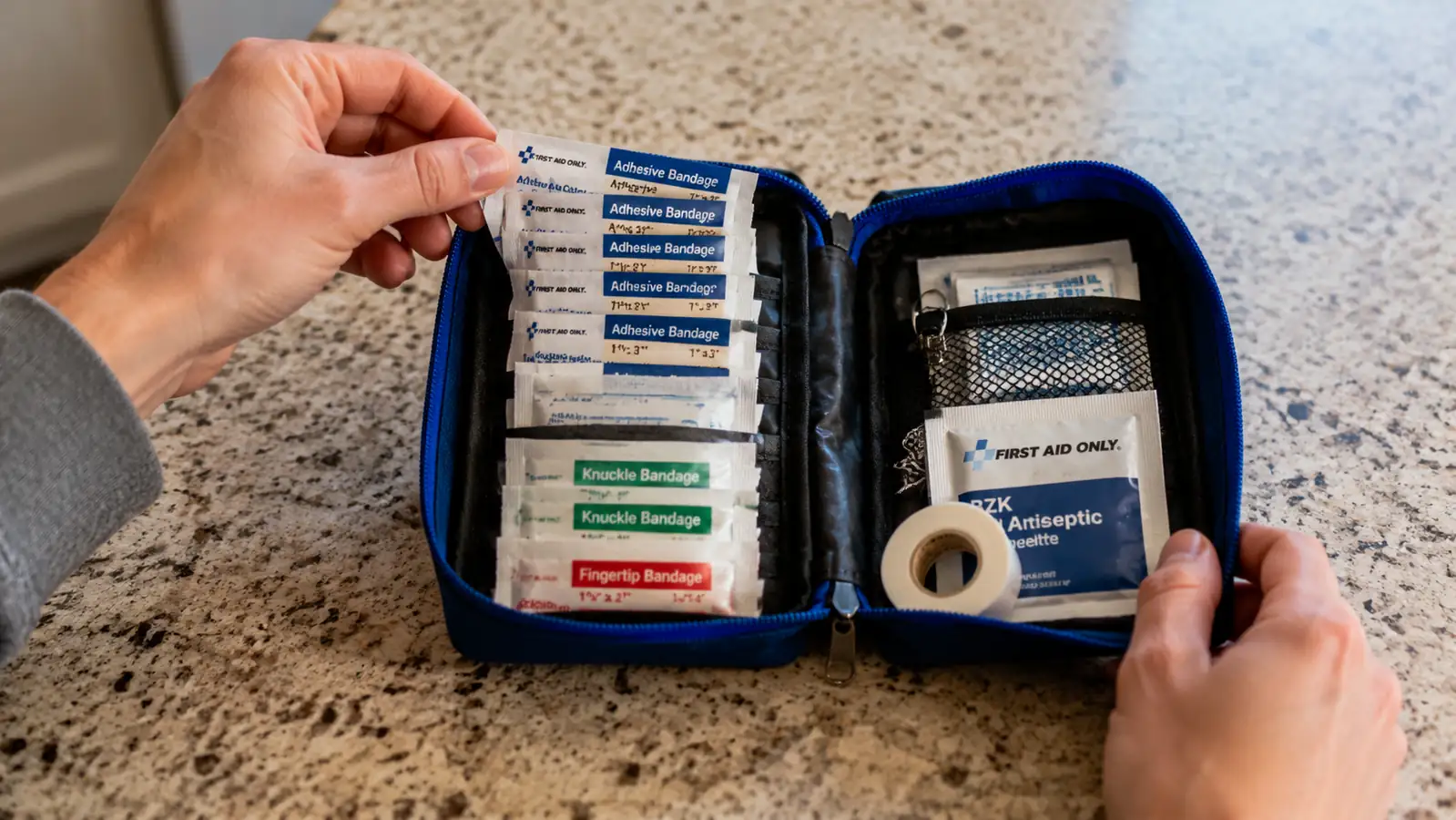
The number 298 sounds inflated until you realize it's counting individual bandages, wipes, and tablets rather than categories. Broken down, you're getting a solid range: adhesive bandages in several sizes, gauze pads and rolled gauze, adhesive tape, antiseptic wipes and ointment packets, a few packets of burn cream, moleskin for blisters, tweezers, small scissors, a couple of instant cold packs, and a scattering of over-the-counter tablets like ibuprofen and antihistamine. There's also a small emergency blanket folded into one of the side pockets, which I didn't expect and haven't needed, but I like knowing it's there.
The organization of the First Aid Only kit is the real selling point here, not the raw count. Everything sits in a soft zippered pouch with two folding panels, so you're not dumping a pile of loose bandages onto a hotel bed trying to find the one thing you need. When I cut my thumb, I didn't have to think. I unzipped, saw gauze on the left panel, tape on the right, done. Compare that to the shoebox of expired pharmacy purchases I used to keep in our hall closet before this kit, where finding a bandage meant sorting through half-used tubes of ointment from three summers ago.
Not every item pulls its weight. The cotton-tipped applicators felt like filler, I used them exactly zero times in six months. Same with a couple of the smaller adhesive strips that are too narrow for anything but a paper cut. If you're counting pieces to judge value, know that a chunk of the 298 is padding. I'd rather have gotten a slightly smaller total count with a bigger allocation of the stuff that actually gets used, gauze, moleskin, and burn cream specifically.
How It Held Up Over Time
The pouch itself is the part I worried about least and it's held up the best. Six months of being crammed into packing cubes, checked bags, and a hiking daypack, and the zipper still runs smooth and the seams haven't started to fray. I expected the Velcro closure on the internal flap to wear out first, since that's usually the first thing to go on soft-sided organizers. It hasn't. The exterior fabric has picked up a little grime from being tossed on airport floors and car trunks, but nothing a wipe-down hasn't fixed.
What did wear down was the supply itself, which is obvious but worth saying: after the Portugal trip, I was down to two adhesive bandages and one burn cream packet. This isn't a kit you buy once and forget. I've had to restock the consumables about every three months with real use, which cost me maybe six dollars at a pharmacy each time, buying loose bandages and a couple of antiseptic wipe packets to top it back off. Budget for that if you're the type of traveler who actually uses what you pack rather than the type who packs it and never opens the zipper.
One thing I didn't expect: a couple of the ointment packets, the antibiotic ones specifically, had started to feel slightly hardened by month five. Nothing unusable, but a reminder that these kits have a shelf life and heat exposure in a car trunk during a Tennessee summer probably didn't help. If your kit spends a lot of time in a hot car, I'd check the ointment packets every few months rather than assuming they'll hold indefinitely.
Who This Kit Is Best For
This is the right kit for someone who travels enough that "eventually something happens" isn't hypothetical. Families with young kids especially, because scraped knees and mystery rashes show up on a schedule of their own, usually at the worst possible moment, a rest stop, a beach, a rental car with no glovebox supplies. It's also a good fit for road trippers and car campers who want something more substantial than a glovebox tin, and for anyone who's ever stood in a foreign pharmacy trying to mime "do you have gauze" to a confused clerk who doesn't speak your language and is losing patience with the charades.
It's also a smart pickup for the person who travels for work and stays in a rotating cast of hotels and Airbnbs. You never know what a rental kitchen's knife situation looks like, and hotel front desks are hit or miss on having so much as a bandage behind the counter. Having your own kit means you're not relying on a stranger's stock at 11pm. I keep a spare pack of antihistamine tablets in the side pocket for exactly this reason, since a hotel minibar has never once bailed me out of a surprise allergy flare-up in a city where I don't know the local pharmacy brands.
What I Liked
- Compartments are actually labeled and logical, no digging through a loose pile
- Covers the realistic 90%, cuts, blisters, minor burns, headaches, not exotic emergencies
- Pouch held up to six months of packing cube abuse with zero fraying
- Compact enough to not feel like dead weight in a carry-on
- Restocking individual items is cheap and easy at any pharmacy
Where It Falls Short
- A noticeable chunk of the 298 pieces is filler you'll rarely touch
- Not a substitute for real emergency supplies if you're doing serious backcountry travel
- Ointment packets showed early signs of degrading by month five in hot storage
- You will need to restock every few months if you actually use it
298 pieces sounds like a marketing number until you're bleeding on a kitchen counter and you just need the gauze to be exactly where the label says it is.
Tradeoffs I Noticed
The biggest tradeoff is scope. This kit is built for the common stuff, and it does that well. It is not built for anything beyond that. There's no tourniquet, no splint material, nothing for a serious wound. If your travel involves remote hiking, backcountry camping, or anything without quick access to help, you'll want to supplement this with a more advanced trauma kit, not replace it. I added a small tourniquet and a compression bandage to my own pouch before the Asheville hiking trip specifically because the stock kit didn't cover that scenario, and I'd rather carry the extra two ounces than not have it.
I also considered building my own kit from scratch before this trip cycle started, buying everything separately from a pharmacy and packing it into a pouch myself. I priced it out. By the time I bought a comparable range of bandages, gauze, tape, antiseptic, and a pouch to hold it all, I was within a couple dollars of just buying this kit pre-assembled, and I'd spent an evening doing something that took the manufacturer an assembly line to do properly. Unless you have very specific needs, like a prescription medication that has to ride along or a particular brand of antihistamine your family uses, the pre-made route wins on time alone.
Size is a minor tradeoff too. It's not bulky compared to a full home first aid kit, but it's noticeably bigger than the tiny keychain-style kits some ultralight travelers prefer. I've never had it push me over a carry-on weight limit, but it does take up more space in a packing cube than I expected the first time I used it. If packing light is your top priority every single trip, that extra bulk is worth weighing against how often you actually expect to use it.
Who Should Skip It
If you're an ultralight backpacker counting grams, this kit is heavier and bulkier than the minimalist pouches built specifically for thru-hiking. You'd be carrying items you'll never use, like the scissors and some of the larger gauze rolls, when a stripped-down version would do the job at a fraction of the weight. And if you're already carrying a serious wilderness medicine kit for backcountry trips, this is redundant, you don't need both riding in the same pack.
Also skip it if you're the type who never actually uses a first aid kit and just wants a checkbox item buried in a closet. A smaller, cheaper option would serve the same purpose without the extra bulk, since you'll likely never restock it anyway. This kit rewards people who'll actually open it, use what's inside, and replace it when it runs low, not people who want a set-and-forget item that sits in a drawer for three years.
Don't Wait for the Next Scrape to Find Out You Need This
Four trips, three real uses, zero regrets about the space it takes up. Grab it before your next flight, not after you need it.
Amazon Check Today's Price on Amazon →