
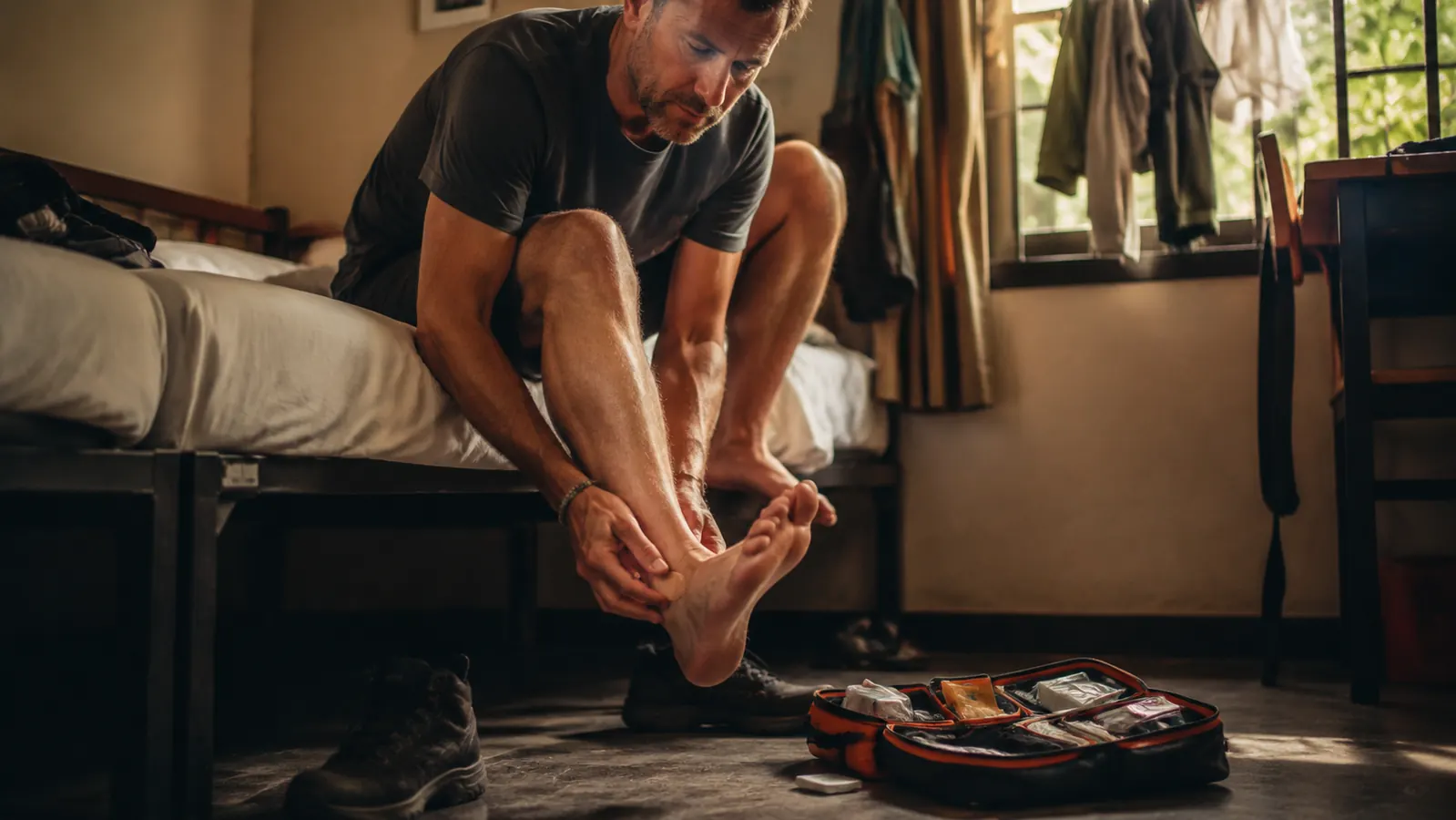
Nobody plans for the blister that shows up on day two of a walking tour, or the paper cut from a boarding pass that somehow won't stop bleeding, or the stomach thing that hits after street food that tasted fine at the time. But if you travel enough, you learn these things aren't rare. They're routine. The question isn't whether something small will go wrong on a trip, it's whether you'll have what you need in your bag when it does, or whether you'll be standing in a pharmacy in a country where you can't read the labels, pointing at shelves and hoping, instead of pulling out the compact first aid kit already sitting in your carry-on.
I've had a version of this happen on almost every trip longer than five days. A blister in Lisbon that turned a nine-mile walking day into a limp back to the hotel. A kitchen burn from a hostel stove in Portugal that I ignored for two days before it started actually hurting. A stomach bug in Oaxaca that hit at 2am with zero pharmacies open and zero Spanish vocabulary for what I needed. None of these were trip-ending emergencies. All of them would have been shorter, less miserable, and cheaper to deal with if I'd had the right supplies within arm's reach instead of hoping a hotel front desk had something buried in a drawer.
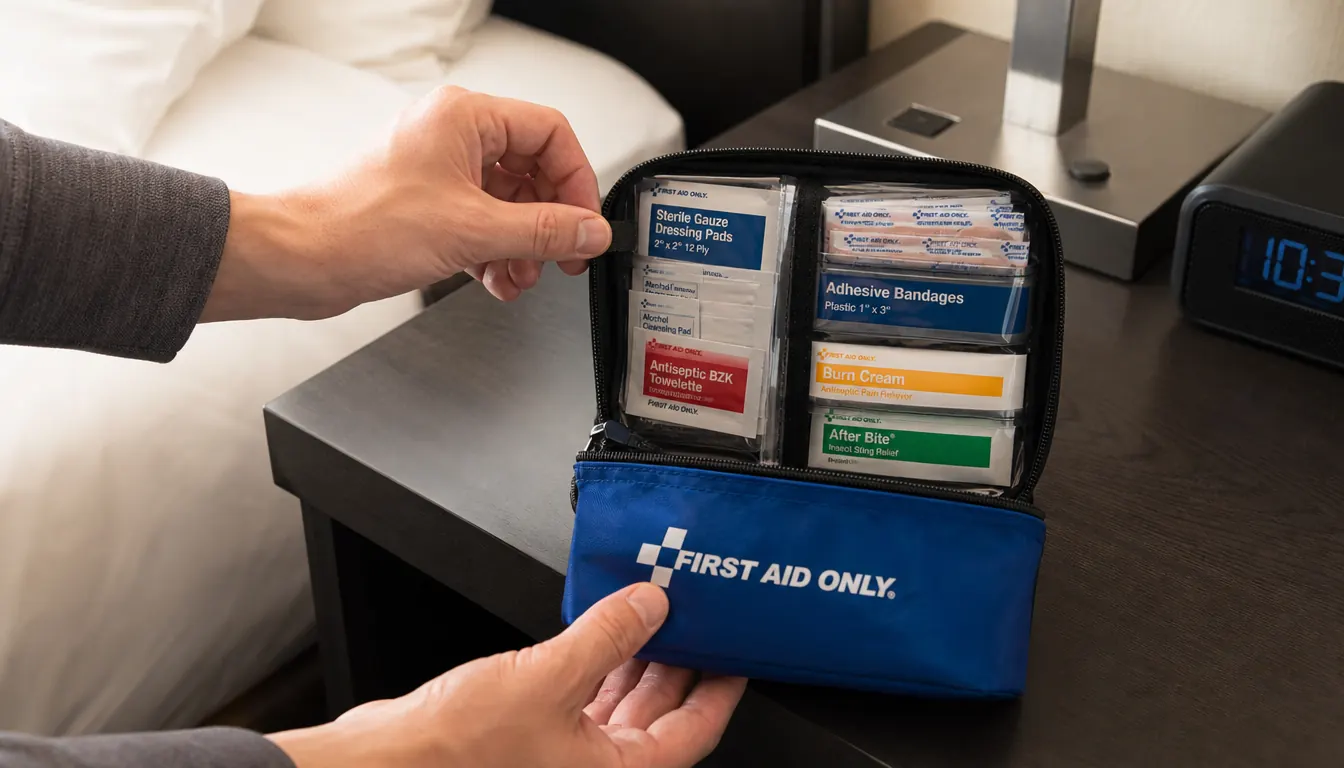
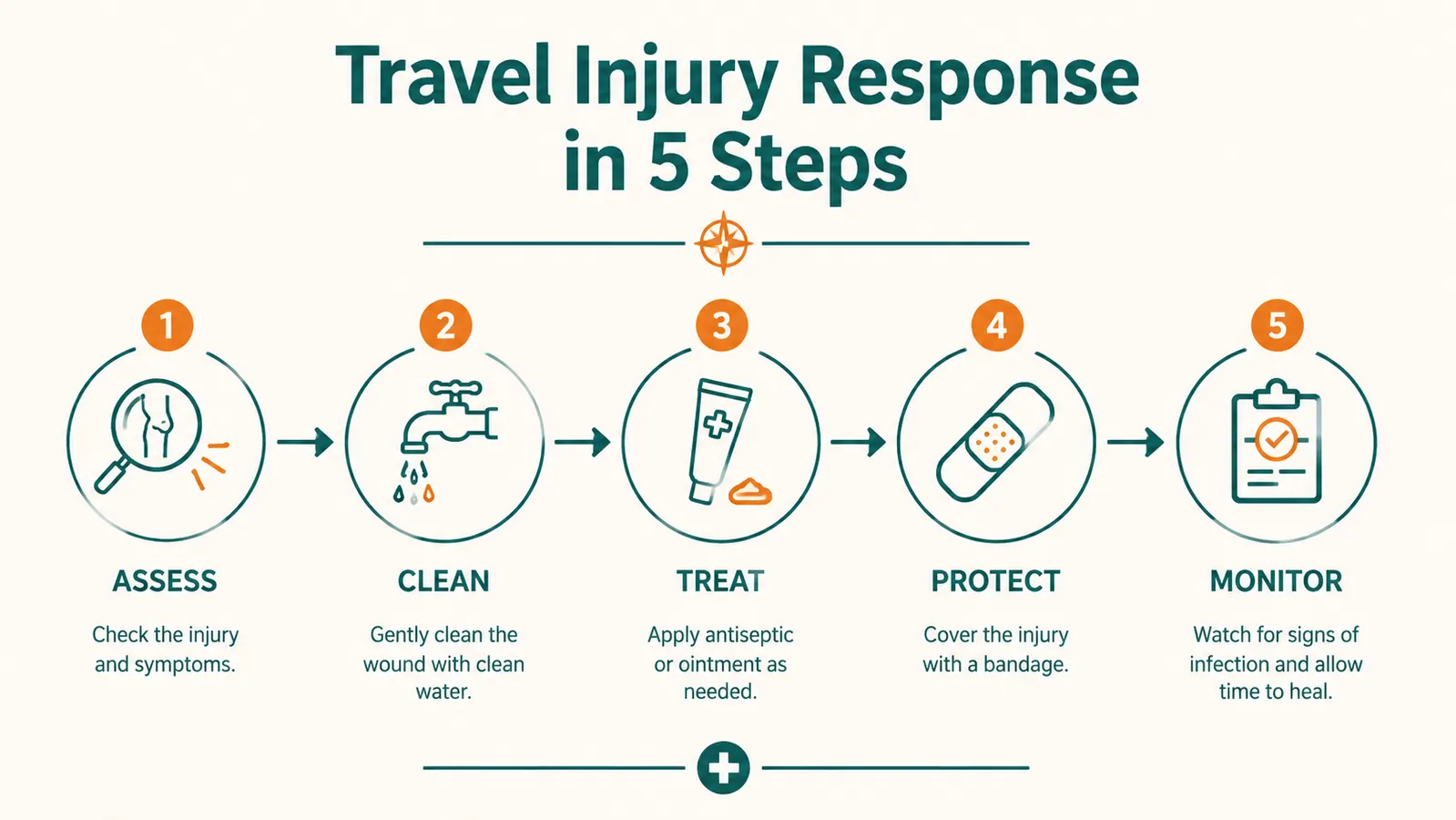
This guide is the system I actually use. Not a theoretical first aid course, just the five things I do, in order, every time something happens on the road, and the specific items from a basic kit that make each step possible. I carry the First Aid Only 298 Piece kit in the bottom of my carry-on. It's compact enough that I forget it's there until I need it, which is exactly how a travel first aid kit should work.
The kit that turns a travel mishap into a two-minute fix
298 pieces, packed into a pouch smaller than a paperback, built for exactly the situations below. Check today's price and see what's actually inside.
Amazon Check Today's Price on Amazon →Step 1: Assess before you treat anything
The instinct when something happens, a fall on cobblestones, a burn from a hostel kettle, a bee sting at an outdoor market, is to react fast. Slow down for ten seconds first. Is this something you can handle yourself in the next five minutes, or does it need a clinic? Heavy bleeding that doesn't slow with direct pressure, a joint that looks wrong, chest pain, trouble breathing, a burn bigger than your palm. Those go to a pharmacist or urgent care, no exceptions, kit or no kit.
Almost everything else, the stuff that actually happens on 95% of trips, is small enough to handle yourself if you have the right supplies in reach. Blisters, shallow cuts, scrapes from a fall, minor burns, bug bites, headaches, upset stomachs, mild sunburn. That's the category this whole guide is built around, and it's the category a compact kit is designed to solve.
I keep the kit zipped in the same pocket every trip, so I'm not digging through three days of dirty laundry to find it at 11pm in a hotel room. That consistency matters more than people think. A first aid kit you can't find fast is barely better than no kit at all.
A useful habit here is doing a quick mental triage checklist before you touch anything: is there heavy bleeding, is the person conscious and breathing normally, is there any sign of a break or dislocation. If the answer to all three is no, you're almost certainly in self-treat territory. I picked this up from a nurse I traveled with years ago, and it's stuck with me since. It takes maybe five seconds once it's a habit, and it keeps you from either overreacting to a scraped knee or underreacting to something that actually needs a hospital.
Step 2: Clean the area before you touch it with anything else
This is the step people skip, and it's the one that actually prevents the trip-ruining outcome, which isn't the cut itself, it's the infection that shows up two days later in a country where you don't know a doctor. Before any bandage or ointment goes on, the area needs to be clean.
The First Aid Only kit includes alcohol prep pads and antiseptic wipes for exactly this. I wipe around the wound first, not directly into an open cut with straight alcohol, that stings for no benefit, but the surrounding skin gets cleaned so you're not sealing dirt and bacteria under a bandage. If it's a scrape with visible grit, I'll rinse with bottled water first, then clean the surrounding skin, then move to the next step.
For blisters specifically, don't pop them if you can avoid it. Intact skin is the best barrier you have against infection. Clean around it, and go straight to protecting it, which is step three. If a blister has already popped on its own mid-hike, which happens more than you'd think, clean it the same way you would any open wound, then treat it a little more carefully in the next step since the skin barrier is already gone.
Water quality matters here too. In places where I wouldn't drink the tap water, I don't use it to rinse a wound either. I'll use bottled or filtered water instead, or lean more heavily on the antiseptic wipes if that's all I've got. It's a small detail that's easy to overlook when you're focused on the injury itself, but the whole point of cleaning a wound is to reduce what's introduced to it, not add something new.
Step 3: Treat with the smallest intervention that works
This is where the kit earns its space in your bag. For cuts and scrapes, a thin layer of antibiotic ointment (included in the kit) and a bandage sized to the wound, not bigger than it needs to be. For blisters, moleskin or a blister-specific pad placed around the hot spot, not directly on the broken skin, so it takes the pressure off without adding friction. For minor burns, cool the area first if you have access to water, then a non-stick pad, never butter or toothpaste, that's a myth that still somehow travels well.
For bug bites and stings, the kit's antihistamine tablets handle the itch and swelling for most people. For headaches, muscle soreness from a long flight, or minor fever, the pain relief tablets included cover the basics without needing to find a pharmacy that's open. I've used every one of these categories on different trips, usually within the first 48 hours of arriving somewhere new, because that's when your body is adjusting to new food, new walking distances, and new sleep schedules all at once.
For stomach issues specifically, and this one comes up more than people admit, the anti-diarrheal and antacid tablets in a good travel kit are worth their weight in gold. I've watched a travel companion go from doubled-over miserable to functional in under an hour because we had the right tablet instead of spending a half day hunting for a farmacia in a town where nothing was open past 6pm. It's a small thing until you're the one lying on a bathroom floor at a hostel with no idea where the nearest pharmacy is, and then it's the only thing that matters.
Step 4: Protect it for the rest of the day, not just the moment
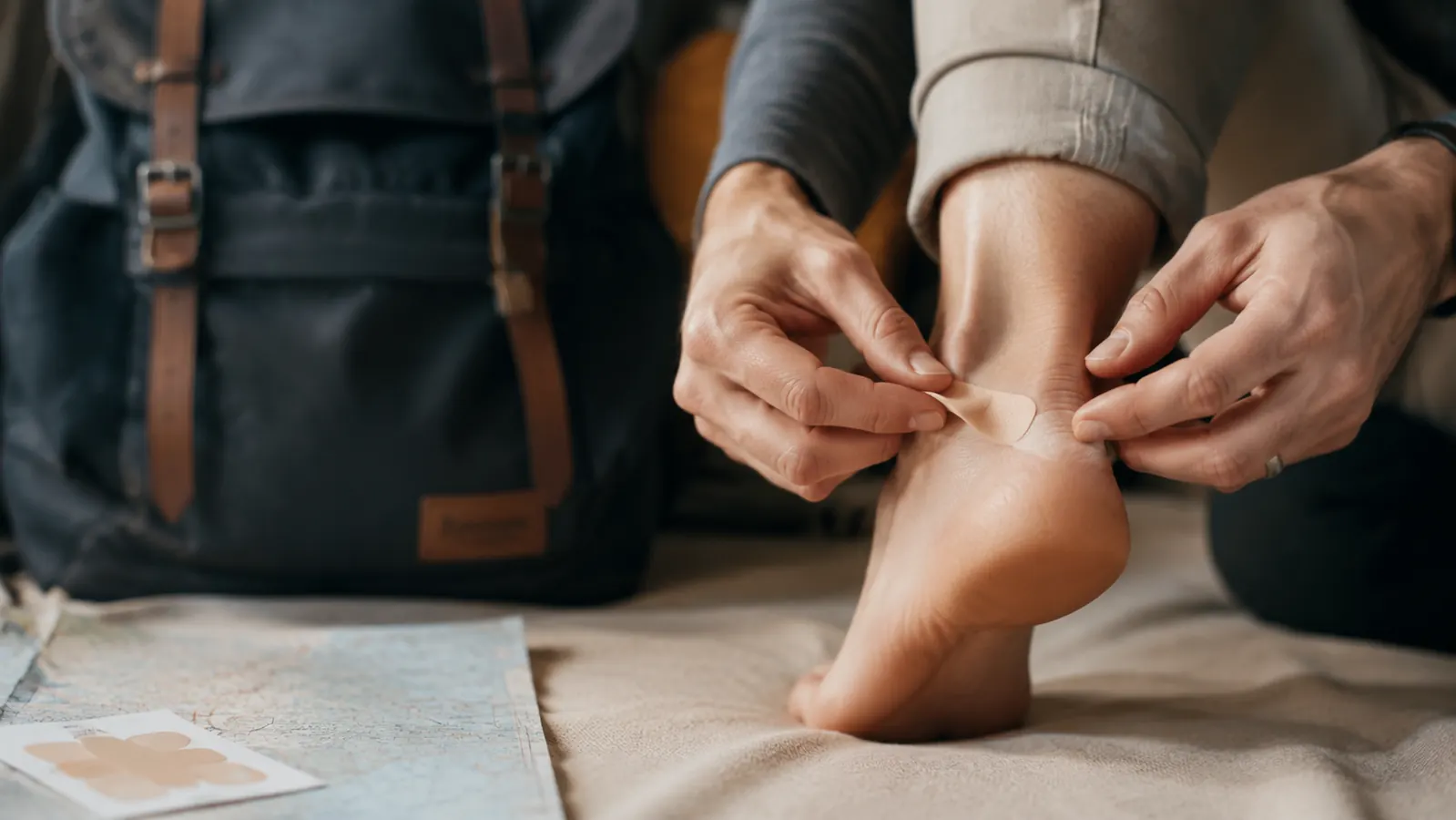
A lot of travel injuries get re-injured because people treat them once in the morning and forget about them for the next twelve hours of walking, swimming, or sightseeing. A blister that's protected at 8am needs to still be protected at 4pm after six miles on cobblestones. This is where having enough supplies, not just one bandage, matters. The 298-piece count sounds like overkill until you're on day nine of a three-week trip and you're grateful you didn't run out on day four.
I re-check bandages at the end of each day. If a bandage got wet, sweaty, or came loose, it comes off and gets replaced with a clean one, not layered over the old one. For burns and sunburn, I keep reapplying the cooling gel or aloe through the day rather than treating it once and moving on. Skin injuries in hot climates or high altitude get worse fast if they're ignored, and a few extra minutes of maintenance during the day prevents a much bigger problem by evening.
This is also where packing a few extras beyond the kit itself pays off. I always throw in a small tube of moleskin and a spare roll of medical tape, since those two items get used up faster than anything else on a trip with a lot of walking. The kit's own supply is generous, but if you're hiking daily or breaking in new shoes, you'll go through blister care faster than you'd expect.
What Else Helps
A first aid kit handles the physical side, but a few habits make it work better. I keep a small printed card in the kit with any allergies or medications for myself and whoever I'm traveling with, since phones die and language barriers happen. I also research, before I leave, whether my destination has a 24-hour pharmacy near where I'm staying, just so I know where the backup is if something's bigger than the kit can handle. And I replace anything I use as soon as I'm home, not the night before the next trip, because that's exactly when you forget.
One thing I've changed over the years is where I pack the kit. It used to live in checked luggage, which is useless the moment you need it on a layover or the first night before your bag arrives. Now it's always in the carry-on, in the same pocket, every single trip. I've also started keeping a mini version, just a few bandages, antiseptic wipes, and blister pads, in whatever daypack I'm carrying that day, so I'm not running back to the hotel for a paper cut.
I also tell anyone I'm traveling with where the kit lives, on day one, before anything happens. It sounds obvious, but on group trips it's usually one person who packed the first aid supplies, and if that person is asleep or off exploring solo when someone else needs a bandage, the kit is useless if nobody else knows where to find it. Two minutes of telling your travel companions where it is saves a lot of scrambling later.
Step 5: Know when to stop treating it yourself
The last step is the most important one. A kit is for the small stuff. If a wound isn't closing after a day or two, if there's spreading redness or warmth around a cut, if a fever doesn't break with the tablets in the kit, if stomach symptoms last more than 48 hours or come with blood, that's the line where self-treatment stops and you find a clinic. I've had to do this exactly once, on a trip to a rural area where a cut got infected faster than expected because of humidity. The kit bought me a day to get to a pharmacist calmly instead of panicking on day one, but it wasn't a substitute for actual care once it was clear the wound needed more than a bandage.
That's really the honest way to think about any travel first aid kit. It's not there to replace medical care. It's there to handle the 90% of small stuff so you're not derailing a trip, or your wallet, over a blister or a headache, and so you recognize quickly when something actually needs more than what's in the pouch.
The kit doesn't need to save your trip from disaster. It just needs to keep the small stuff small, so it never gets the chance to become a disaster in the first place.
Don't wait until you're standing in a foreign pharmacy to wish you'd packed this
The First Aid Only 298 Piece kit covers every step above in one pouch that fits in a jacket pocket. See today's price on Amazon before your next trip.
Amazon Check Today's Price on Amazon →