
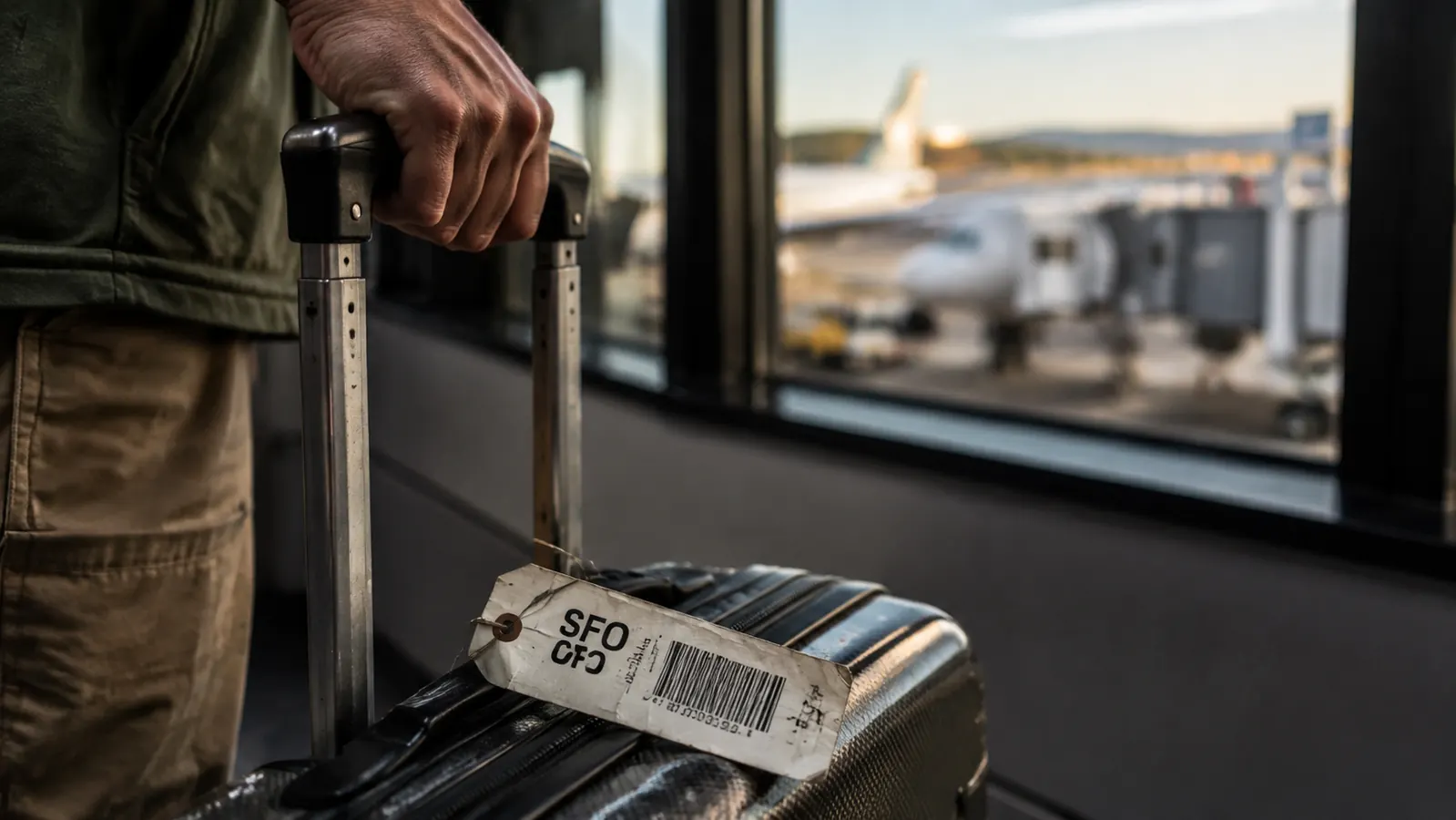
I want to get one thing out of the way first. Nobody sent me this luggage tag 3-pack. I didn't get it for free in exchange for a nice write-up, and there's no brand rep checking my drafts before this goes live. I bought these on Amazon myself in March of last year because my old paper tags had disintegrated somewhere between Lisbon and home, and I needed something fast before a trip to Nashville four days later. A year of actual travel later, here's the version of this review nobody pays for: the one where I tell you what's mediocre about it too.
This isn't a takedown. I still use these tags. But 'honest' means I'm not going to pretend all three held up the same, and I'm not going to pretend the privacy flap is as private as the packaging implies. Let's get into it.
The Quick Verdict
After a year of real trips, these luggage tags do the one job that matters: they make your bag easy to spot and easy to return. The write-on cards and privacy flap are genuinely useful. The stock loops are the weak point, so plan to swap them for steel loops if you check bags often. For the price, they are still an easy yes.
Amazon Check Today's Price →See the exact 3-pack I've been using for a year
Check today's price and current availability on Amazon before you keep reading.
Amazon Check Today's Price on Amazon →What Nobody Tells You in the Five-Star Reviews
Scroll through the reviews on the Amazon listing and you'll see a wall of five stars. Most of them are from people who bought the tags, clipped them on, and never flew again before writing the review. That's not a knock on those buyers, it's just the nature of how reviews get written: right after unboxing, when everything is shiny and new. A tag that looks great in your kitchen on day one tells you almost nothing about how it survives a baggage handler at Newark throwing your suitcase eight feet onto a conveyor belt.
What those early reviews don't cover, and what I can tell you after a year, is that the plastic loop connecting the tag to the handle is the actual weak point, not the tag body itself. Mine are still legible. The loops are where things start to fail.
The Loop Problem
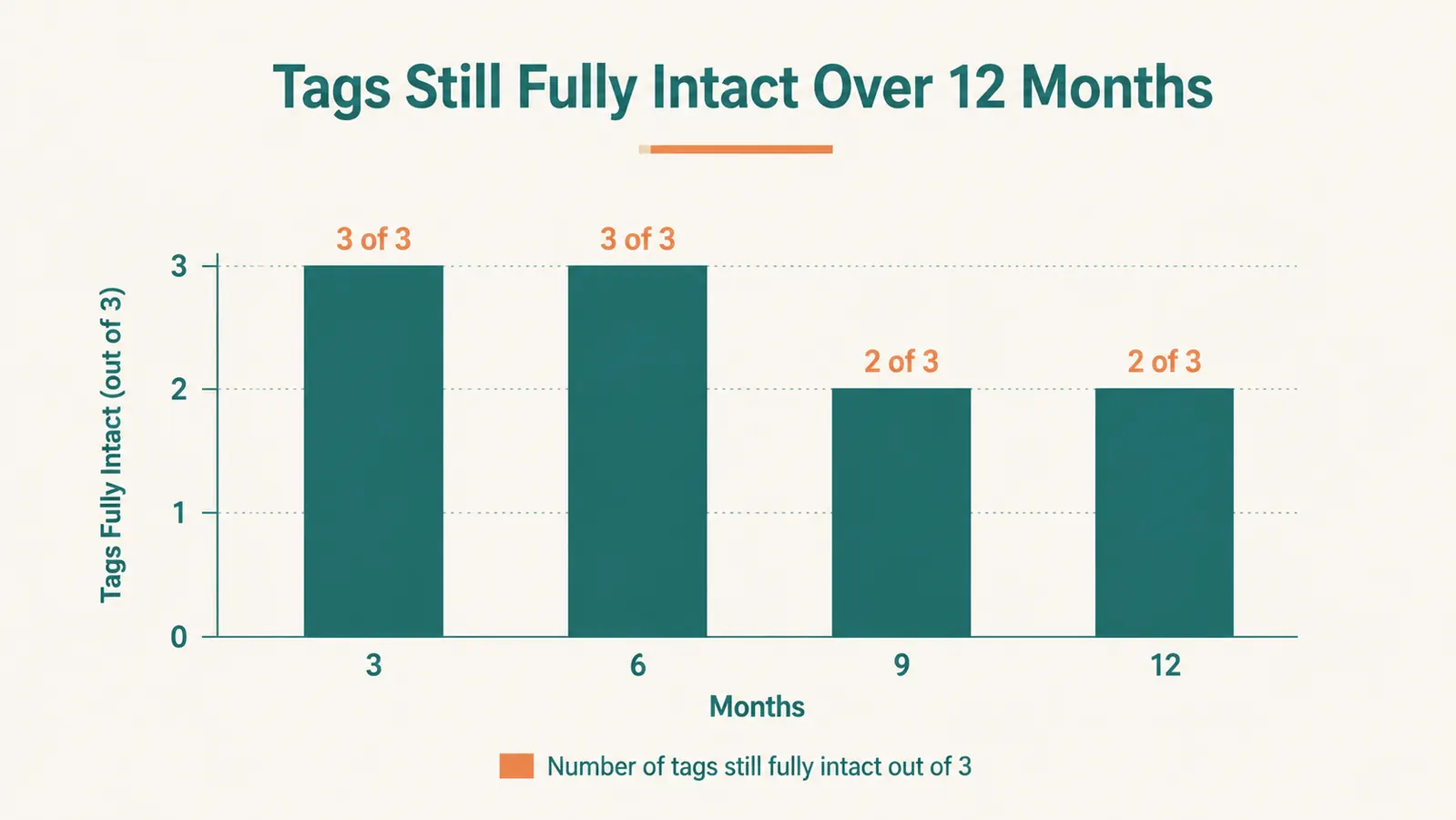
Two of my three tags are still on the original plastic loop that came in the package. The third snapped at month nine, on a trip back from a work conference in Columbus, and I only noticed because the tag was rattling loose in my carry-on backpack pocket where I'd tossed it after checking a bag. If that loop had broken while the tag was actually clipped to a checked bag, I wouldn't have known until baggage claim, and by then it's too late to matter.
I've since started replacing the stock loops with small steel key rings, the kind you'd find in a hardware store multi-pack for a few dollars. It's a five-minute fix and honestly should have been how the tags shipped in the first place. If you buy these, do this on day one. Don't wait for month nine like I did.
The Privacy Flap: Mostly Marketing
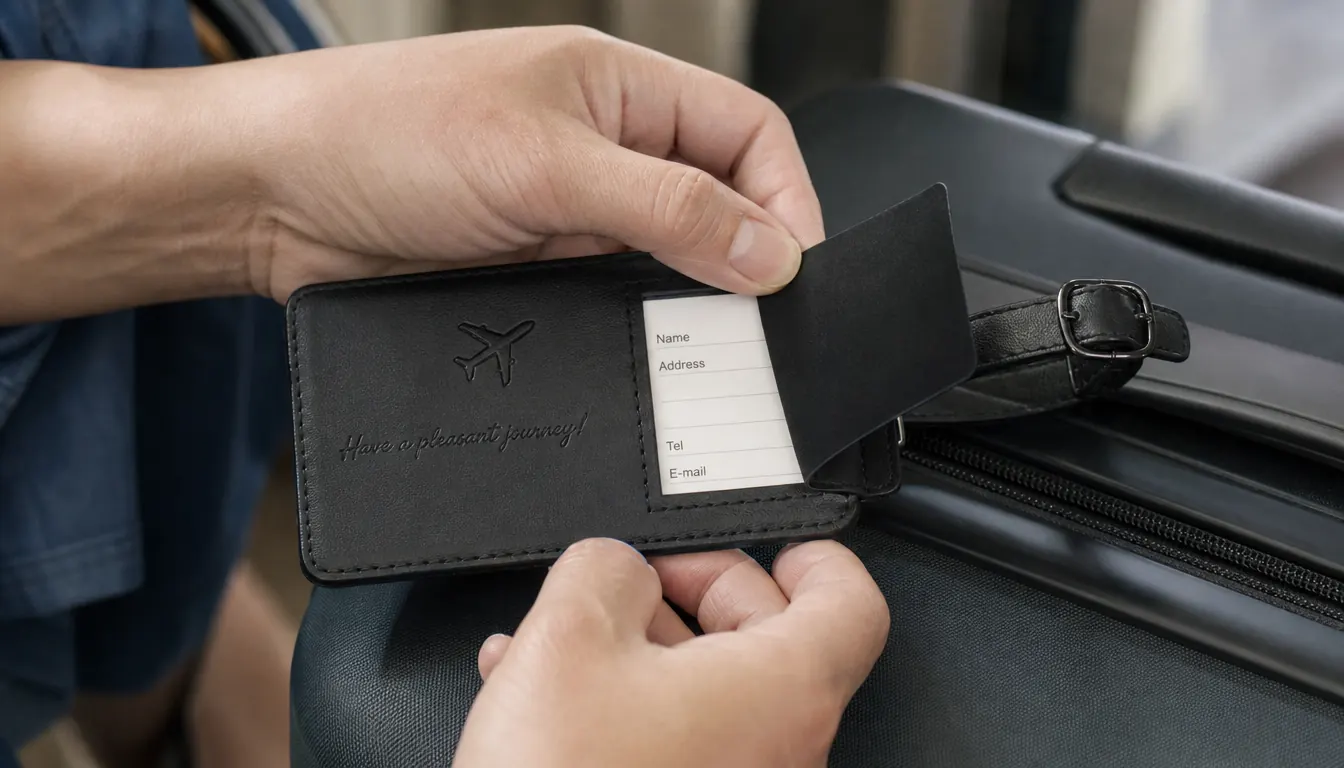
The listing leans hard on the privacy angle, the idea that a flap covers your name and address so strangers at baggage claim can't casually read your personal information off your suitcase. In practice, the flap is a thin snap-down cover, and it does exactly one job: it stops someone glancing at your bag from a few feet away from seeing your info. It does not stop someone who actually wants your information and is willing to flip the flap open, which takes about one second and requires no tools.
I don't think this is a dealbreaker. I just think the marketing oversells what 'privacy' means here. The real value isn't security, it's that your name and number aren't broadcast to every person walking past the carousel. If you're hoping this tag hides your address from a determined bad actor standing right next to your bag, it won't. Nothing at this price point will.
How I Actually Tested This, Not Just Wore It
A lot of luggage tag reviews boil down to 'I clipped it on and it stayed on,' which tells you almost nothing. Here's what I actually did differently. I rotated all three tags across three different bags, a hard-shell spinner, a soft duffel, and a backpack, on purpose, because each one abuses a tag differently. The hard-shell spinner gets tossed onto conveyor belts and slides through baggage systems where the tag catches on metal edges. The duffel gets crushed under other bags in an overhead bin. The backpack takes the least abuse but gets snagged on zipper pulls in crowded overhead compartments.
I also deliberately left one tag clipped to the hard-shell suitcase that lives in my garage between trips, uncovered, so I could see how much a full year of temperature swings and occasional direct sun through a window would do to the plastic on its own, apart from the wear from actual travel. That's the tag that yellowed the most. The two that traveled the most and sat in a closet the rest of the time actually held their color better than the one that just sat in the garage.
That surprised me. I expected travel wear to be the main driver of degradation. It turns out ambient UV exposure while just sitting around does more damage to the plastic than the actual friction of getting thrown around by TSA and ground crews. If you store your suitcase somewhere with a window, that's worth knowing.
What I Actually Write on the Insert Card
This took me two tries to get right, and it's the kind of detail that never shows up in a listing description. My first instinct was to write my full home address on the card, the way you'd address an envelope. Bad idea. If a bag genuinely gets lost and someone unscrupulous finds it before the airline does, you've just told a stranger exactly when your house is empty.
What I write now: my first name, my cell number, and the word 'traveling' with no city listed. No home address. No last name. If airline staff need more, they scan the bag tag barcode from check-in, which is the actual system that gets lost bags back to you, not the little paper card in this kind of tag. The tag is a backup for a human who finds your bag off the belt, not the primary recovery method. Once I understood that, I stopped over-engineering what I wrote on the card.
The One Time It Actually Mattered
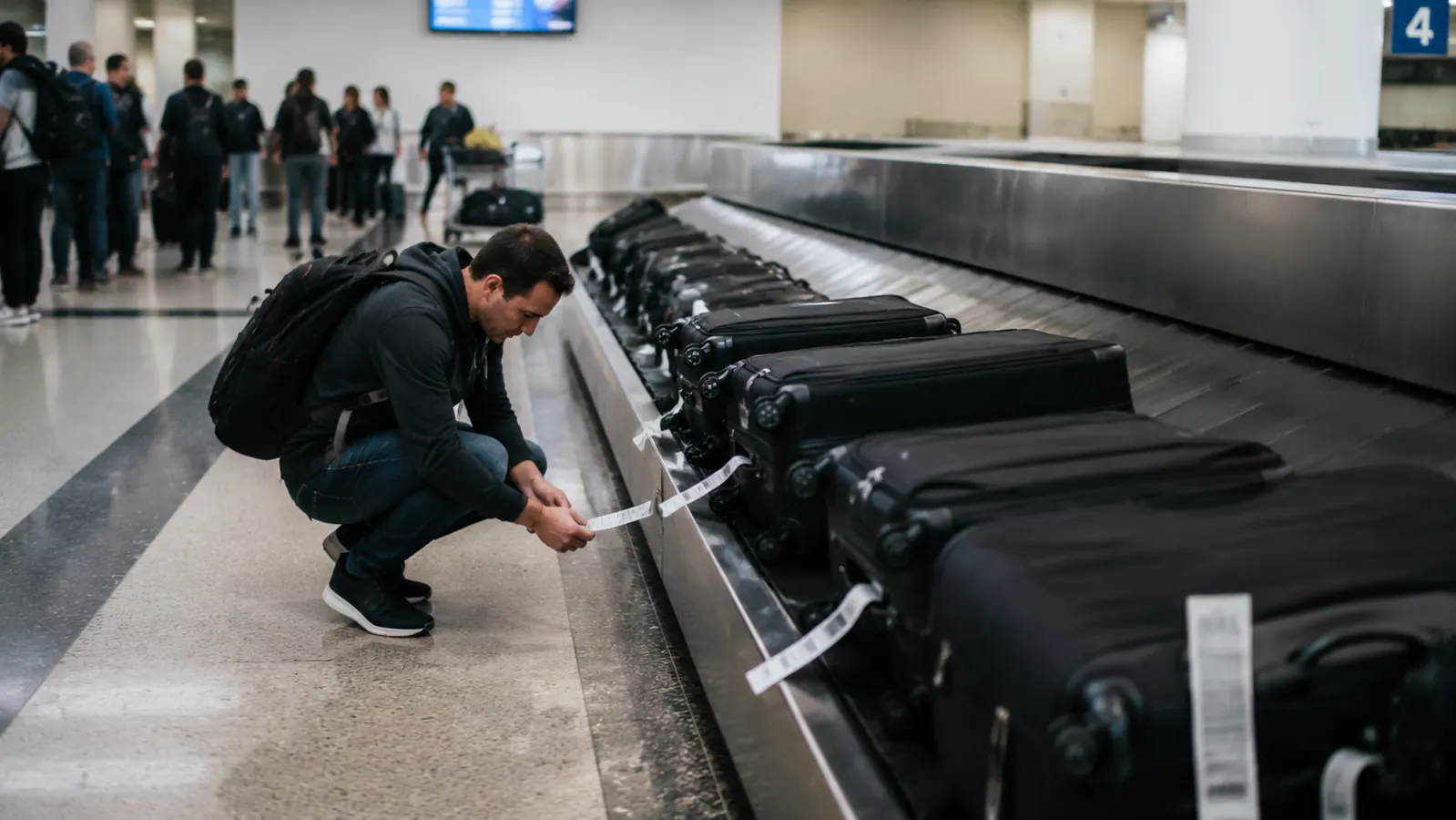
I flew Phoenix to Sacramento in October with a connection in Vegas, and my duffel bag ended up on the wrong cart at the Vegas gate, so it flew out an hour after I did on a different flight entirely. When it finally showed up, the ground crew called the number on my luggage tag directly instead of waiting for me to file a claim at the counter, because the barcode scan was backed up and my tag was faster to check. I had a bag back in my hands about ninety minutes sooner than the couple next to me at the claim counter who were filing paperwork for their identical missing suitcase with nothing but a barcode to go on.
That's the honest case for these tags. Not that they're rugged or that the privacy flap is bulletproof. It's that a cheap backup with your real contact info on it occasionally saves you an hour of standing in a claims line, and that hour is worth more to me than what I paid for the whole pack.
The tag isn't what gets your bag found. It's what gets your bag back to you an hour faster once someone already has it.
Where the Value Actually Falls Off
By month twelve, all three tags still show their text clearly, which is more than I can say for the paper airline tags I used to rely on. But the plastic on two of them has gone slightly cloudy, the kind of UV haze you get from a bag that spends a lot of time on a tarmac in direct sun. It's cosmetic, not functional, the writing's still readable, but it does look like something that's been through a year rather than something fresh out of the box.
The clips themselves have held their tension. None of the three has gone loose or spun freely on the handle, which was actually my biggest worry going in. So the core mechanism works. It's the accessory hardware, that thin plastic loop, that's the part I'd flag to anyone buying these expecting a full year of zero maintenance.
What I Considered Instead
Before settling on this 3-pack, I looked at two other routes. The first was leather luggage tags, the kind you see monogrammed at department stores. They look sharp and hold up to weather better than plastic, but every leather tag I've owned eventually had the strap crack at the stitching, and replacing a leather tag costs a lot more than replacing a plastic one. For the price difference, I didn't think the upgrade in looks was worth the downgrade in how easily I could just buy a fresh one when it wore out.
The second route was going all-in on a Bluetooth tracker clipped to the bag instead of a paper tag at all. I actually own one of those too and use it alongside these tags, not instead of them. A tracker tells you where your bag is. It does nothing to help a stranger at baggage claim get it back to you, because a stranger can't see a Bluetooth signal. The paper tag and the tracker solve two different problems, and after a year of using both, I don't think either one replaces the other.
What I Liked
- Text on the insert card is still legible after a year of sun and handling
- Snap clip holds tension, doesn't spin loose on the handle
- Cheap enough to replace without a second thought
- Got my bag back faster on the one occasion it actually mattered
- Easy to write your own privacy-conscious info instead of a full address
Where It Falls Short
- Stock plastic loop is the real weak point, one of three failed by month nine
- Privacy flap blocks casual glances, not a determined look
- Plastic yellows slightly with heavy UV exposure over a year, even in storage
- Doesn't replace the actual airline barcode tag, it's a backup only
- Only 3 in a pack, so a family of 4 needs a second set
The Packaging Detail That Almost Made Me Return It
When the pack arrived, one of the three tags had a hairline crack in the plastic window right out of the bag, the kind of thing that happens during shipping when a box gets tossed around before it even reaches you. My first instinct was to request a replacement through Amazon, and I'm glad I did, because the seller sent a new one within a few days with no back-and-forth, no photos required, no runaround. That's worth mentioning because it tells you something about how the seller handles the inevitable shipping damage that comes with a product this thin and light.
I bring this up because a review that only covers the product and skips the buying experience isn't giving you the full picture. If you get a cracked tag out of the box, don't just toss it in a drawer and use two out of three. Request the replacement. It's a five-minute process and it means you actually get the 3-pack you paid for instead of settling for less.
How This Compares to the Version I Used Years Ago
I've been buying some version of a plastic luggage tag for over a decade, and the honest comparison is that this current generation is better than what I used to buy, but not dramatically so. The clip mechanism is sturdier than the tags I had in my twenties, which used to pop open on their own inside an overhead bin. The insert card stock is thicker too, so it doesn't turn to mush the first time your bag gets rained on during a tarmac transfer.
What hasn't changed in a decade is the loop issue I mentioned earlier. Every generation of cheap luggage tag I've owned has had the same weak connector between the tag and the handle. It's clearly a cost-cutting decision that's been standard across this whole category for years, not something specific to this particular pack. Knowing that going in would have saved me some frustration the first few times a loop failed on older tags I owned.
Would I Buy Them Again, Knowing What I Know Now
Yes, but I'd do two things differently from day one. I'd swap the stock loops for steel key rings before the first trip, not after a failure. And I'd stop treating the privacy flap as an actual security feature and just use it the way it's meant to be used, as a light cover, not a lock.
I wouldn't buy these expecting them to look brand new after a year of real travel. I would buy them expecting the core function, someone being able to reach me if my bag gets separated from me, to keep working. That's what happened, and that's really the only job a luggage tag has.
Who This Is For
This is for the traveler who checks bags a few times a year and wants a cheap, low-effort backup identifier that doesn't require an app, a subscription, or charging a battery. If you're the type who'll actually swap the loop hardware once a year and rewrite the insert card when it fades, these will serve you fine for a long stretch.
Who Should Skip It
If you want something closer to a security feature than a name tag, this isn't it, and no product at this price will be. Look at a Bluetooth tracker instead if losing a bag entirely is your real fear. And if you're not willing to do the five-minute loop swap I mentioned, you might get unlucky the way I did around month nine.
Ready to see it for yourself?
Check current pricing and availability, then decide if it's the right backup for your next trip.
Amazon Check Today's Price on Amazon →