
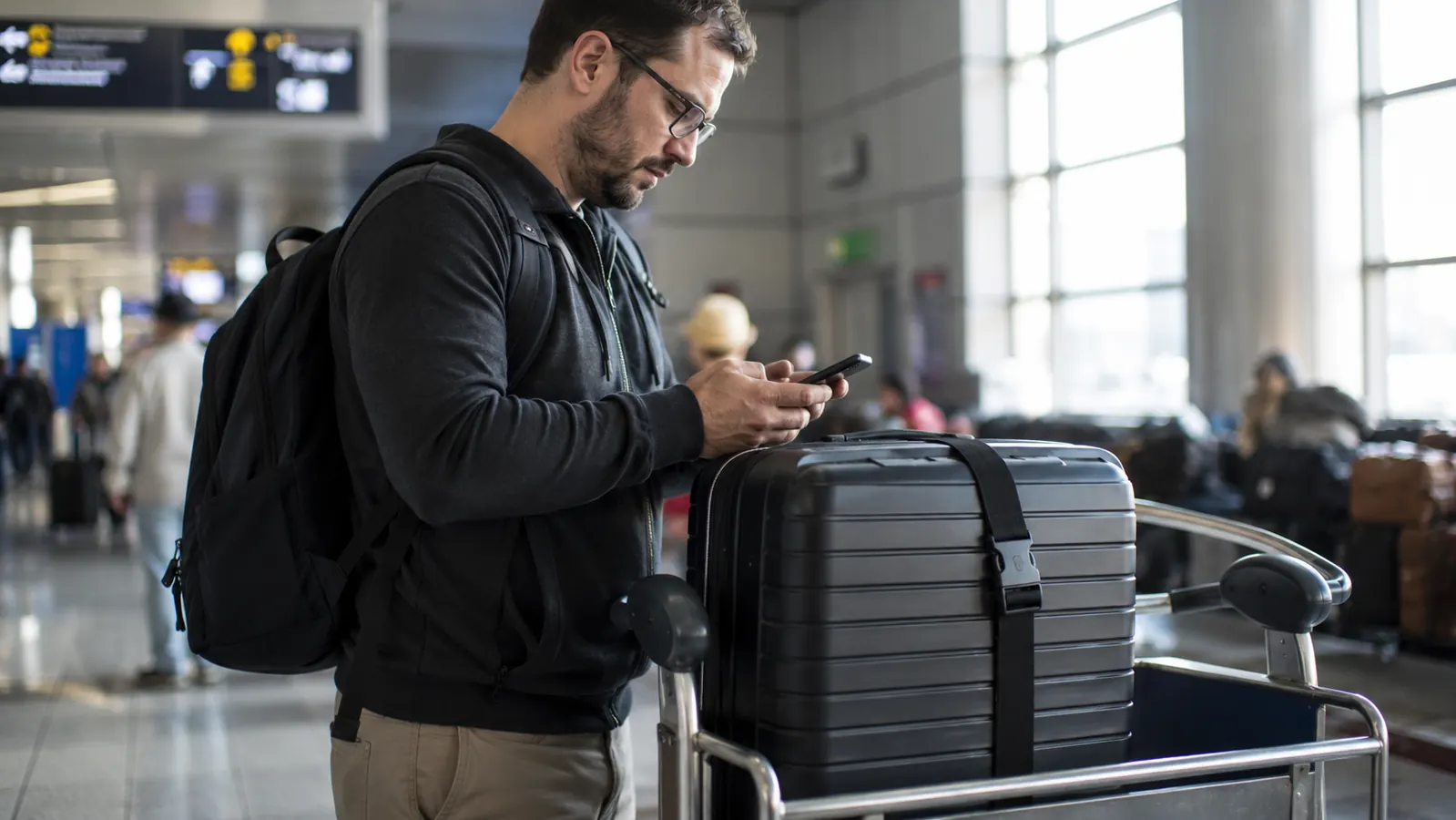
I've had a zipper blow open on a checked bag exactly once, and once was enough. It happened on a connection through Charlotte, and by the time I got to the carousel in Tampa, my suitcase looked like it had lost a fight. The zipper pull was gone, one seam had started to separate, and a sock was hanging halfway out the side like a white flag. Nothing fell out completely, but only because a baggage handler had wrapped the whole thing in stretch film before it came off the belt. That was luck, not planning.
Since then I've run every checked bag through the same system, and the anchor of it is a set of TSA-approved luggage straps I keep in a kitchen drawer next to my passport. It's a small habit that costs about ten dollars and two minutes, and it's the difference between a bag that survives a rough transfer and one that doesn't. This is the exact process I use, step by step, from the moment I start packing to the moment I pull the bag off the carousel.
None of this is complicated. It's five small habits, done in order, every time you check a bag. The people I know who've had checked luggage arrive damaged or missing almost never had a strap on it. The people who fly constantly for work, the ones who've checked hundreds of bags and never had a real problem, almost all do some version of what's below, even if they've never written it down as a checklist.
Start with a strap that's actually rated for checked baggage
Not every strap on Amazon is TSA-compliant or built to hold under real cargo-hold pressure. This 4-pack is the one I've used on every checked flight for the past year, and it's held up through gate-checks, connections, and one very rough landing bag drop.
Amazon Check Today's Price on Amazon →Step 1: Pack so the bag can't shift or bulge
Before a strap does any good, the bag itself needs to be packed so it isn't fighting its own zipper. I put heavier items (shoes, toiletry bag, the paperback I never finish) at the bottom near the wheels, and I roll clothes instead of folding them flat. Rolled clothes compress into the gaps around hard items instead of leaving air pockets that let things slide during handling.
If the bag bulges even slightly when you try to close it, that's the zipper doing structural work it wasn't designed for. A zipper is a fastener, not a compression system. I've learned to repack rather than force it, even if that means wearing my bulkiest sweater on the plane instead of packing it. A zipper that's straining just to stay shut on your bedroom floor is not going to hold up after being thrown onto a cart, stacked under three other bags, and dropped onto a conveyor belt.
This step matters more than people think. A strap can reinforce a zipper, but it can't fix a suitcase that's already under strain from the inside. Get the packing right first, and everything after this gets easier. I also try to keep weight balanced across the bag rather than piled on one end, since a lopsided suitcase tumbles and shifts more on a conveyor belt, and that shifting is what stresses a zipper over a multi-leg trip. On a trip with two or three connections, that repeated shifting adds up in a way a single direct flight never will.
Step 2: Close the zipper fully, then check both sliders
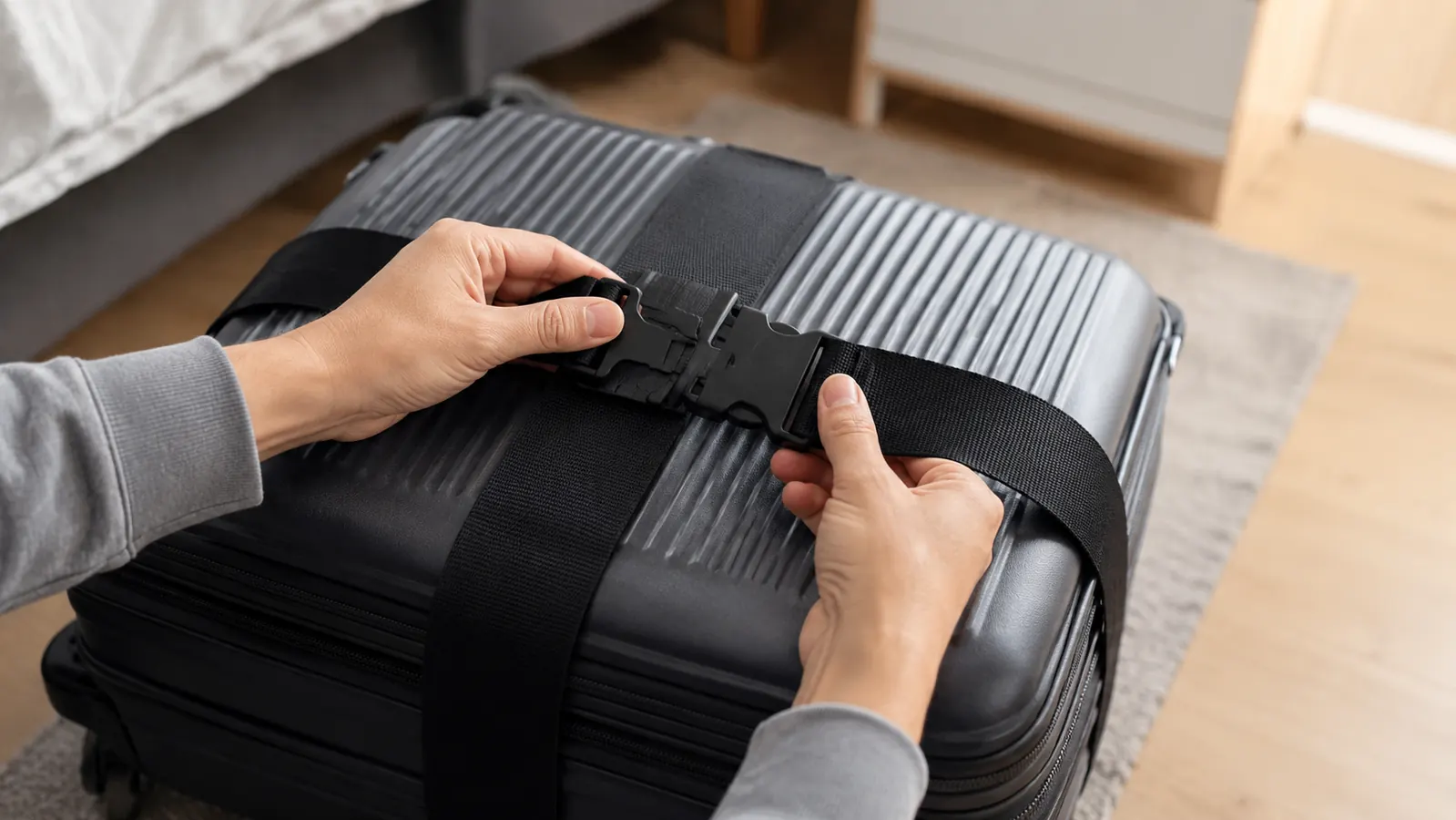
Most suitcase zippers have two sliders that meet in the middle or at a corner. I always push both sliders all the way to the same point and give the seam a firm tug test before moving on. A zipper that's 95% closed with one slider stopped an inch short is the single most common failure point I've seen on other people's bags at the carousel.
If your suitcase has a zipper pull with a small loop, this is also the moment to loop a twist tie or small zip tie through both pulls. It's not security, TSA can still open a checked bag if they need to, but it stops the zipper from slowly working itself open from vibration during transport, which is a real and common thing on baggage conveyor systems. I keep a small baggie of spare zip ties in my carry-on for exactly this, since airport gift shops never seem to sell them when you actually need one.
I do this check standing up, bag on its wheels, so I can see the whole zipper line at eye level instead of crouching over it in a hurry at the ticket counter. Thirty extra seconds here has saved me from checking a bag that wasn't actually sealed more than once.
Step 3: Run the strap perpendicular to the zipper, not parallel
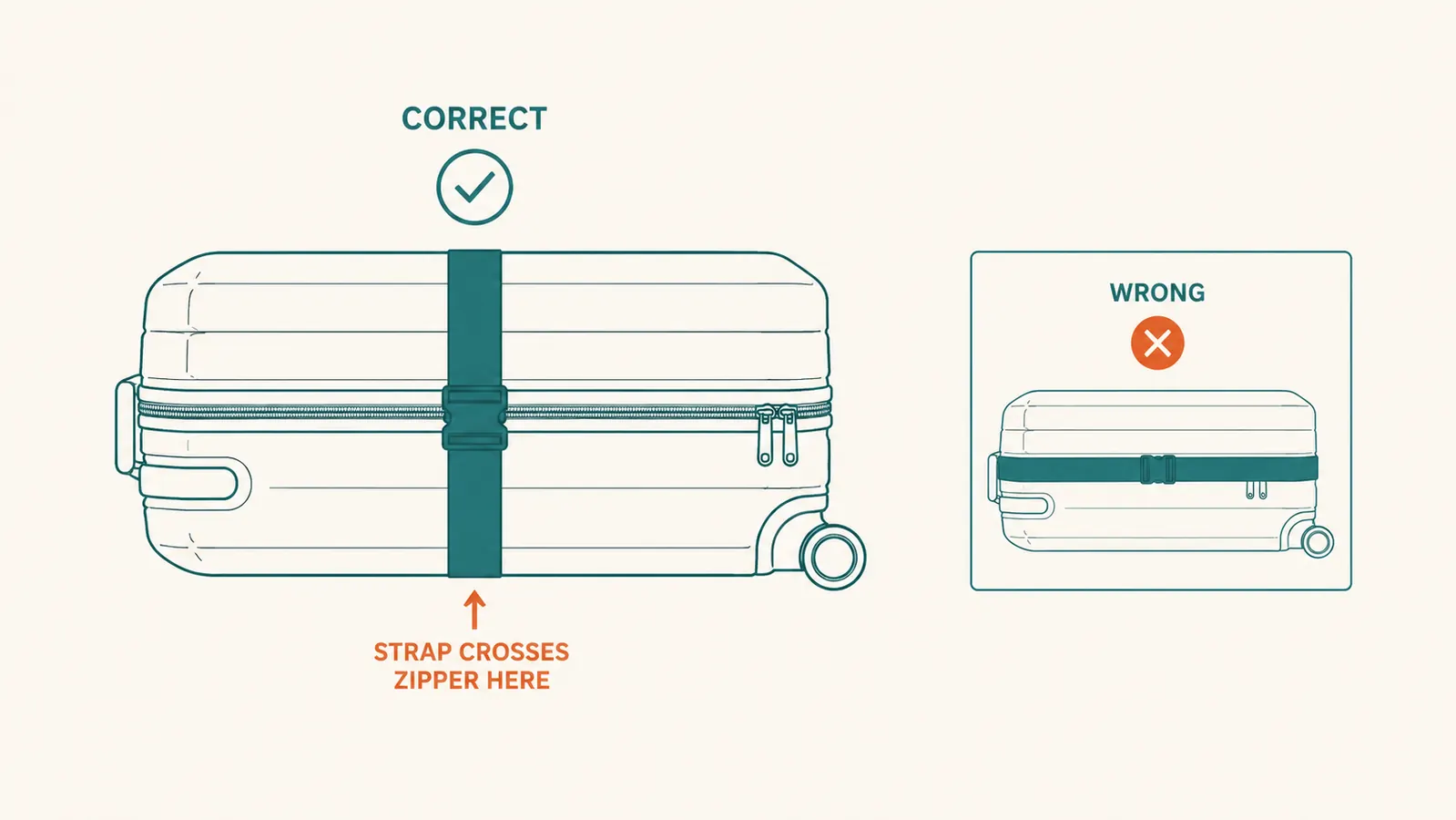
This is the part almost everyone gets wrong, including me for the first year I used straps. A luggage strap only reinforces the zipper if it physically crosses over the zipper line. If you wrap the strap the long way around the suitcase, parallel to the zipper seam, it does almost nothing to stop the zipper from separating under pressure. It just squeezes the bag from a direction the zipper doesn't need help with.
I run my strap around the shorter dimension of the case, so it crosses directly over the main zipper seam and cinches the two halves of the shell together at the exact point where they'd otherwise pull apart. On a standard hardshell or softshell suitcase, that means the strap goes around the width, not the length. Buckle it snug enough that you can't slide more than a finger underneath.
On larger checked bags, I'll sometimes use two straps from the pack, one near the top third and one near the bottom third, both crossing the zipper. It's overkill for most trips, but for anything longer than two weeks where the bag is packed heavier than usual, the second strap is cheap insurance against the extra internal pressure. It also spreads the load across two points on the shell instead of concentrating it in the middle, which matters more on softer-sided luggage.
Step 4: Make the bag identifiable at a glance
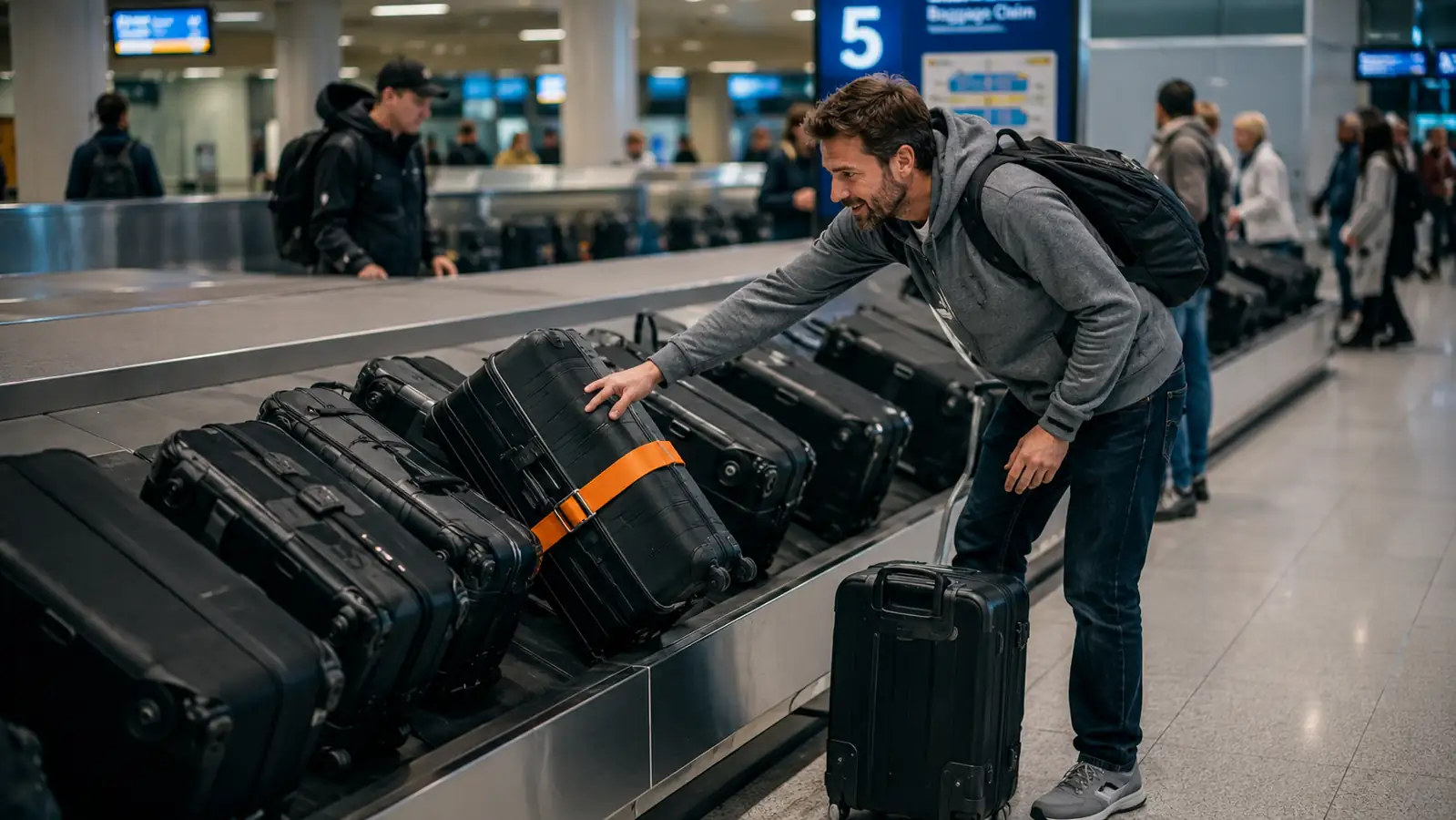
A strap does double duty that people underrate: it makes an otherwise anonymous black suitcase instantly recognizable on a crowded carousel. I use a strap in a bright color, mine's a burnt orange, specifically because none of my luggage is that color. I've watched people grab the wrong identical black bag off a carousel more than once, and I've done it myself before I started strapping.
This isn't just convenience. A bag that's easy to identify is a bag that's less likely to get picked up by the wrong traveler, accidentally or otherwise, in the chaos of a busy arrivals hall. Combine the strap with a tag on the handle and you've made your suitcase the one bag on the belt that nobody could mistake for theirs.
I've also started buckling the strap in the same spot every time, roughly a third of the way down from the handle, so I can recognize my own bag by silhouette from across the terminal before I even get close enough to read the tag. It sounds small, but after a long flight when you're running on no sleep, being able to spot your bag without squinting at every black suitcase on the belt is a real relief, and it cuts down the time you're standing at baggage claim in general.
Step 5: Double-check strap length and buckle security before you check the bag
Right before I hand the bag to the airline at the counter, I do a 10-second check: buckle clicked and flat, no twist in the webbing, and no excess strap tail flapping loose. A loose tail can catch on conveyor machinery, which is a real risk, not a theoretical one. Most straps have a way to tuck or trim the excess through a keeper loop, and I always use it.
I also glance at the strap's stitching where it meets the buckle. That's the failure point on cheap straps, the webbing pulling loose from the buckle hardware under load. It's one reason I stick with a strap that's specifically built and rated for suitcase use rather than a generic cargo strap from a hardware store, since a hardware-store ratchet strap is designed for a completely different kind of tension than a suitcase buckle needs.
If I'm checking a bag at a gate instead of a ticket counter, meaning it's about to get tossed down a jet bridge ramp instead of sorted gently on a belt system, I tighten the strap one notch further than usual. Gate-checked bags get handled faster and rougher than bags checked at the counter, simply because there's less time between the gate agent tagging it and the bag going into the cargo hold.
What Else Helps
A strap solves the zipper and identification problem, but it's one piece of a bigger system. I also keep a printed name and phone number card inside the top of the bag, in addition to the outside tag, in case the outside tag is torn off. I photograph the packed bag before I check it, so I have a record of contents and condition if there's ever a damage claim. And I never check anything I couldn't survive losing for 48 hours, medications, chargers, and one change of clothes stay in the carry-on regardless of how tight the connection is.
I also avoid overpacking the outside pockets on soft-sided bags. Those pockets are the first thing that snags on a conveyor rail or another bag's wheel, and an overstuffed pocket puts extra strain on a zipper that's already doing more work than it should. A strap crossing the main body of the bag won't help a side pocket that's zipped shut under pressure.
The last habit is watching how my bag actually gets handled when I can see it, at the gate-check ramp or through a glass window near an oversized-bag scanner. It's not something you can control, but it's useful information. If you notice your airline or your specific route tends to be rougher on bags, that's the trip where you double up on straps and skip anything even slightly fragile in the checked bag.
The strap doesn't need to be fancy. It needs to cross the zipper, hold a buckle under pressure, and stand out enough that you can spot your bag from thirty feet away.
Ten dollars of insurance for a bag you can't afford to lose
I've run this exact 4-pack through connections, gate checks, and one genuinely rough baggage handler in Charlotte. Buckles have held every time, and the color makes my bag impossible to miss on the carousel.
Amazon Check Today's Price on Amazon →