
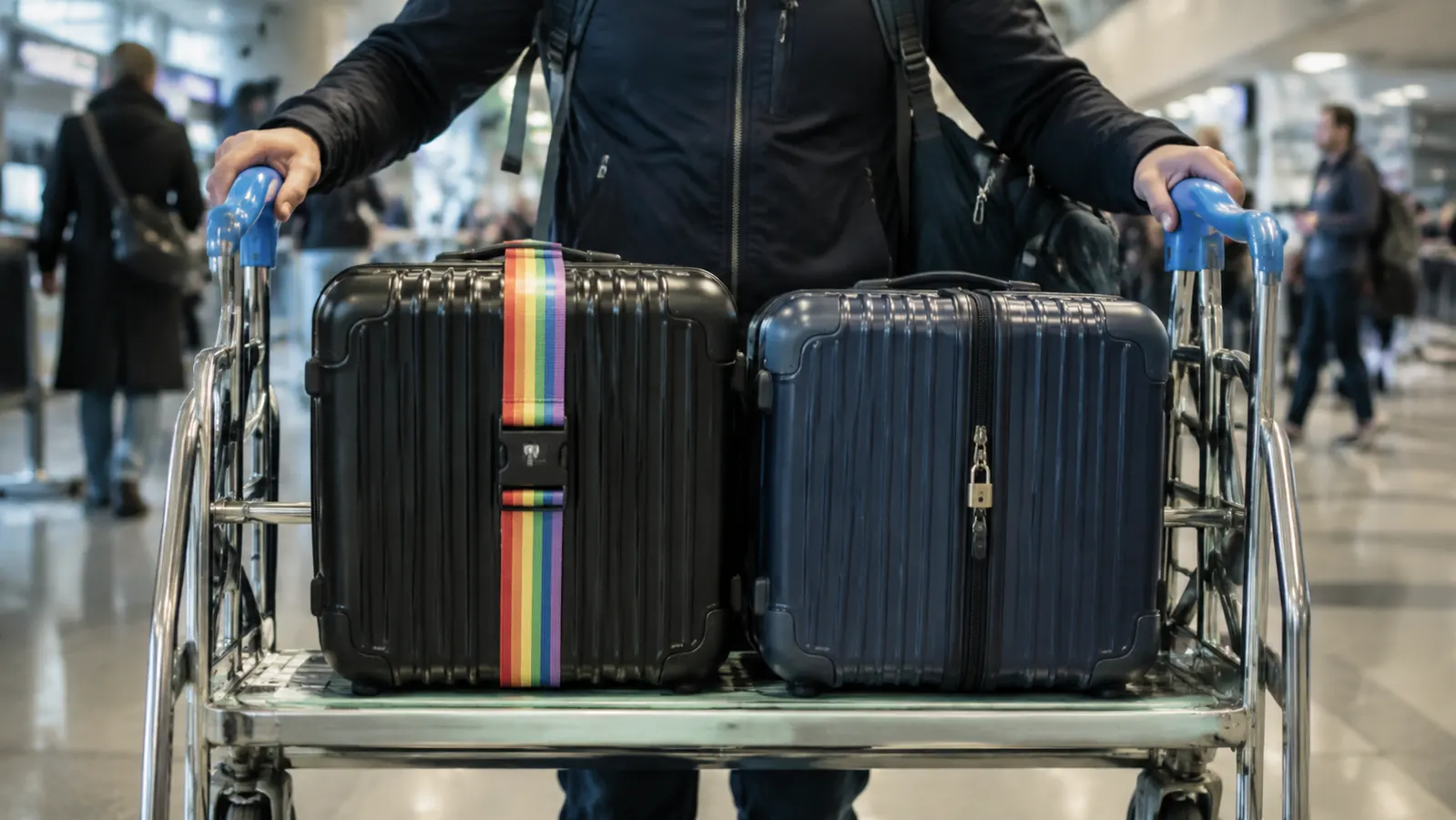
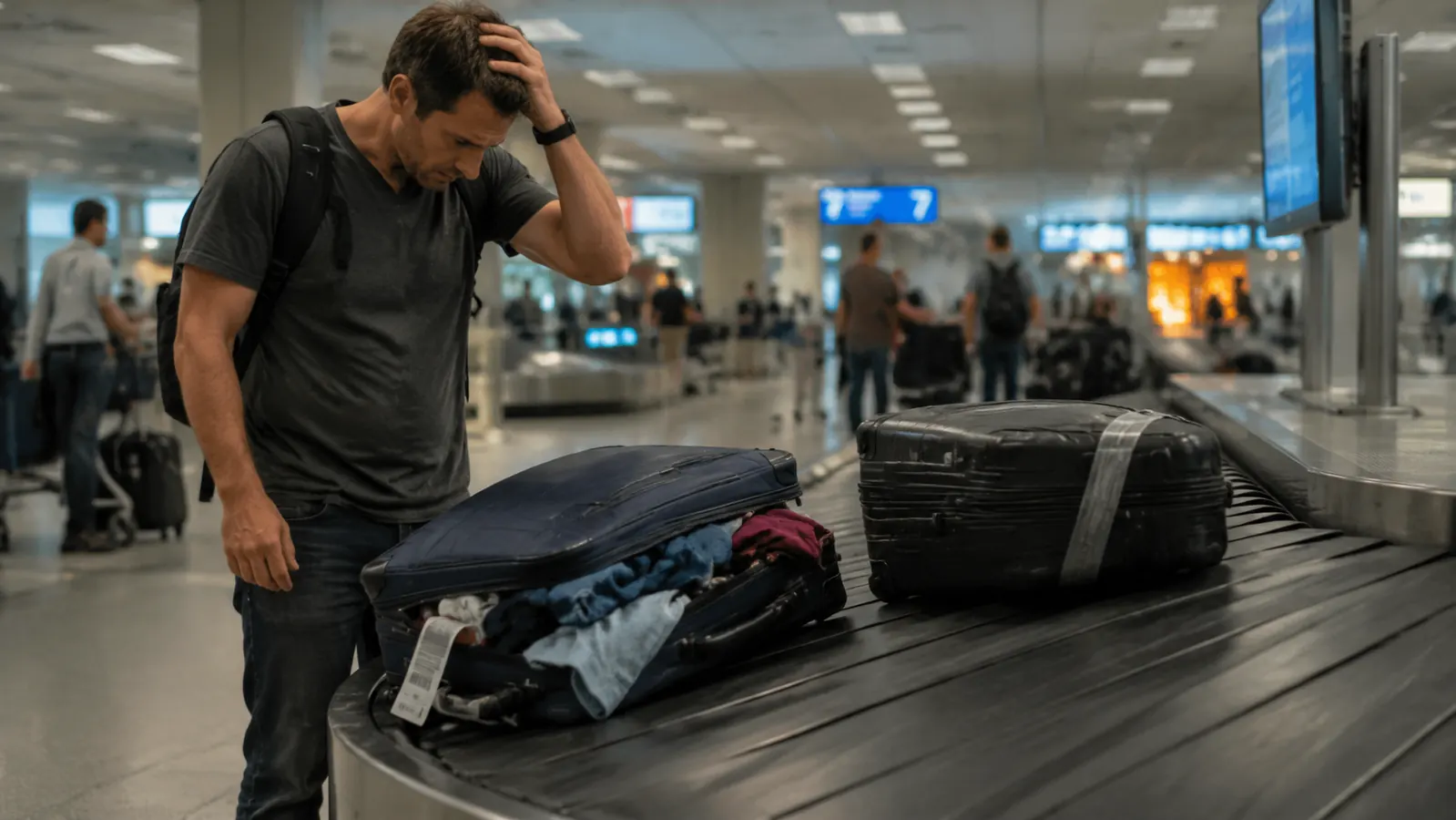
Short answer: if I could only pick one, it's the strap. Not because locks are useless, but because a lock only protects a zipper that's still working. A strap protects the bag even after the zipper isn't. I learned that difference the hard way on a return flight from Cancun when my case came down the ramp at baggage claim, split open, spinning contents across the belt, while my strapped bag rolled by untouched two carousels over. That flight taught me more about luggage protection in ten minutes at baggage claim than years of packing lists ever had.
I've traveled with both a 4-pack of TSA-approved nylon luggage straps and a couple of standard TSA combination locks for years now. They get lumped together in a lot of packing lists as if they solve the same problem, but they don't. One is structural. The other is a deterrent. Once you see them side by side, the choice for most travelers gets pretty clear, and it's not the one most people default to first.
This isn't a case where I'm trying to talk you into buying two products instead of one. I genuinely think most travelers overinvest in locks and underinvest in straps, mostly because locks feel more like "security" and straps feel like an afterthought, something you clip on and forget about. After watching a zipper fail mid-trip with real consequences, I flipped that priority for good and haven't gone back.
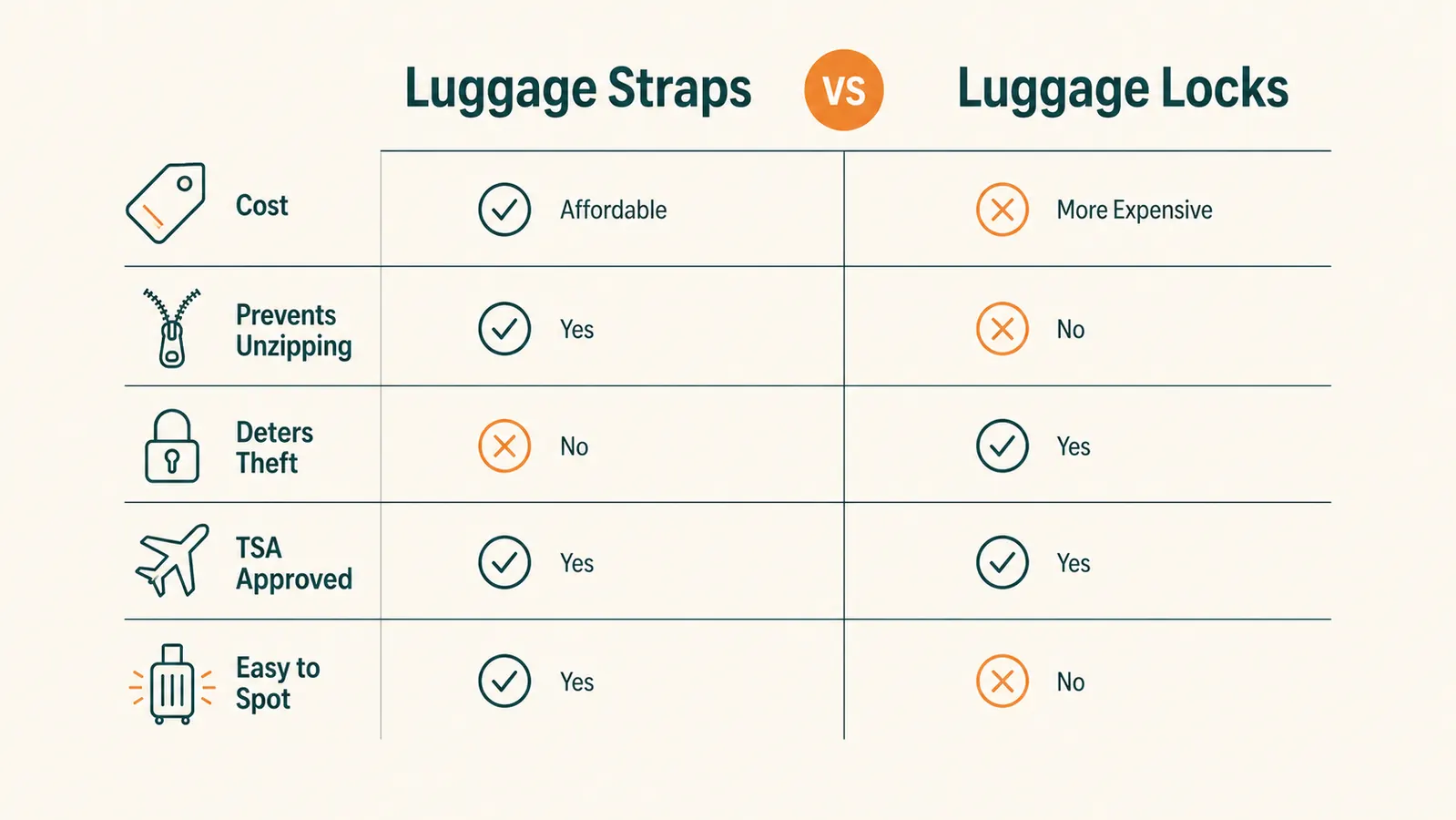
| Luggage Straps | Luggage Locks | |
|---|---|---|
| Product Type | TSA-Approved Luggage Strap (4-pack, nylon) | TSA Combination Zipper Lock |
| Typical Price | Around $10 for a 4-pack | Around $6 to $9 per lock, often sold in pairs |
| Primary Job | Holds the whole case shut, zipper or no zipper | Locks the zipper pulls together |
| Protects Against Burst Zippers | Yes, keeps the shell closed even if the zipper fails | No, a broken zipper defeats the lock entirely |
| Theft Deterrence | Moderate, slows down casual tampering | Higher, actually requires a key or combination to open |
| Bag ID at a Glance | Bright colors make your bag instantly spottable | Blends in, no visual ID benefit |
| TSA Compliance | TSA-approved buckle designs exist and are widely sold | TSA-approved locks are standard and easy to find |
| Setup Time | 10 to 15 seconds to wrap and buckle | 5 seconds to click shut |
| Failure Point | Buckle can loosen on very long hauls if not double-checked | Cheap combination dials can slip or jam |
Where Luggage Straps Win
The single biggest thing a strap does that a lock cannot is protect you from the zipper itself failing. Zippers are the weakest part of almost every checked suitcase, especially on soft-sided bags that get tossed, stacked, and crushed by conveyor systems and baggage handlers who are not being gentle with your stuff. When a zipper track splits or a slider blows out mid-transit, a lock on that zipper is now protecting nothing. The bag is open. A strap wrapped around the entire shell keeps the case physically closed regardless of what the zipper is doing underneath it.
I've seen this exact failure twice now, once with my own bag on that Cancun trip and once watching a stranger's duffel dump half its contents onto a carousel in Denver. In both cases the zipper gave out from ordinary wear and rough handling, not from anything unusual happening to the bag. A strap turns that kind of failure from a disaster into a non-event, because the case stays closed no matter what the zipper decides to do. My bag in Cancun had a slider that had been getting stiffer for months, and I'd ignored it. The strap didn't care that the zipper was on its way out.
The second win is visibility. I run a bright red strap on my main checked bag and a striped one on my wife's. Both of us can spot our suitcases from twenty feet away on a crowded carousel without squinting at tags or checking handle shapes. That sounds minor until you're standing at baggage claim in Atlanta watching forty identical black hardshells go by, all with the same generic manufacturer logo and the same worn corners. A lock does nothing for this. It's small, it's usually black or silver, and it's invisible by design from more than a few feet away.
Straps also add a layer of compression. On a soft-sided duffel or an overstuffed suitcase, cinching a strap around the middle keeps the bag from bulging, which reduces stress on the zipper track in the first place. That's a preventative benefit locks simply don't offer, since a lock only engages after the bag is already zipped and doesn't do anything to reduce the pressure being put on that zipper during loading, stacking, and transit. If you're the kind of packer who sits on the suitcase to get it closed, a strap is doing real mechanical work every single flight, not just sitting there as a symbol of security.
The 4-pack I use is TSA-approved, which matters more than people think. TSA agents are legally allowed to cut off a non-approved lock or strap if they need to search your bag, and they will, without calling you first. A TSA-approved buckle has a recognized lock mechanism that agents can open with a master tool, inspect the bag, and re-secure it before it ever reaches the belt. I've had a bag flagged for a secondary check twice, and both times the strap was intact when I picked the suitcase up, which tells me the system actually works the way it's supposed to.
Stop guessing which black suitcase is yours
This 4-pack of TSA-approved nylon straps wraps your whole bag shut, holds zippers together if they fail, and makes your case impossible to mix up on the carousel. Current price on Amazon below.
Amazon Check Today's Price on Amazon →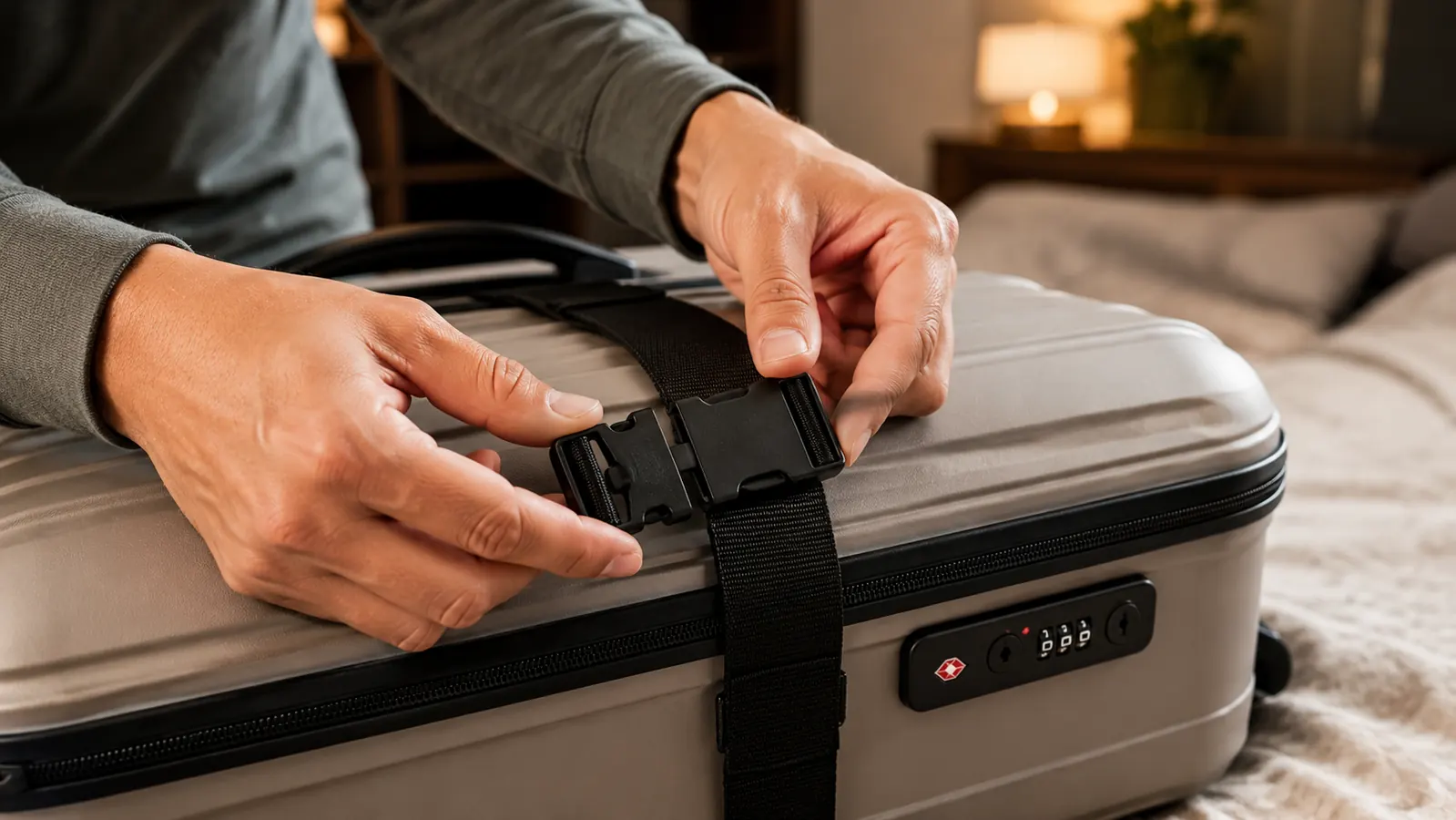
Where Luggage Locks Win
Locks earn their keep on a different job entirely: keeping someone from quietly unzipping your bag and poking around while the zipper itself is intact. A determined thief with tools can defeat almost any consumer lock, and everyone in the travel world knows this, but the point was never to be a bank vault. It's to slow someone down enough that they move to an easier, unlocked target sitting right next to yours, and to keep a zipper from working itself open from vibration and handling over a long multi-leg trip.
A lock is also the right call if you're checking a hard-shell case with a built-in zipper closure and no exterior strap loop points, or if you're on an international connection where an airline or customs agent has specifically asked that checked bags be locked. In those narrower situations, a combination lock is doing a job a strap physically can't do, because there's no full shell surface to wrap a strap around in the first place, just a zipper seam that needs its own dedicated fastener.
Locks are also faster to use if you're the type who checks a bag and forgets about it until baggage claim. Clicking a combination lock shut takes a few seconds and requires no wrapping, tucking, or double-checking a buckle. For someone who travels light and infrequently and just wants a five-second habit at the airport counter, that convenience matters more than the marginal extra protection a strap would add.
There's also a psychological angle here that's worth being honest about. A lock signals to a casual opportunist, someone walking past unattended bags at a hostel or a hotel luggage room, that this particular bag is not the easy grab. It won't stop someone who's determined, but most petty theft on the road is about opportunity and speed, not effort. A lock removes both.
The Honest Answer: Use Both If You Can
I don't actually run these as an either-or on my own bags. My checked suitcase gets a strap wrapped around the whole shell for the zipper-failure and carousel-ID reasons, and I still keep the zipper pulls linked with a small TSA lock underneath the strap for casual tamper resistance. Total cost for both is under twenty dollars and neither interferes with the other. The strap goes on last, over the top, so even if someone worked the lock off with tools, they'd still have to deal with a fully wrapped case underneath.
A lock protects a bag that's still working right. A strap protects the bag when nothing else does.
If you're only willing to buy one thing, though, the strap protects against the failure mode that actually ends trips, a burst zipper scattering your clothes across a conveyor belt in a city you don't live in, hours from home, with a connecting flight to catch and no time to repack a broken suitcase into a trash bag from the gift shop. That's a much worse afternoon than a lock ever prevents, and it's the scenario I'd rather insure against first.
Locks are cheap insurance against snooping. Straps are cheap insurance against your suitcase falling apart in transit. Given the choice between those two problems, I'll take the strap every time, and I'd tell any first-time flier packing their first checked bag the same thing before their next trip.
One more thing worth mentioning: durability differs quite a bit between the two once you're past the first few trips. A decent TSA lock will usually outlast several years of casual use since there's nothing to wear out beyond the dial and the shackle. Straps take more abuse because they're doing more work, cinched tight and dragged across belts and carts trip after trip. The nylon webbing on mine has faded from bright red to a duller brick color after roughly two years of monthly flights, and one buckle needed replacing after the plastic clip cracked in cold weather. That's a fair tradeoff for something absorbing that much physical stress on every single flight, but it's worth knowing going in that a strap is a wear item, not a buy-once-forget-it purchase the way a lock tends to be.
Who Should Buy Which
If you check bags more than a couple times a year, especially soft-sided duffels or overstuffed hardshells, get the straps first. They solve the more common and more expensive problem, and a 4-pack means you can wrap every checked bag in the household for less than the cost of one meal at the airport. If you're an infrequent flier with a newer hard-shell case in good condition and you mostly worry about someone rifling through your bag between the counter and the plane, a lock alone might be enough for now.
And if you want the setup I actually run on my own luggage, get both. Lock the zipper pulls together first, then wrap the strap over the entire case as a second layer. It takes less than a minute total, it costs less than twenty dollars for both pieces, and it covers the two most common ways a checked bag actually fails you, a broken zipper and a curious set of hands, in one pass before you ever hand the bag over at the counter.
Cover the failure mode that actually ruins trips
Grab the 4-pack of TSA-approved luggage straps, wrap every checked bag in the house, and stop worrying about a blown zipper mid-layover.
Amazon Check Today's Price on Amazon →