
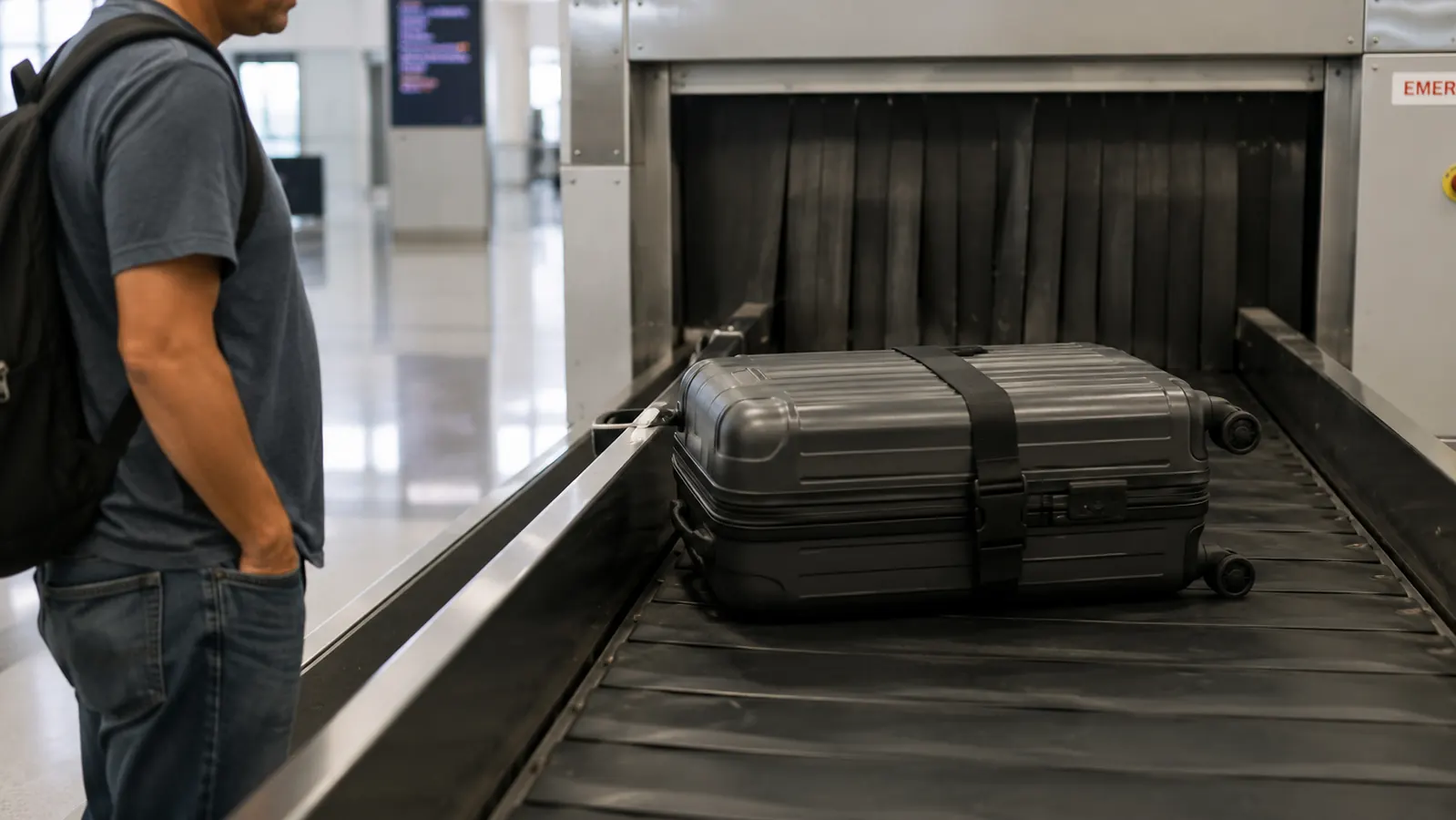
I've checked a bag on 14 flights since January, three work trips, a ten-day loop through the Pacific Northwest with my brother, and a family trip to Puerto Rico that involved two connections each way. Every one of those bags wore the same thing under the belt, a black nylon luggage strap from a $10, 4-pack set with a TSA-approved combination lock built into the buckle. I bought the pack myself after watching my zipper split open on a carousel in Denver two years ago, spilling a sock and half a toiletry bag onto the belt in front of forty strangers. That happened without a strap. I wasn't going to let it happen again.
Nobody sent me these straps to review. I paid for the 4-pack myself, used all four of them across two suitcases and a duffel for six straight months, and I'm writing down exactly what held up and what didn't. No hype, no 'game-changing' nonsense, just a plain accounting of what happens to a cheap strap after real airline handling.
The Quick Verdict
A genuinely solid $10 upgrade for anyone checking bags regularly. The webbing and buckle held up to 14 flights without failing once, but the combination dial gets stiff in cold weather and the printed numbers wear down faster than the strap itself.
Amazon Check Today's Price →Tired of watching your zipper take the abuse your suitcase can't afford?
This is the exact 4-pack I've used on every checked bag since January. TSA-approved lock, tight buckle, and a strap that's survived rougher handling than I expected for the price.
Amazon Check Today's Price on Amazon →How I Tested These
My test wasn't a lab bench, it was my real travel calendar. I put one strap on my main hard-shell suitcase, a second on a soft-sided duffel I use for shorter trips, and kept the other two in a drawer as backups until my sister borrowed one for her own trip in June, which gave me a second household's worth of data almost by accident. Between January and July I flew Delta, United, and Frontier, connected through Denver, Minneapolis, and Charlotte, and checked bags on every single leg. That's 14 individual flights and closer to 28 handoffs if you count both directions, more than enough cycles to see how a $2.50-per-strap accessory actually performs once it leaves the packaging.
I didn't baby them. Baggage handlers don't baby your suitcase, so I stopped pretending mine deserved special treatment. I watched my case get tossed onto a cart from about three feet up in Minneapolis, left it strapped through a rainstorm on the Charlotte tarmac, and never once removed the strap between trips, so it lived on the suitcase for the full six months without a break. I also ran the combination lock through its paces daily during the Puerto Rico trip, since that was the one leg where I actually used the lock function instead of just the strap for identification.
One thing I can't speak to firsthand is a strap actually preventing a real theft attempt, since nobody tried to break into my bag during this stretch, thankfully. So this review covers durability, buckle strength, and day-to-day usefulness, not a controlled test against an actual thief with bolt cutters. For that angle, and for a straight comparison against a hard luggage lock, I dig into that tradeoff in a companion article linked below. What I can speak to with total confidence is six months of ordinary rough handling, which is honestly the scenario most travelers actually deal with far more often than an attempted break-in.
The Buckle Is Doing More Work Than I Expected
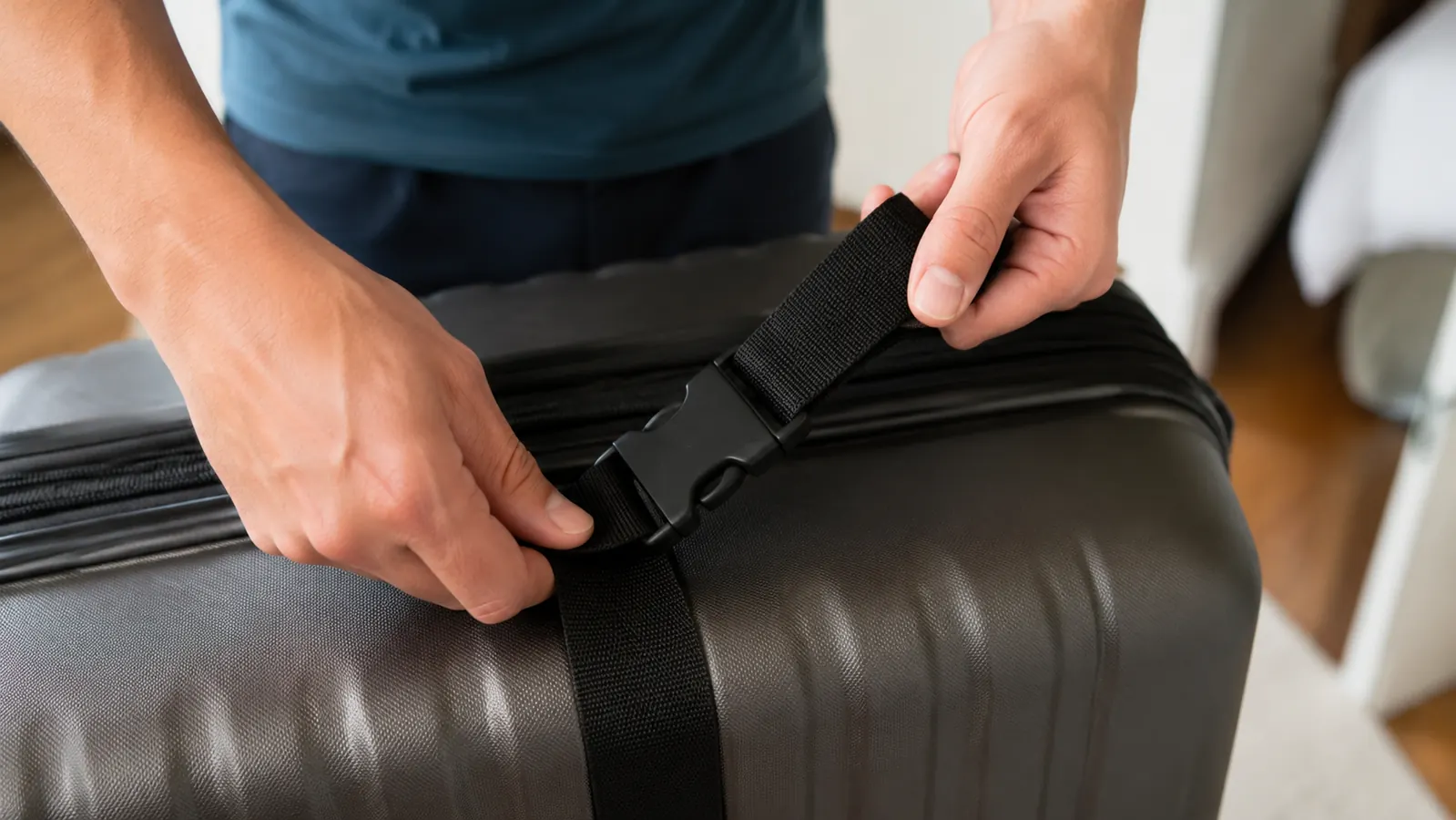
The strap uses a side-release plastic buckle with a built-in 3-digit combination lock, TSA-approved, meaning airport security can open it with a master key without cutting it off. That last part matters more than I realized before I owned one. On my Puerto Rico trip, my bag got flagged for a manual inspection in San Juan, and instead of coming back with a cut strap and a apology slip tucked inside, it came back fully intact, lock reset to 000 like it always is after a TSA search. That alone justified the $10 for me.
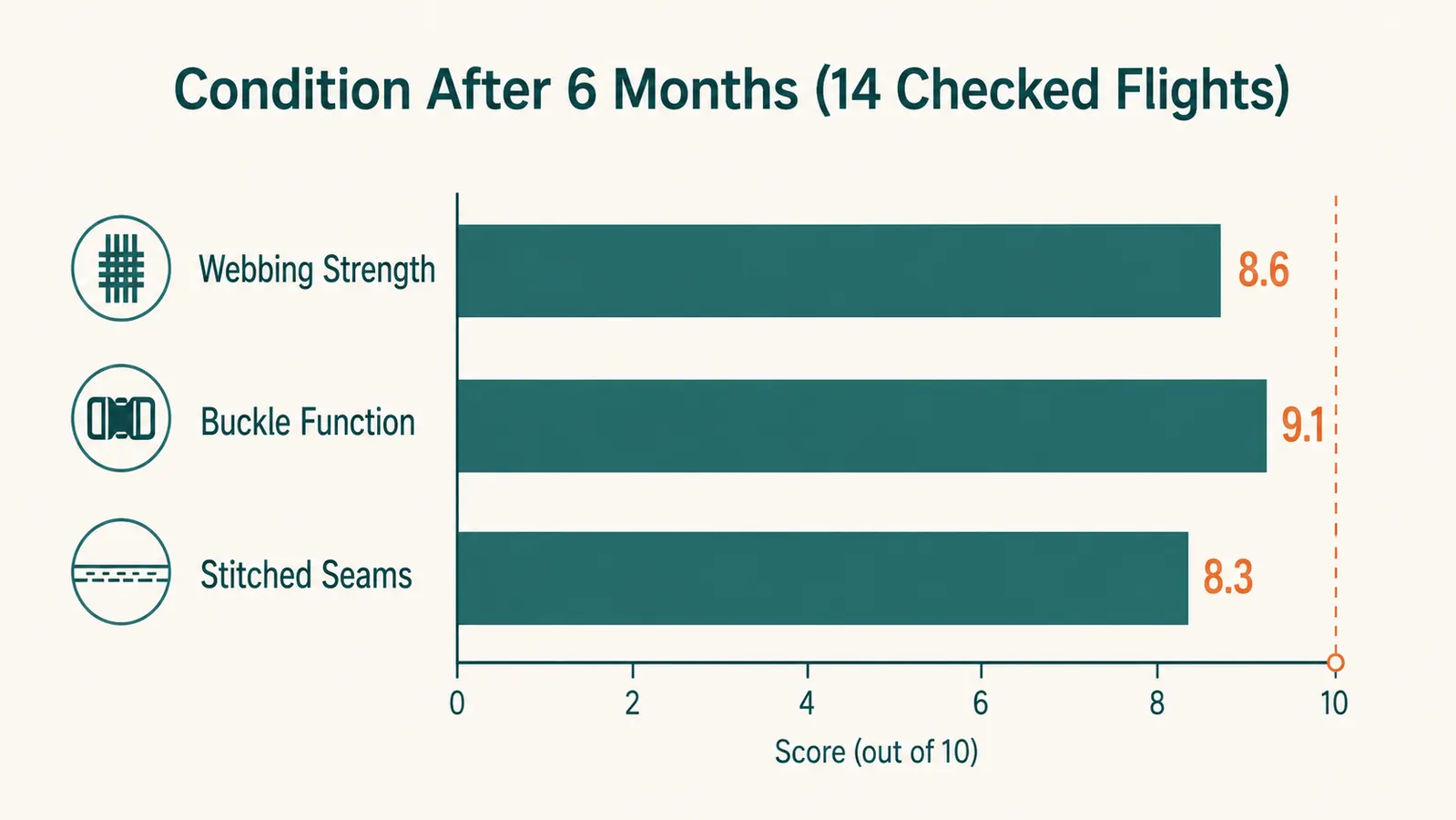
The buckle itself is plastic, not metal, and I went in expecting it to be the weak point. It hasn't been. Six months and 14 flights later, the release mechanism still snaps shut with the same tension it had on day one, no looseness, no cracking at the hinge. I tested this specifically before writing this review by clipping and unclipping each of my two active straps twenty times in a row, and neither buckle showed any give. For a $2.50-per-unit accessory, that's a better result than I expected walking in.
The one weak spot is the combination dial itself. In cold weather, specifically a layover in Minneapolis in February where the jet bridge felt like a walk-in freezer, the dial got noticeably stiffer to turn, and I had to work it slowly to avoid cross-threading the numbers. It never failed to open, but it wasn't the smooth, one-handed operation I get in warm weather. Worth knowing if you're checking a bag somewhere cold in January rather than somewhere warm in July, since that's the one condition where this strap showed any real personality change.
The Webbing After 14 Flights
The strap itself is a 2-inch woven nylon band, similar in feel to a car seatbelt but slightly thinner. Six months in, mine has fuzzed a little at the point where it threads back through the buckle, the kind of surface wear you'd see on a backpack strap after a semester of daily use. It's cosmetic. I pulled hard on both active straps before writing this, full body weight, and neither one gave an inch of extra stretch or showed any fraying at the stitch line.
The printed capacity label near the buckle, the part that says the strap is rated to a certain tension, has faded to the point of being barely legible. That doesn't affect function, but it does mean I can no longer double check the rating printed on the strap itself without pulling up the listing again. Small thing, but worth flagging since a few readers have asked whether the printed specs hold up over time. Mine didn't, though the strap's actual performance did.
The stitching where the webbing loops through the buckle is the part I watched most closely, since that's usually the first failure point on cheap straps. Zero issues. No loose threads, no separation, nothing. For comparison, my brother uses a strap from a different, pricier brand, closer to $18 for a single unit, and his showed the exact same level of stitch wear after a similar number of flights this year. I don't think strap stitching quality tracks all that closely with price once you're above the very cheapest tier, it seems to mostly come down to how the webbing is looped and sewn rather than the sticker price.
What I Considered Before Buying These
Before landing on this 4-pack, I looked at three other routes. A single premium leather-accented strap sold at a luggage boutique for around $28, a set of bright elastic straps sold at a kiosk near my gate on impulse one trip, and just skipping straps entirely and relying on the suitcase's own zippers and a hard lock. The leather-accented strap looked sharp but didn't include any combination lock at all, meaning I'd still need a separate lock for security, so I'd effectively be paying $28 for decoration and buying the actual function elsewhere.
The kiosk elastic straps were fine for maybe one trip. They stretched noticeably after a single flight and didn't have a locking mechanism at all, just a plastic clip, so they solved the 'spot my bag on the carousel' problem but did nothing for the 'keep my zipper from splitting open' problem, which was actually my original reason for buying a strap in the first place. Skipping straps entirely was my status quo for years, and it's the option I'd least recommend after this test, since the zipper failure that started this whole search happened without any strap involved. Comparing all three, a $10 pack of four TSA-approved straps with real locking function was the clear pick. I go deeper on the strap-versus-hard-lock question in a separate comparison if you're deciding between the two, since they solve genuinely different problems and don't have to be an either-or choice.
Where It Falls Short
The combination dial getting stiff in cold weather is the biggest real complaint I have, and it's the kind of thing you won't notice until you're standing at a gate in February trying to reset three little wheels with numb fingers. It's a minor annoyance, not a dealbreaker, but I'd rather flag it than pretend the strap is flawless.
The color options are also more limited than the listing photos suggest. I ordered expecting a slightly richer black, and what arrived reads a touch more charcoal in direct sunlight. Still easy to buckle and use, just not quite the deep black I pictured from the product images. And the printed weight-rating label fading, as I mentioned, means you lose the at-a-glance spec reference after a few months, though the strap itself hasn't shown any actual performance drop to match that faded print.
To be clear, this is a $10, 4-pack accessory, not a premium single-strap product built for looks. If you want something that matches a leather weekend bag on a boardroom trip, this isn't it. It's built to do a job, keep your suitcase closed and identifiable, not to look expensive doing it.
What I Liked
- TSA-approved lock let security inspect my bag without cutting the strap
- Buckle has survived 14 flights and rough handling with zero cracks or failures
- Bright color option makes a bag easy to spot on a crowded carousel
- 4-pack means you can cover two suitcases and keep spares for cheap
- Backs up a weak or aging zipper so it isn't the only thing holding your bag shut
Where It Falls Short
- Combination dial gets stiff and harder to turn in cold weather
- Printed weight-rating label fades faster than the strap's actual performance
- Color reads slightly darker or duller in person than in listing photos
- Webbing shows cosmetic fuzzing at the buckle loop after 6 months of use
The buckle is the part I expected to crack first. Fourteen flights later, it's the one piece of this strap that's never given me a single problem.
Who This Is For
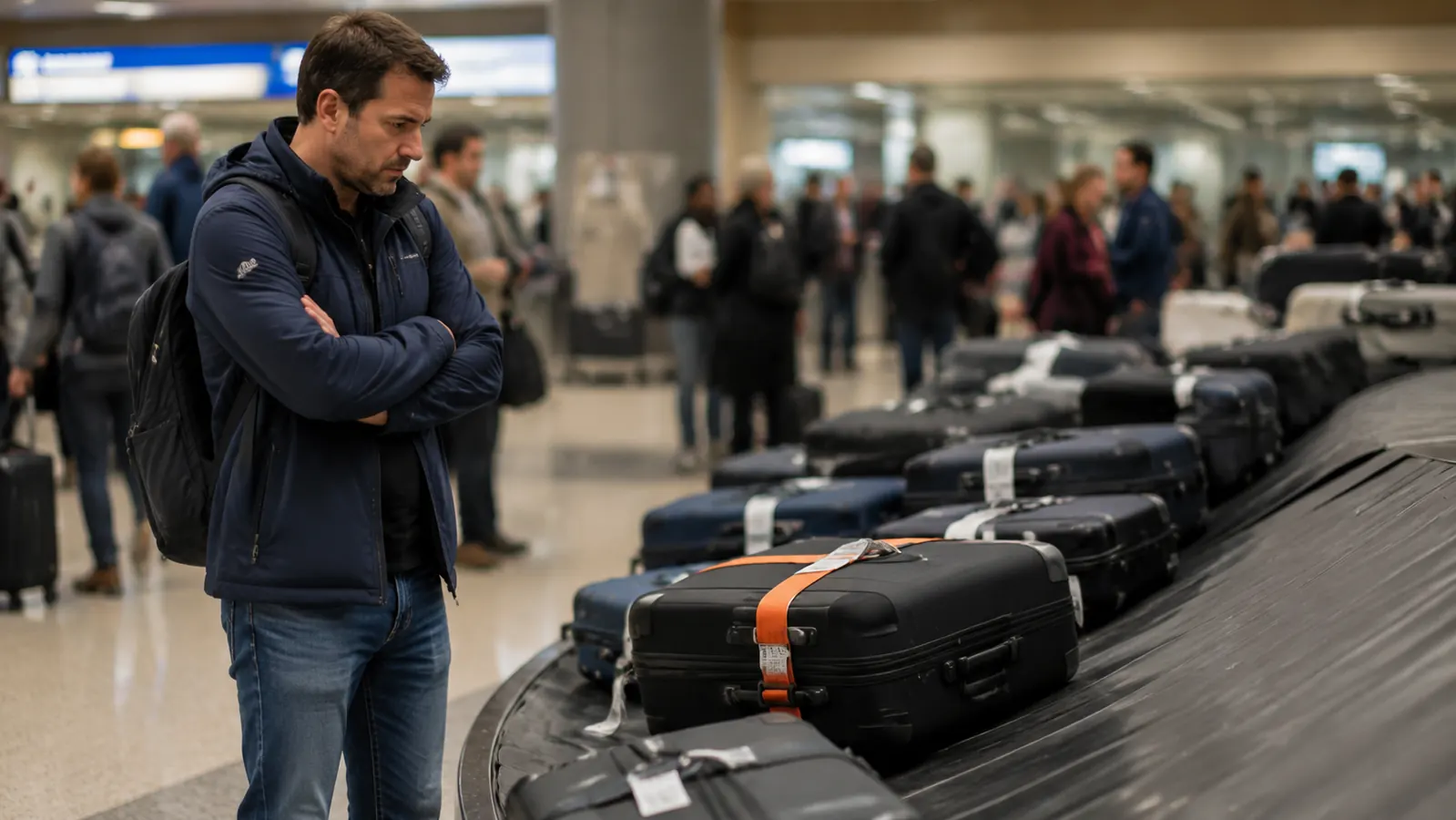
If you check a bag more than a couple times a year, especially on an older suitcase where you're not totally confident in the zipper anymore, this is a cheap, sensible upgrade. It's especially worth it if you've ever had a zipper strain or split open under normal handling, since the strap takes on a chunk of that structural load instead of leaving it all on the zipper track. Families checking multiple similar bags also get real value here, a 4-pack covers two suitcases with a spare left over, and a bright strap color does double duty as quick visual identification at the carousel.
It's also a smart pick if you fly through a lot of connections with tight layovers, since a strap gives you one more second of confidence that your bag arrived sealed the same way it left your hands, rather than wondering if a zipper popped somewhere between three different baggage systems.
Who Should Skip It
If your only concern is a determined thief cutting into your bag, a strap alone isn't a real deterrent, it slows someone down by seconds, nothing more. Pair it with a proper hard-shell lock if that's your specific worry, and I break down that comparison in more detail in a separate piece. And if you're a once-a-year flier with a newer suitcase and zippers you trust, you probably don't need this, a strap solves a problem you may not have yet.
Fourteen flights, zero buckle failures, still wrapped around my suitcase today.
At under $10 for four, this is one of the cheapest insurance policies you can put on a suitcase you actually trust to survive a connection.
Amazon Check Today's Price on Amazon →